Mapping Your May Planting in Zone 9: A Journaling Rest Day
A Rest Day With a Pen in Hand ✍️
Some rest days call for stillness; this one calls for a notebook and a quiet cup of something warm. The task is gentle — look ahead to May and map out your planting — but the way we are invited to do it is what makes this day special: as a conversation with God. Garden journaling is one of the loveliest, most grounding practices a gardener can keep, and pairing it with a little forward planning turns an ordinary rest day into something quietly sacred. You sit with your garden and your thoughts and your Maker, and you dream the month ahead together.
In Zone 9, May is a pivotal planting month, and a little thought now pays off richly. But the point of today is not efficiency; it is presence. This day’s phrase says it beautifully: let your planning and journaling be a conversation with God. Let me offer you a way to map your May planting and journal your garden as a quiet, prayerful practice.
Free eBook
Rooted in Grace
A Christian guide to intuitive gardening — the whole book, free. Tell me where to send it and it’s yours in a minute.
What May Brings in Zone 9
Knowing the shape of the month gives your planning something to work with. May in our climate is the last comfortable window to plant heat-loving summer crops before the real heat settles in, while the cool-season crops are finishing and beds are opening up. Here is the shape of a Zone 9 May.
| May Focus | What to Plant or Do |
|---|---|
| Plant heat-lovers | Okra, sweet potatoes, Southern peas, melons |
| Last summer sowings | Beans, squash, cucumbers (succession) |
| Tend fruiting crops | Feed, water, support tomatoes & peppers |
| Harvest & clear | Finish cool-season crops before heat |
| Prepare for summer | Mulch deeply, shade, check irrigation |
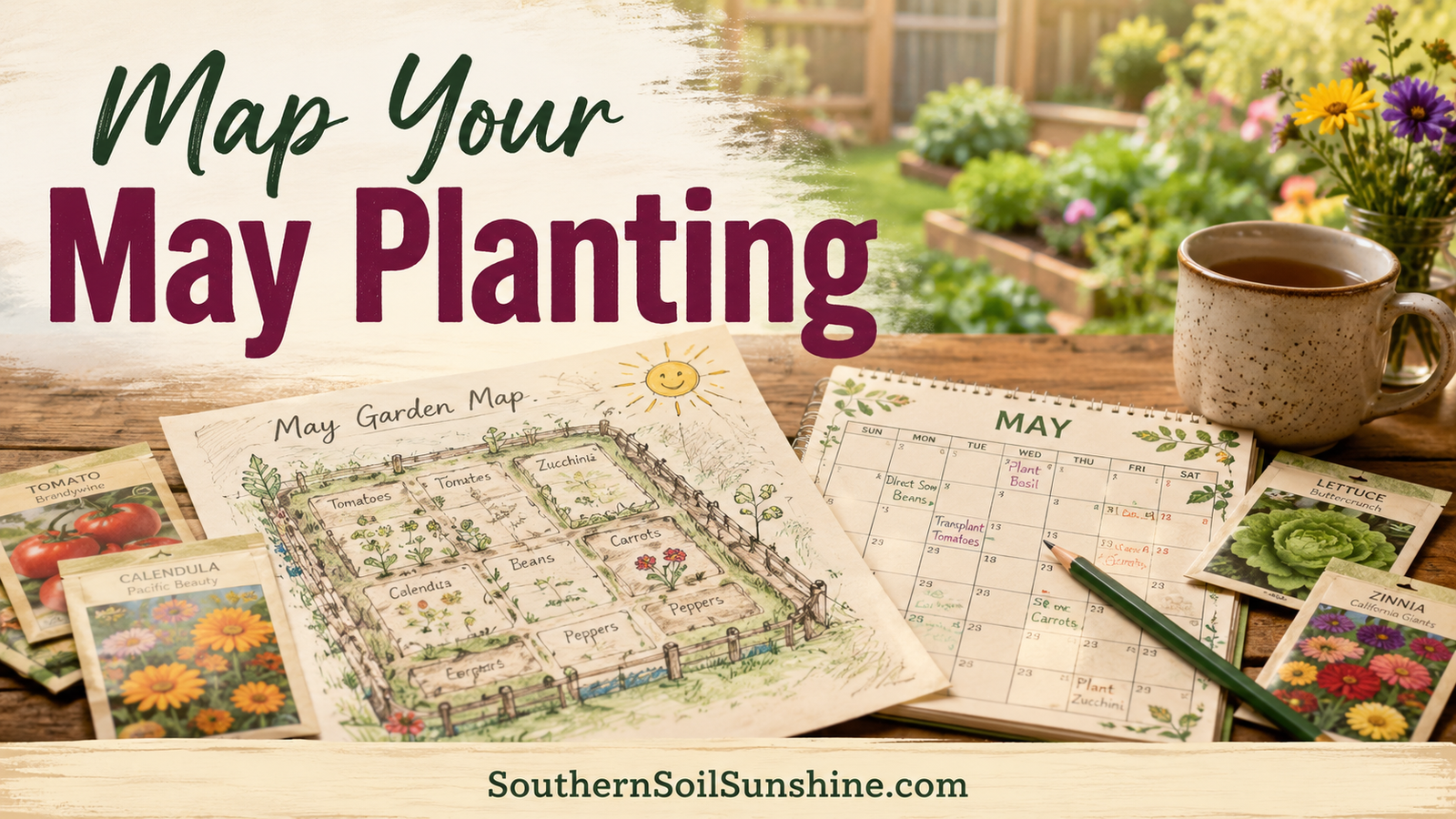
As you plan, let these questions guide your notebook: Which heat-loving crops do you want to add, and do you have seeds or slips ready? Which beds will open as your spring crops finish, and what will follow them? Where do your fruiting tomatoes and peppers need more support or feeding? How will you prepare the garden for the coming heat? Sketch a rough map, make a loose list, and note what you will need — gently, holding it all with an open hand.
Garden Journaling as a Practice
Garden journaling is more than a planting to-do list. At its richest, it is a record of your relationship with your garden — what you planted and when, what thrived and what struggled, what you noticed and felt and learned. Over seasons, a garden journal becomes a treasure: a memory of past springs, a source of hard-won wisdom, and a mirror of your own growth alongside your plants. Today, as you plan May, let your journaling hold both the practical and the reflective — the planting schedule and the quiet noticing of what this season has stirred in you.
Journaling as a Conversation With God
Here is what transforms this rest day from mere planning into something deeper. As you sit with your notebook, let the writing become a conversation — not just planning at your garden, but talking with the God who made both the garden and you. Thank Him for what has grown. Bring Him your hopes for the season ahead. Lay down your worries about what might not go as planned. Ask for wisdom in what to plant and how to tend. Notice, on the page, where you have seen His faithfulness in the small daily miracles of seed and soil and rain.
There is something about a garden that opens the heart to this kind of quiet conversation. Kneeling in the dirt or sitting among growing things, we are close to the humble, patient way God so often works — through seasons, through slow unseen growth, through faithful tending rather than dramatic intervention. To journal our garden prayerfully is to let the garden become what it has always been meant to be: a place of communion, where the practical and the sacred meet, where planning the next month and talking with our Maker are not two separate things but one.
Let Your Planning Be a Conversation With God
This day’s phrase is one I wish every gardener could carry: let your planning and journaling be a conversation with God. So often we plan alone, in our own strength and anxiety, gripping our schedules and outcomes tightly. But there is a gentler, more grounded way — to plan with God, bringing our hopes and hesitations into an ongoing conversation, planning wholeheartedly while holding it all with open hands, trusting that the garden of our lives, like the garden in our yard, is tended by hands wiser than ours.
When our planning becomes a conversation rather than a solitary striving, everything changes. The anxiety eases. The plans become offerings rather than demands. We do the good, thoughtful work of preparing for what is ahead, and then we release our grip, trusting the One who sends the rain and the sun to bring the growth we cannot manufacture. This is true of a May planting schedule, and it is true of every plan we make for our days and years. So take this rest day and dream May gently onto the page. Map your planting, journal your noticing, and let all of it be a quiet, unhurried conversation with the God who is growing both your garden and you. There is deep rest in planning that way — not alone and gripping, but together and open-handed.
Share your garden journals and May plans with us on Instagram @southernsoils — there is quiet beauty in dreaming and praying the season ahead.
Gentle Journaling Prompts
If a blank page feels intimidating, a few prompts turn journaling into an easy, prayerful conversation. Let these guide your pen today — answer only the ones that call to you.
| Reflect On | A Gentle Prompt |
|---|---|
| Gratitude | What in my garden am I most thankful for right now? |
| Hope | What am I hoping to grow — in the garden and in me? |
| Learning | What has this season taught me? |
| Release | What worry can I lay down as I plan? |
| Presence | Where have I noticed God’s faithfulness lately? |
You need not answer them all, and there are no wrong responses. Let the prompts simply open the conversation, and follow wherever it leads. Some days the writing will be all practical planning; other days it will turn into prayer and reflection. Both are good. The page is a place to bring your whole self — the planner and the ponderer, the hopeful and the weary — and to meet God there among the growing things.
Looking Back to Plan Forward
A journaling rest day is the perfect time to glance back before you look ahead. If you kept any notes from previous springs, read them over — they are a generous teacher. What did well in past Mays, and what struggled in the mounting heat? When did the summer crops go in, and did they have time to establish before the worst arrived? What did you plant too much of, or wish you had planted more? These remembered details make this year’s plan wiser and gentler. You are never truly starting from scratch; you are building on seasons of quiet learning, and each year your planning grows more attuned to your own garden’s particular rhythms.
This looking back is itself part of the conversation with God — a remembering of His faithfulness through past seasons, a noticing of how you and your garden have grown, a gratitude that steadies you as you step into what is next. Let the past inform the present without ruling it, and let the remembering fill you with thanks. A gardener who reviews with gratitude plans forward with hope.
Rest First, Then Dream
One last gentle word: this is a rest day, and the rest matters as much as the planning. Do not let the notebook become one more task. If mapping May starts to feel like pressure, set it aside and simply be — in your garden, in your chair, in the quiet — unhurried and unproductive, which is its own holy thing. The plan can wait; your rest and your peace cannot always. And a well-rested gardener plans better anyway, with a clearer head and a lighter, more prayerful heart. So take the rest first, fully and without guilt. Then, if you feel drawn to it, open the notebook and dream May onto the page — gently, prayerfully, in conversation with the God who tends both your garden and you. However the month unfolds, you will meet it from a place of peace rather than striving, which is the truest readiness of all.
The Garden as a Place of Prayer
Long before it was a place of produce, the garden was a place of presence — the very first meeting place between God and the people He made. Something of that lingers still. There is a reason so many of us find our clearest, most honest prayers rising while our hands are in the soil or our eyes are resting on growing things. The garden slows us down, quiets the noise, and draws us into the patient, hopeful, unhurried rhythm in which God so often works. To bring your notebook out among the plants and let your planning become prayer is simply to receive what the garden has always offered: a place to be with your Maker. So let this rest day be exactly that. Plan your May, yes — but more than that, let the garden do what it was made to do, and be for you a quiet place of communion, where the practical and the sacred grow together in the same good soil.
Ready to Go Deeper in the Garden?
If this article resonated with you, you might be ready for something more than tips.
- Download the FREE Rooted in Grace eBook
- Join Rooted Reset
- Follow on Instagram – @southernsoils
“The garden is not just a place to grow plants – it is a place to grow yourself.”
Free eBook
Before you go — the book is yours
Rooted in Grace: A Christian Guide to Intuitive Gardening. No cost, no catch. Read it on any device, at whatever pace the season allows.