15 Stunning Heat-Tolerant Spring Flowers for Zone 9 That Thrive All Summer
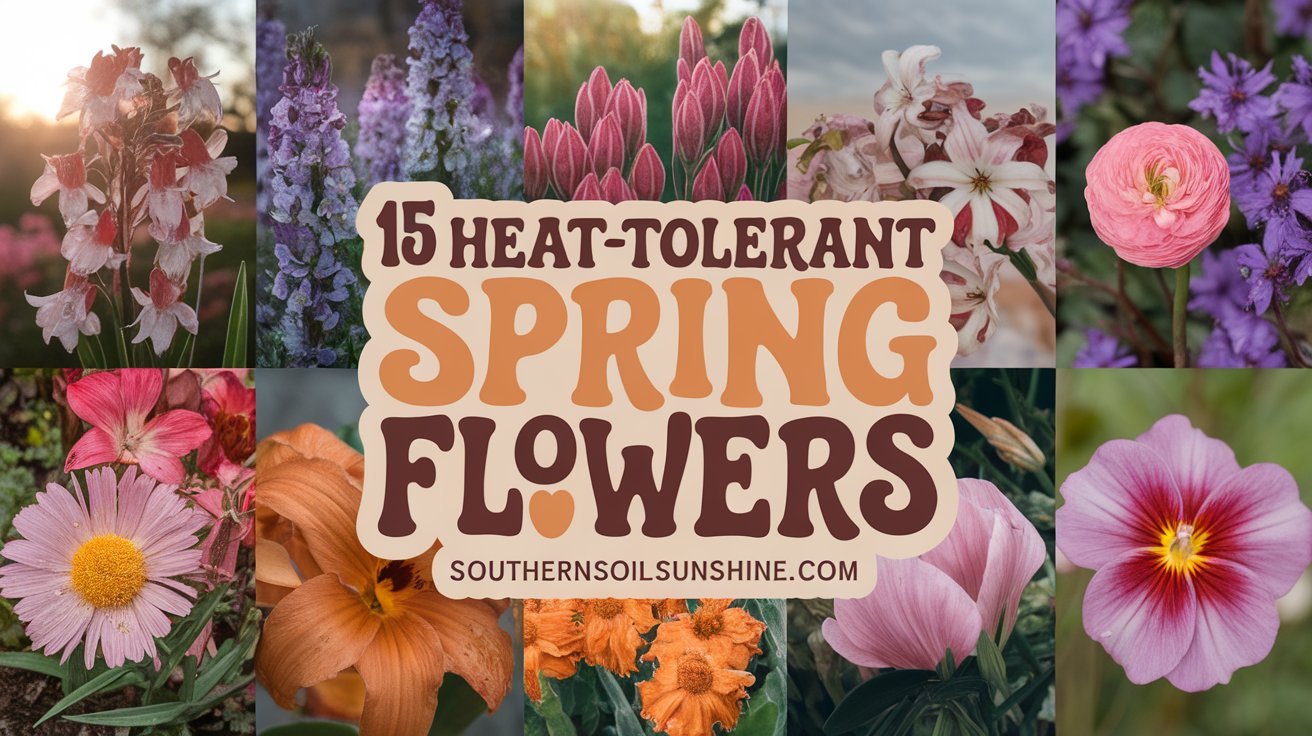
15 Stunning Heat-Tolerant Spring Flowers for Zone 9 That Thrive All Summer
If you garden in Zone 9—especially here in the Houston suburbs—you know how quickly spring can turn into something fierce. One week you’re planting in soft, hopeful soil with morning temperatures in the 60s. The next week, we’re already creeping toward 85°F by mid-May, and that June heat is breathing down our necks like it’s got somewhere to be. 🌞
It’s easy to respond with urgency when you garden here. To rush out and fill every space before the heat “wins.” To grab whatever is blooming at the garden center without thinking past Memorial Day. To try to get ahead of what’s coming.
But warm-climate gardening rarely rewards rushing. It rewards attention.
The most successful summer gardens aren’t the ones planted fastest—they’re the ones planted with awareness. With a quiet understanding of what can actually endure, not just what looks beautiful for a moment in May. When you learn to work with our Zone 9 conditions instead of against them, something shifts in how you garden altogether.
Sanda’s Garden Wisdom: In a long, hot season like ours, the real question isn’t just “What will grow?” It’s “What will last—and how am I learning to work faithfully with the conditions I’ve been given?” That shift in perspective changes everything about how you approach summer color.
When you choose heat-tolerant flowers for your spring garden, you’re doing more than planning for color. You’re practicing a different kind of gardening—one shaped by timing instead of urgency, and by partnership with the land instead of control. And over time, that shift changes how you approach growth itself.
If you’re ready to build a garden that doesn’t just survive our brutal Houston summer—but settles into it with grace—these 15 heat-tolerant spring flowers are a beautiful place to begin. 🌺
Free eBook
Rooted in Grace
A Christian guide to intuitive gardening — the whole book, free. Tell me where to send it and it’s yours in a minute.
Quick Reference: Zone 9 Heat-Tolerant Spring Flowers
| Flower | Best Feature | Zone 9 Timing | Great For |
| Desert Marigold | Drought tolerance | Plant early spring | Dry beds, low-water gardens |
| Lantana | Long bloom season | March-October | Pollinator beds, containers |
| Mexican Sunflower | Height & bold color | May-frost | Back borders, butterfly gardens |
| Salvia | Pollinator magnet | Spring through fall | Cottage gardens, mixed beds |
| Zonal Geraniums | Easy container color | Spring-early summer | Patios, porches, pots |
| Coreopsis | Cheerful, long-lasting | April-July | Borders, naturalistic plantings |
| Bougainvillea | Dramatic color & vigor | May-October | Trellises, walls, focal points |
| Zinnias | Fast color, easy care | Late April onward | Cutting gardens, sunny beds |
| Gaillardia | Tough & drought-hardy | May-frost | Borders, wildflower beds |
| Verbena | Long blooming, trailing | April-September | Walls, baskets, edging |
| Blanket Flower | Bright color & resilience | May-October | Hot, dry areas |
| Portulaca | Succulent, heat-loving | May-frost | Rock gardens, ground cover |
| Tropical Hibiscus | Dramatic tropical look | May-October | Statement beds, warm patios |
| Heat-Wave Petunias | Continuous color | April-September | Hanging baskets, borders |
| Sweet Alyssum | Soft filler & edging | Spring-early summer | Paths, borders, pollinator spaces |
Understanding the Zone 9 Spring-to-Summer Shift
Before we dive into specific flowers, let me share what I’ve learned gardening here in the Houston suburbs. Our Zone 9 spring is a bit of a tease. We get these glorious weeks in March and April when the soil is warm enough for planting, the humidity hasn’t yet become oppressive, and everything grows like it’s got somewhere to be. 🌱
Then May arrives, and everything changes. Temperatures climb into the 85-90°F range. The intense afternoon sun—especially that western exposure—starts cooking even the most vigorous plants. By June, we’re regularly hitting 95°F+, and our humidity climbs to levels that feel like you’re gardening underwater.
The flowers that make it through this transition are the ones that have deep roots (literal and metaphorical), that understand how to conserve water, and that can handle both the heat and the humidity without sulking or succumbing to powdery mildew.
Sanda’s Zone 9 Note: If you plant tender spring flowers (like cool-season snapdragons or delicate pansies) without a plan for succession planting, you’ll watch them fade by mid-June. That’s not failure—it’s just Zone 9 reality. Instead of fighting it, choose flowers bred for heat tolerance or plan your garden in waves.
Desert Marigold: Quiet, Cheerful Resilience
When it comes to heat-tolerant flowers for Zone 9, Desert Marigold is genuinely underrated. Its bright golden-yellow blooms bring a cheerful, almost unexpected pop of color—especially in dry or sunny spaces where other flowers may fade fast.
These flowers are especially helpful if you want a low-maintenance garden that still feels vibrant and alive. Once established, they need very little supplemental water, which makes them a strong choice for gardeners trying to balance beauty with stewardship of our water resources. They bloom from spring into summer, and they’re practically immune to pests.
Plant them in early spring (March in our area) in well-draining soil. They prefer lean conditions—rich soil actually makes them grow leggy and less floriferous. I think of Desert Marigold as a flower that teaches contentment. It doesn’t need coddling. It just needs sun, good drainage, and the space to be itself.
Lantana: The Pollinator’s Dream (and Yours)
If you want one flower that will absolutely perform in a Houston summer, plant Lantana. This is one of the easiest ways to bring long-lasting color into a Zone 9 garden, and butterflies and hummingbirds will treat your garden like their favorite restaurant. 🦋
Lantana blooms continuously from late spring right through the
Reading the Heat: When Your Spring Flowers Need to Shift Into Summer Mode
One of the most important things I’ve learned gardening here is that heat-tolerant doesn’t mean the same thing as *heat-indifferent*. Many of these beautiful spring bloomers—Coreopsis, Gaillardia, Salvia—will absolutely keep flowering through our brutal summers, but they often need a little support during that critical May-to-June transition. This is when the afternoon sun goes from pleasant to punishing, and humidity starts affecting how plants transpire water.
What I’ve found helpful is watching for a subtle shift in how the plant looks. When Coreopsis or Gaillardia start to look a bit tired by late May—flowers slightly smaller, maybe fewer blooms—that’s not a sign they’re failing. That’s them telling you they’re adjusting. A deep watering in early morning, a light layer of mulch to keep soil temperature stable, and sometimes even a little afternoon shade cloth during the absolute peak heat can help them settle in more gracefully.
The flowers that seem to panic least during this transition are the ones with naturally succulent or fuzzy foliage—Lantana, Portulaca, and Gaillardia have that built-in protection. But even tender-looking bloomers like Heat-Wave Petunias can surprise you if you give them consistent moisture and a little breathing room from the most intense western exposure. In our Zone 9 climate, the key isn’t choosing flowers that ignore heat—it’s choosing ones that can *adapt* to it, and then giving them the conditions to make that adaptation smoothly.
Watering Wisdom: How Heat-Tolerant Flowers Drink Differently Than Spring Bloomers
Here’s something that catches many Houston gardeners off guard: heat-tolerant flowers often need *different* watering than the cool-season flowers they replace. When you’re planting in March and April, soil moisture feels one way. But as temperatures climb and humidity shifts, that same flower’s water needs can change dramatically.
Take Lantana as an example. In early spring, after planting, it needs regular water to establish roots—maybe every two to three days if we’re not getting natural rainfall. But by mid-June, when it’s 95°F and the humidity is thick enough to cut with a knife, that same Lantana might actually prefer deeper, less frequent watering. Frequent shallow watering in peak heat encourages fungi and makes the plant work harder to regulate its own moisture. A deeper soak less often teaches the roots to go deeper, making the plant more resilient long-term.
Portulaca and Gaillardia almost seem to thrive on neglect—they genuinely prefer drier conditions and will actually bloom *more profusely* if you let the soil dry out between waterings. Zinnias and Petunias, on the other hand, want consistent moisture but excellent drainage. The difference matters enormously in July and August.
| Flower Type | Spring Watering (March-April) | Peak Heat Watering (July-August) | Soil Preference |
| Lantana, Gaillardia, Desert Marigold | Regular until established | Drought-tolerant; deep watering weekly or less | Well-draining; lean soil preferred |
| Zinnias, Heat-Wave Petunias, Verbena | Consistent moisture; don’t let dry out | Consistent deep watering 2-3 times weekly | Well-draining but moisture-retentive |
| Portulaca, Tropical Hibiscus (established) | Regular until roots develop | Let soil dry between waterings; deep occasional soak | Sandy, very well-draining |
| Salvia, Coreopsis, Blanket Flower | Moderate; consistent but not soggy | Moderate to deep; adapt to drier patterns | Good drainage; medium fertility |
The practical thing I’ve learned is to observe, not just water on a schedule. Stick your finger two inches into the soil in early morning. For drought-lovers like Portulaca, you want it nearly dry. For Zinnias, you want it cool and slightly moist. For Lantana, somewhere in between. Once you learn to read what your soil is actually telling you—not just what a calendar says—your heat-tolerant flowers settle into their groove much faster.
Deadheading, Pruning, and Letting Go: Summer Maintenance That Keeps Heat-Lovers Blooming
One of the kindest things you can do for heat-tolerant flowers as the season intensifies is to learn when to trim them back and when to let them rest. This feels counterintuitive—we want continuous bloom, so we deadhead frantically, right? But in peak Houston heat, sometimes less intervention is actually more generous to the plant.
Lantana, for instance, blooms so prolifically that by mid-July, it can actually benefit from a fairly aggressive deadheading—not just pinching off individual spent flowers, but cutting back entire stems by a third. This encourages fresh growth and new blooms, and it helps air circulate through the plant, reducing humidity-related fungal issues. Zinnias respond beautifully to this too. A trim every three to four weeks keeps them compact and floriferous rather than tall and scraggly.
But here’s where it gets more nuanced: Gaillardia and Coreopsis, once they hit their stride in the heat, often do better with *less* deadheading. They’re efficient bloomers, and constant pruning can actually stress them during peak heat. Sometimes the kindest thing is to let them flower, set seed naturally, and just enjoy what they give.
Portulaca almost never needs deadheading—it blooms so continuously and
Reading the Heat: When Your Spring Flowers Need to Shift Into Summer Mode
One of the most important things I’ve learned gardening here is that heat-tolerant doesn’t mean the same thing as heat-indifferent. Many of these beautiful spring bloomers—Coreopsis, Gaillardia, Salvia—will absolutely keep flowering through our brutal summers, but they often need a little support during that critical May-to-June transition. This is when the afternoon sun goes from pleasant to punishing, and humidity starts affecting how plants transpire water.
What I’ve found helpful is watching for a subtle shift in how the plant looks. When Coreopsis or Gaillardia start to look a bit tired by late May—flowers slightly smaller, maybe fewer blooms—that’s not a sign they’re failing. That’s them telling you they’re adjusting. A deep watering in early morning, a light layer of mulch to keep soil temperature stable, and sometimes even a little afternoon shade cloth during the absolute peak heat can help them settle in more gracefully.
The flowers that seem to panic least during this transition are the ones with naturally succulent or fuzzy foliage—Lantana, Portulaca, and Gaillardia have that built-in protection. But even tender-looking bloomers like Heat-Wave Petunias can surprise you if you give them consistent moisture and a little breathing room from the most intense western exposure. In our Zone 9 climate, the key isn’t choosing flowers that ignore heat—it’s choosing ones that can adapt to it, and then giving them the conditions to make that adaptation smoothly.
Watering Wisdom: How Heat-Tolerant Flowers Drink Differently Than Spring Bloomers
Here’s something that catches many Houston gardeners off guard: heat-tolerant flowers often need different watering than the cool-season flowers they replace. When you’re planting in March and April, soil moisture feels one way. But as temperatures climb and humidity shifts, that same flower’s water needs can change dramatically.
Take Lantana as an example. In early spring, after planting, it needs regular water to establish roots—maybe every two to three days if we’re not getting natural rainfall. But by mid-June, when it’s 95°F and the humidity is thick enough to cut with a knife, that same Lantana might actually prefer deeper, less frequent watering. Frequent shallow watering in peak heat encourages fungi and makes the plant work harder to regulate its own moisture. A deeper soak less often teaches the roots to go deeper, making the plant more resilient long-term.
Portulaca and Gaillardia almost seem to thrive on neglect—they genuinely prefer drier conditions and will actually bloom more profusely if you let the soil dry out between waterings. Zinnias and Petunias, on the other hand, want consistent moisture but excellent drainage. The difference matters enormously in July and August.
| Flower Type | Spring Watering (March-April) | Peak Heat Watering (July-August) | Soil Preference |
Ready to Go Deeper in the Garden?
If this article resonated with you, you might be ready for something more than tips.
- Download the FREE Rooted in Grace eBook
- Get the Rooted in Grace Print Book on Amazon
- Join Rooted Reset
- Follow on Instagram – @southernsoils
- Save on Pinterest – @southernsoilsunshine
- Join on Facebook – Southern Soil Sunshine
“The garden is not just a place to grow plants – it is a place to grow yourself.”
Free eBook
Before you go — the book is yours
Rooted in Grace: A Christian Guide to Intuitive Gardening. No cost, no catch. Read it on any device, at whatever pace the season allows.