How to Grow Lettuce in Suburban Zone 9: A Complete Guide
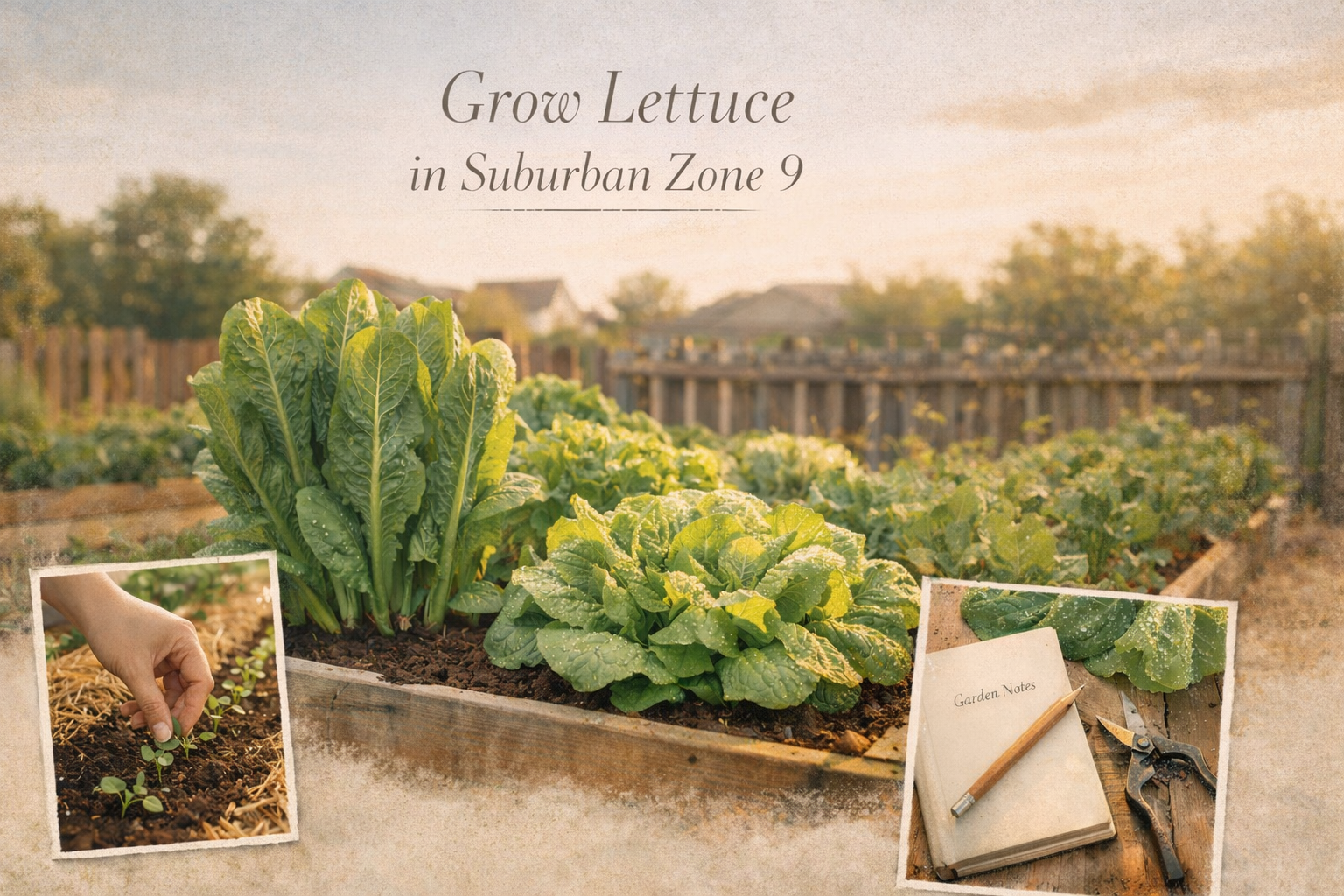
How to Grow Lettuce in Suburban Zone 9: A Complete Guide 🥬
There’s something deeply satisfying about growing your own lettuce—especially here in Zone 9, where our mild winters create a gardener’s gift. I’ve learned over the years that lettuce isn’t just one of the easiest crops to grow; it’s also one of the most spiritually rewarding. There’s something about nurturing tender greens from tiny seeds and watching them transform into a harvest you can eat just hours after picking that connects us back to the rhythms of the earth and seasons.
In our suburban Houston gardens, lettuce thrives in ways it might struggle elsewhere. While northern gardeners wait for spring, we’re harvesting crisp, buttery heads throughout our mild winters. Whether you’re planting in a raised bed tucked beside your porch, filling containers on a sunny corner of your patio, or weaving lettuce into your edible landscape, this cool-season crop is forgiving, fast-growing, and endlessly versatile.
The beauty of lettuce in Zone 9 is that it asks so little while giving so much. It doesn’t demand perfect soil, won’t exhaust your water supply, and rewards even a beginner gardener with results worth celebrating. Let’s walk through everything you need to know to grow lettuce successfully in your suburban yard. 🌱
Free eBook
Rooted in Grace
A Christian guide to intuitive gardening — the whole book, free. Tell me where to send it and it’s yours in a minute.
Understanding Lettuce in Zone 9
Before we dig into the how-to, let’s talk about the why and when. Our Zone 9 climate is actually ideal for lettuce—but timing is everything. Unlike gardeners in cooler zones who plant in spring, we plant in fall and winter, then again in early spring. This is where observing our local rhythms becomes crucial. Pay attention to when your first frost date arrives (typically mid-December here in the Houston area), and let that guide your planting schedule. Reflection is key: what worked last year? Did your lettuce bolt in March? Did slugs find your seedlings? These gentle lessons help you respond faithfully to what your garden teaches you.
| Characteristic | Details |
| Plant Name | Lactuca sativa |
| Type | Cool-season annual |
| Best for Zone 9 | Raised beds, containers, edible borders |
| Light Requirements | Full sun to partial shade (afternoon shade is fine in spring) |
| Soil Requirements | Well-draining, rich in organic matter, pH 6.0–7.0 |
| Best Companion Plants | Carrots, onions, radishes, spinach, calendula |
| Avoid Planting Near | Brassicas (cabbage, broccoli, kale) which attract similar pests |
The Best Lettuce Varieties for Our Houston Gardens
Not all lettuce is created equal, especially when you’re gardening in Zone 9. Over the years, I’ve discovered which varieties absolutely thrive in our climate and which ones can be finicky. Here’s what I reach for:
Loose-leaf varieties like ‘Buttercrunch,’ ‘Oak Leaf,’ and ‘Red Sails’ are my go-to choices. They’re forgiving, mature quickly (30–40 days), and you can begin harvesting outer leaves while the plant keeps producing. ‘Buttercrunch’ is particularly reliable here—it tolerates both cool snaps and the occasional warm spell without bolting too quickly.
Romaine types like ‘Parris Island’ and ‘Winter Density’ offer that satisfying crunch we all crave in a salad. They take a bit longer (55–70 days) but reward patience with substantial heads that store beautifully in the fridge.
Butterhead varieties such as ‘Bibb’ and ‘Tom Thumb’ give you those silky, tender hearts that feel like a luxury in your own garden. They’re slightly more heat-sensitive than other types, so plant them earlier in fall or later in winter to avoid spring bolting.
Sanda’s Zone 9 Note: Try ‘Winter Density’ if you want a single, reliable variety that does it all. It’s a semi-head type that’s perfect for containers, germinates in cool soil, and handles our occasional Texas cold snaps without complaint. I plant it in succession every two weeks from October through February for nearly constant harvests.
Timing Your Plantings: The Lettuce Calendar
This is where Zone 9 gardening gets truly special. While other regions are bound by spring and summer, we have not one but two prime lettuce seasons, with potential for even a third mini-season if we’re attentive.
Fall/Winter Crop (September–November planting): This is our main event. Begin sowing seeds in late September or early October, which gives you harvests from November through February. The cool nights and shorter days are lettuce paradise. Seeds germinate beautifully in that cooling soil, and plants grow steadily without the stress of heat.
Early Spring Crop (January–February planting): As February approaches, we can squeeze in another planting for a spring harvest. The key is timing it so lettuce matures before our heat truly arrives in April. By early March, you’ll be harvesting before temperatures climb beyond lettuce’s comfort zone.
Late Winter Planting (late February–early March): Some years, if winter has been particularly mild, you might try a very late sowing—but this is where observation matters most. Watch your weather patterns. If March has already brought warm days, skip this timing and wait until fall.
Preparing Your Soil and Space
Lettuce is forgiving about many things, but soil quality really matters if you want tender, flavorful leaves. Spend a little time here, and your plants will thank you with vigor and taste.
Whether you’re using a raised bed, containers, or in-ground garden space, work in 2–3 inches of finished compost before planting. This is where our Texas clay can work against us, so don’t skip this step. Good organic matter helps clay drain better while still holding moisture—exactly what lettuce wants. Aim for a pH between 6.0 and 7.0; if you’re uncertain, a simple soil test from your local extension office (Texas A&M is excellent) takes the guesswork out.
For containers, I use a quality potting mix blended with compost. Shallow pots work beautifully for loose-leaf varieties—even a 4–6 inch deep container will work—while head lettuce appreciates something closer to 8 inches deep. Make sure whatever container you choose has drainage holes; lettuce hates soggy feet.
Warning: Don’t reuse potting soil from summer containers without refreshing it. Old potting mix compacts, drains poorly, and may harbor disease spores. Mix in 30–50% fresh compost or potting medium before replanting. Your lettuce seedlings will be vulnerable to damping off and root rot if the soil isn’t fresh and airy.
Direct Sowing Seeds: The Right Way
Lettuce seeds are tiny—almost dust-like—which is part of their charm and part of the challenge. Here’s how to sow them faithfully so they germinate and grow strong.
Prepare a fine seedbed: Rake your soil smooth and break up any clumps. Lettuce seeds need good contact with soil to germinate, so a fine, crumbly texture matters.
Sow at the right depth: This is critical and worth paying attention to. Lettuce seeds germinate in light, so only press them gently into the soil surface or cover with a thin layer—no more than 1/8 inch of soil. If you bury them deeper, they’ll struggle to push through. I often place seeds on moist soil, press gently, and leave them just slightly exposed, especially in containers where I can monitor moisture easily.
Water gently: Use a fine mist or water can with a rose attachment so you don’t wash seeds away. Keep the soil consistently moist (not waterlogged) until germination, which typically occurs within 7–14 days in cool fall and winter conditions.
Thin seedlings promptly: This step feels wasteful but is essential. Once seedlings have their first true leaves, thin them ruthlessly. Loose-leaf varieties need 4–6 inches between plants; romaine and butterhead types need 8–12 inches. Crowded seedlings compete for light and moisture, leading to weak, disease-prone plants. I snip extras with scissors at soil level rather than pulling, which prevents root damage to surrounding plants.
Sanda’s Tip: Save those thinned seedlings! They’re already at the perfect size for a first harvest. Toss them into a salad—they’re tender, nutritious, and it feels like getting something for nothing. Waste not, want not, as my grandmother always said.
Watering: Finding the Sweet Spot
Lettuce’s water needs are consistent but modest. Unlike tomatoes or peppers that love deep soaking, lettuce prefers steady, gentle moisture. Think of it like nurturing someone through a difficult season—consistent presence matters more than grand gestures.
In our Zone 9 winters, you’re typically watering 2–3 times per week, depending on rainfall and whether plants are in containers or ground. Container lettuce dries faster, so check the top inch of soil daily once plants are established. If it feels dry to the touch, water. In-ground plants need less frequent watering but benefit from deeper soaking to encourage root growth.
A 1–2 inch layer of mulch around plants (keeping it pulled back from the stem) helps regulate soil moisture and keeps foliage clean. I use shredded leaves or straw in fall—both are abundant in our area and break down beautifully by spring.
Water quality matters too: If you’re watering from a rain barrel or well, that’s ideal. If you’re using municipal water high in chlorine, let it sit in a bucket for an hour before using, or water in the evening so chlorine can dissipate. Lettuce is sensitive to chemical stress, and this small courtesy goes a long way.
Feeding Your Lettuce
Here’s the beautiful truth: lettuce is a light feeder. If your soil has good organic matter worked in before planting, your lettuce will likely thrive without any additional fertilizer. I know this because I’ve learned it the hard way—over-fed lettuce bolts faster and tastes bitter.
That said, if your soil is lean or you’re growing in containers, a light feeding every 3–
Managing Heat Stress in Late-Season Plantings
One of the trickiest aspects of Zone 9 lettuce gardening isn’t cold—it’s the unpredictable warm spells that can arrive even in winter. We’ve all experienced those February days when temperatures spike into the 70s, sending our plants into confusion. Lettuce responds to both day length and temperature, and when either changes suddenly, bolting can accelerate dramatically.
If you notice flower stalks forming prematurely, it’s often a signal that your lettuce is stressed by warmth or perceiving longer days as spring’s arrival. Rather than fighting this natural impulse, work with it. Plan your late-winter and early-spring plantings for varieties specifically bred for bolt resistance. ‘Winter Density,’ ‘Magenta Red,’ and ‘Jericho’ are bred to hold longer before flowering, even when temperatures fluctuate.
Afternoon shade becomes your ally in March and April. If you’re planting lettuce in late February, consider positioning it where it receives morning sun but is shaded after 2 p.m. East-facing beds are ideal. Even a few hours of afternoon protection can extend your harvest window by 1–2 weeks and improve tenderness, since lettuce grown in full sun during warm periods tends to develop a slightly bitter edge.
Water becomes especially critical during warm snaps. Inconsistent moisture stresses plants and triggers bolting as a survival mechanism. During those surprise warm weeks, water deeply and check soil moisture daily. Some gardeners in our area have found success with shade cloth (30–50% density) draped over late plantings to moderate temperature swings without completely blocking light.
Pest and Disease Watch in Our Humid Climate
Houston’s humidity is wonderful for many things, but it does create conditions where lettuce can struggle with fungal diseases and certain pests. Unlike our northern counterparts who might battle primarily with rabbits and deer, we’re more likely to encounter slugs, snails, and fungal leaf spots—especially in January and February when conditions are cool and damp.
Slugs and snails are relentless here, and they absolutely adore tender lettuce seedlings. I’ve learned to accept that some protection is necessary rather than treating it as a failure. A barrier of diatomaceous earth (food-grade, reapplied after rain) around seedlings works beautifully. Copper tape around container rims stops slugs effectively. Beer traps—shallow containers of beer sunk into soil—attract and drown slugs; it sounds quirky, but it genuinely works.
For fungal issues like powdery mildew or leaf spot, prevention is far easier than treatment. Ensure good air circulation by spacing plants properly and not overhead-watering in late afternoon. If you do see early signs of fungal disease, remove affected leaves immediately and thin remaining foliage to improve airflow. A sulfur spray (organic-approved) applied early can prevent spread, but honestly, most Houston gardeners find that simply removing diseased leaves and improving air circulation solves the problem.
The grasshoppers that emerge in warm spells can make quick work of young lettuce, but they’re usually not a major issue during peak season (November–February). If you do notice irregular holes in leaves during warmer stretches, row cover fabric draped loosely over plants keeps them out without trapping heat underneath.
Succession Planting for Continuous Harvest
One of the great joys of growing lettuce in Zone 9 is the possibility of harvesting something fresh nearly every week from October through March. Rather than planting everything at once and facing a glut followed by nothing, succession planting creates rhythm and abundance without overwhelming you.
The concept is simple: instead of one large planting, sow a small section of seed every two weeks. A 4-by-8 foot bed might have six small sections, each planted two weeks apart. As the oldest section reaches maturity and you’re harvesting from it, the next section is just becoming established, and the newest section is germinating. This staggered approach means you’re never without fresh lettuce, yet you’re never drowning in it either.
For loose-leaf varieties that you harvest continuously by picking outer leaves, succession planting feels almost meditative. For head lettuce, which is cut all at once, succession planting means planning ahead—if your family eats one head of lettuce every 10 days, plant accordingly. Keep simple notes in a garden journal: “Planted Bibb on October 15, harvested November 25” gives you the timeline for future years.
This practice of watching, noting, and
Ready to Go Deeper in the Garden?
If this article resonated with you, you might be ready for something more than tips.
- Download the FREE Rooted in Grace eBook
- Get the Rooted in Grace Print Book on Amazon
- Join Rooted Reset
- Follow on Instagram – @southernsoils
- Save on Pinterest – @southernsoilsunshine
- Join on Facebook – Southern Soil Sunshine
“The garden is not just a place to grow plants – it is a place to grow yourself.”
Free eBook
Before you go — the book is yours
Rooted in Grace: A Christian Guide to Intuitive Gardening. No cost, no catch. Read it on any device, at whatever pace the season allows.



2 Comments