
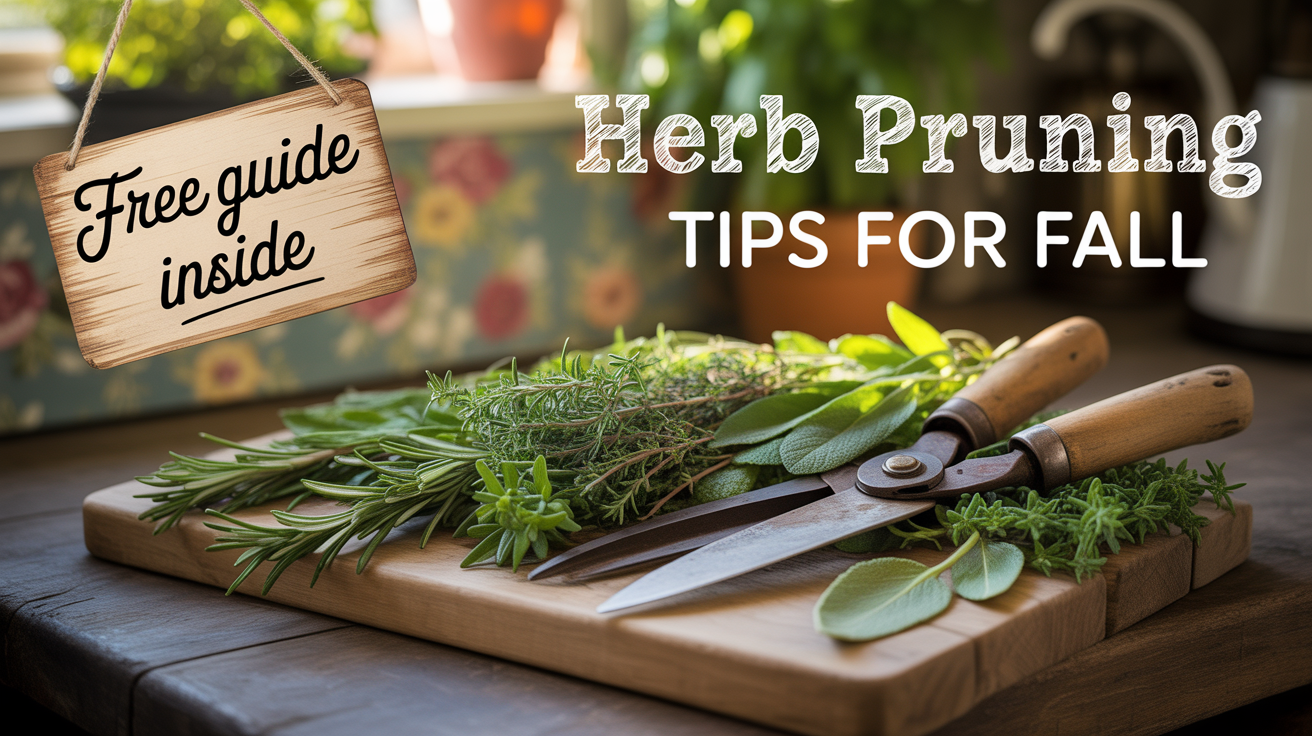
Herb Pruning Tips for Fall
Some of the links on this website are affiliate links, which means that if you make a purchase through these links, I may earn a small commission at no additional cost to you. As an Amazon Associate, I earn from qualifying purchases. I only recommend products I genuinely trust and believe will bring value to my readers. Also, some of the content was created with strategic use of AI tools. For more information, please visit the Privacy Policy page. Thank you for supporting my blog and helping me continue to provide valuable content. Gardening is more than growing food—it's where God grows us. If you're hungry for a faith that feels grounded again, I wrote a book for you. Download my free eBook: Rooted in Grace: A Christian Guide to Intuitive Gardening
🌿 A Gentle Start: The Gift of Pruning
There’s something deeply satisfying about walking into the herb bed on a crisp fall morning, shears in hand, and snipping away what no longer needs to stay. It feels both practical and symbolic.
Pruning in fall is not about taking from the plant—it’s about giving. We give it shape, breathing room, and the chance to rest well so it can rise strong again next season.
Spiritually, pruning reminds us of the gentle, purposeful work of God in our lives. “Every branch that does bear fruit He prunes, that it may bear more fruit” (John 15:2). Cutting back doesn’t mean cutting off—it means preparing for abundance.
🌱 Why Prune Herbs in Fall?
Pruning herbs before winter sets in gives both plant and gardener long-term benefits:
- Encourages Healthy Regrowth – Prevents woody stems and legginess in perennials.
- Extends Harvests – Keeps herbs producing later into the season.
- Prepares for Dormancy – Shapes plants for winter rest, reducing stress.
- Reduces Disease Pressure – Removes damaged or diseased stems that harbor pests.
- Supports Flavor & Vigor – Ensures tender, flavorful growth next spring.
💡 Think of fall pruning as a gift to your future self—you’ll step into spring with herbs that are already poised for growth.
📋 Step-by-Step: How to Prune Herbs in Fall
1. Gather Your Tools
Pruning is more efficient (and enjoyable) with the right setup:
- Clean, sharp pruning shears or scissors (dull blades tear instead of cut).
- Gloves for prickly herbs like rosemary or oregano.
- Basket or jar for cuttings you’ll dry, freeze, or preserve.
- Mulch or straw ready to protect freshly pruned plants.
2. Learn Herb-Specific Approaches
Not all herbs are pruned the same way. Here’s how to handle each type:
🌿 Tender Annual Herbs
- Basil, Dill, Cilantro: These herbs won’t survive frost. Harvest them fully before your first freeze. Dry leaves, make herb salts, or freeze pesto cubes to savor them all winter.
- Parsley: A biennial that will overwinter in many zones. Trim leaves regularly but leave enough growth to support root reserves for spring regrowth.
🌿 Woody Perennial Herbs
- Rosemary, Thyme, Sage, Oregano: Lightly prune in fall to remove dead stems and shape plants. Avoid cutting into old, woody stems—they won’t regrow. Focus on green, flexible growth.
- Lavender: Remove faded blooms and shape gently, but don’t prune hard in fall (wait until spring to avoid winter damage).
🌿 Semi-Perennial & Herbaceous Perennials
- Mint & Lemon Balm: Cut back by two-thirds before frost. These spread aggressively, so pruning keeps them in check. Mulch crowns for winter protection.
- Chives: Cut down to 2 inches above the soil after frost and mulch. They’ll return strong in spring.
- Tarragon: After frost kills foliage, cut stems to ground level and mulch deeply.
3. Follow the One-Third Rule
Never prune more than one-third of the plant’s growth at one time. This golden rule prevents stress and ensures the plant still has enough energy to thrive.
👉 If you’ve ever gotten overzealous with pruning basil and watched the plant droop, you know why this rule matters!
4. Prune at the Right Time
- Early to Mid-Fall – Best for shaping woody herbs and harvesting tender ones.
- Before First Frost – Essential for tender annuals like basil and cilantro.
- After Frost Hits – Cut back herbaceous perennials (like chives) once they naturally die back.
5. Mulch & Protect
Pruning exposes crowns and root systems. Protect herbs with a blanket of mulch, straw, or pine needles. In colder zones, add row covers or cloches over rosemary, sage, or thyme.
6. Preserve the Harvest
Don’t waste those fragrant cuttings!
- Drying: Tie bundles of oregano, thyme, and sage; hang upside down in a cool, dry place.
- Freezing: Chop parsley or chives, pack into ice cube trays with olive oil or water.
- Infusing: Use rosemary or sage sprigs in vinegars, oils, or honey for winter flavor.
This step turns a simple pruning chore into an extended blessing for your kitchen.
🗺 Zone-Specific Fall Herb Pruning Tips
Zones 9–10 (Warm Climates)
- Herbs often grow year-round—focus on shaping, not heavy cutting.
- Basil may last longer but will eventually bolt; harvest fully before cool nights set in.
Zones 7–8 (Mild Winters)
- Lightly prune woody herbs, mulch perennials, and harvest tender herbs before frost.
- Lavender benefits from a gentle trim to keep it compact over winter.
Zones 5–6 (Colder Winters)
- Cut back mint, lemon balm, and chives to ground level after frost.
- Mulch heavily; consider bringing rosemary indoors to overwinter in pots.
Zones 3–4 (Harsh Winters)
- Dig and pot tender herbs like rosemary or thyme to overwinter inside.
- Protect outdoor perennials with thick mulch and, if possible, snow cover.
🌿 Spiritual Lessons from Pruning
Pruning teaches us about letting go:
- Cutting back is not destruction—it’s preparation.
- Removing dead or diseased growth protects the whole plant—just as releasing unhealthy habits protects our souls.
- Shaping now creates space for flourishing later.
The herb bed whispers a truth we often resist: sometimes the best way to love something is to cut it back.
🧪 Common Mistakes to Avoid
- Cutting woody herbs back too hard (they may not recover).
- Forgetting to mulch after pruning (leaves crowns vulnerable).
- Harvesting everything at once and leaving plants bare.
- Waiting too long—frost can damage herbs before you harvest them.
📝 Journal Prompt
Where is God inviting me to prune back in my life? What am I holding onto that may need to be cut away—not as a loss, but as preparation for fruitfulness in the next season?
✨ Grace Note
Pruning herbs is an act of trust. You cut back, believing in the promise of future growth. In your life, God may be pruning too—not to harm you, but to prepare you.
“By this my Father is glorified, that you bear much fruit and so prove to be my disciples.” – John 15:8
🪴 Final Thoughts
Fall herb pruning is both a practical gift and a spiritual metaphor. It blesses your plants, preserves your harvest, and teaches you to trust rhythms of release.
Next spring, when tender green shoots push up again, you’ll remember: what looked like loss was really the foundation for flourishing.
🌿 Related Garden Wisdom
- Harvesting Herbs: How and When
- When to Pick Basil for Maximum Flavor
- How to Freeze Basil Without Losing Flavor
📄 Printable Resource
Download the Fall Herb Pruning Guide — with a herb-by-herb pruning chart, zone tips, and a reflection page.
🎙️Listen to the Podcast!
Tune into The Rooted In Grace Podcast for faith-filled garden encouragement.
📘Rooted in Grace: The eBook
Feeling scattered or unsure about what to plant, when, or how to keep it all alive?
Grab Rooted in Grace—your soulful companion for gardening through every season.
This eBook will walk you through the rhythms of intuitive gardening, spiritual reflection, and simple seasonal wins.
💌Want More Grace in Your Inbox?
Sign up here to start growing with grace! Next?
- Early access to podcast episodes & products
- Weekly encouragement
- Exclusive download Monthly garden to-do lists