
Compost Tea at Fruit Set: Feeding Peppers and Tomatoes for a Strong Harvest
Feeding for the Fruit to Come 🌶️
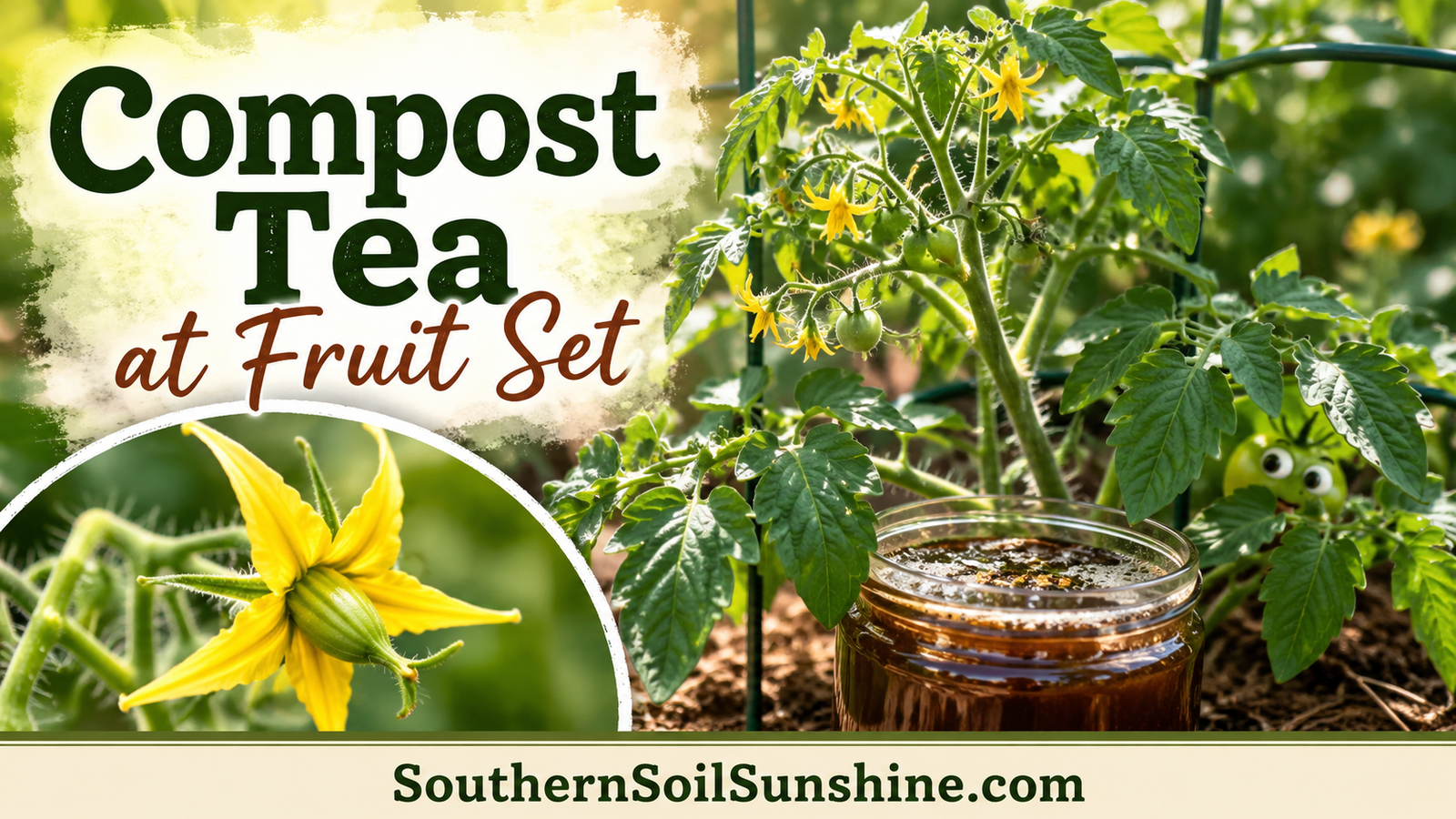
By mid-April in Zone 9, your peppers and tomatoes have settled into the garden, grown strong, and are beginning the most important transition of their season: from making leaves to making fruit. Little flowers are opening, and behind each pollinated blossom, the first tiny fruits are starting to form. This is the moment the whole season has been building toward, and it is exactly when a gentle, steady feeding pays its greatest dividends. A drink of compost tea now — as the plants set fruit — pours quiet strength into the plant right when it needs the resources to size up a heavy, healthy harvest.
This day’s task is to feed your peppers and tomatoes with compost tea, and it carries a phrase I love: pour quiet strength into what you hope will fruit. Let me show you how to feed these plants well at fruit set, and why this gentle, hopeful feeding is such a fitting picture of investing in what we hope will bear fruit.
Free eBook
Rooted in Grace
A Christian guide to intuitive gardening — the whole book, free. Tell me where to send it and it’s yours in a minute.
Why Fruit Set Is the Feeding That Matters Most
A tomato or pepper plant works in phases. First it builds itself — roots, stems, leaves — the green machinery it needs to power everything else. Then it shifts to reproduction, flowering and setting fruit. That shift is demanding. Producing and swelling fruit takes real energy and nutrition, and a plant that runs short at this stage will drop its blossoms, set fewer fruits, or grow small, poor-quality ones. Feeding at fruit set gives the plant the steady resources it needs to hold its blossoms, set a good number of fruits, and size them up well.
But there is a crucial nuance: at fruit set, the plant no longer wants a lot of nitrogen. Heavy nitrogen now pushes the plant back toward leafy growth — big green jungles with few fruits. What it wants instead is balanced, steady nutrition leaning toward phosphorus and potassium, the nutrients that support flowering and fruit. This is exactly where compost tea shines: it feeds gently and in balance, supporting fruit without over-pushing leaves, and it is nearly impossible to overdo.
How to Feed at Fruit Set
The application is simple and gentle. Here is the rhythm.
| Step | What to Do |
|---|---|
| Brew | Steep compost or worm castings in water 24–48 hrs |
| Dilute | Strain and thin to weak-tea color |
| Water first | Moisten dry soil with plain water |
| Feed | Pour at the base, into the root zone |
| Repeat | Every 2 weeks through fruiting |
Feed your peppers and tomatoes with diluted compost tea every couple of weeks now that they are flowering and setting fruit. Pour it at the base in the morning, onto already-damp soil so it spreads evenly through the root zone. If your plants are heavy feeders wanting a bit more support, you can supplement with an organic fertilizer formulated for tomatoes or a “bloom” feed lower in nitrogen and higher in phosphorus and potassium. But the steady, gentle compost tea remains your dependable staple — quiet strength poured in, week after week, to fuel the harvest forming on the vine.
Support the Whole Fruiting Plant
Feeding is one part of a larger care at this stage. As fruit forms, the plants grow heavy, so make sure your tomato cages and stakes are secure and tie up sprawling branches before a fruit-laden limb snaps. Keep the mulch refreshed to hold even moisture. And remember that peppers and tomatoes need pollination to fruit — they are mostly self-pollinating, but a gentle daytime breeze or a light shake of the plant helps move pollen and set more fruit, especially in still air or under any cover.
Pour Quiet Strength Into What You Hope Will Fruit
This day’s phrase has stayed with me: pour quiet strength into what you hope will fruit. There is something deeply moving about feeding a plant at fruit set. The fruit is not there yet — only the flowers and the first tiny beginnings, the promise of a harvest still forming. And into that promise you pour a gentle, steady strength: not a dramatic push, but a quiet, faithful nourishing of the plant at exactly the moment it is trying to bear fruit. You are strengthening it for the very thing you hope it will do.
This is how fruitfulness is supported everywhere, not just in the garden. The things we hope will bear fruit — a child growing, a calling taking shape, a relationship deepening, a young faith maturing — are strengthened not by grand, forceful interventions but by quiet strength poured in steadily, right at the tender, in-between stage when the fruit is only a promise. It is gentle, unglamorous, faithful work: the regular feeding, the steady support, the quiet nourishment offered in hope, before there is any harvest to show for it. And it is exactly that patient, quiet strengthening that makes the fruit possible. So as you pour compost tea around your flowering plants today, feeding what has not yet fruited, let it ask you gently: what are you hoping will bear fruit? And are you pouring quiet strength into it — steadily, faithfully, in hope — at this very stage, before the harvest can be seen? Feed what you hope will fruit. The quiet strength you pour in now is what the harvest will be made of.
Share your fruiting peppers and tomatoes with us on Instagram @southernsoils — there is real hope in feeding a plant toward the harvest it is just beginning to form.
A Feeding Timeline Through Fruiting
Fruit set is one stage in a longer arc, and feeding the right way at each phase is what carries peppers and tomatoes to a heavy harvest.
| Stage | Feeding Focus |
|---|---|
| Establishing | Gentle compost tea; build roots |
| Vigorous growth | Balanced feeding for a strong plant |
| Flowering & fruit set (now) | Ease off nitrogen; steady compost tea |
| Heavy fruiting | Keep feeding gentle; water deeply and evenly |
Notice that the feeding never turns heavy — it simply shifts emphasis, easing away from the leaf-pushing nitrogen as the plant turns to fruit. Compost tea makes this easy because it feeds in balance, and its gentleness is a feature, not a limitation, at this delicate stage. Keep the every-two-week rhythm going right through the fruiting stretch, pair it with deep and even watering, and your plants will hold their blossoms, set generously, and size up a harvest worth all the tending.
Reading a Fruiting Plant
Let the plants guide your hand. A pepper or tomato at fruit set that is deep green, steadily growing, holding its flowers, and forming small fruits is well fed and content — keep to your gentle rhythm and do not fuss. Yellowing lower leaves and slowed growth suggest it could use a little more nourishment, easily met with compost tea or a measured bloom feed. But a huge, dark, leafy plant dropping its blossoms and setting little fruit is telling you it has had too much nitrogen and too little of everything else — ease off, favor phosphorus and potassium, and let it rebalance toward fruit. Learning to read a fruiting plant this way — feeding what it actually asks for rather than what a schedule dictates — is the difference between a gardener who follows rules and one who tends relationships. Watch the plant, and it will show you exactly what it needs.
The Faithful Feeding That Makes a Harvest
There is nothing dramatic about pouring a watering can of diluted compost tea around your plants every couple of weeks. It will never look like the impressive part of gardening. But this quiet, faithful feeding at fruit set is precisely what stands between a plant covered in flowers and a plant covered in fruit. The harvest you will gather this summer — the baskets of peppers, the tomatoes warm off the vine — is being fed into existence right now, in these gentle, unremarkable, hopeful feedings. So pour the quiet strength in faithfully. Feed steadily, water deeply, support the heavy branches, and trust that the harvest is forming out of exactly this patient, hopeful care. What you pour into your plants now, in hope, is what you will hold in your hands, in abundance, before the summer is through.
Keep a Brew Ready Through the Season
Because you will feed your fruiting plants every couple of weeks for many weeks to come, it is worth keeping a compost tea brew going as a steady habit through the whole fruiting season. A bucket steeping in a shady corner, refreshed regularly, means you always have gentle feed on hand for the peppers, tomatoes, and everything else that wants it. Once brewing is routine, feeding stops being a task you schedule and becomes something you simply do — dip the can, pass down the rows, pour the quiet strength in. That easy rhythm, kept up faithfully from fruit set through the last harvest, is exactly how the most abundant tomato and pepper patches are grown: not with one heroic feeding, but with steady, gentle nourishment offered again and again to plants you are hoping, and helping, to fruit. Keep the brew going, keep the feeding light and regular, and let your steady care carry your plants all the way to a generous harvest.
Pour the quiet strength in today, keep the gentle rhythm through the weeks of fruiting ahead, and let this faithful feeding become the harvest you are hoping for.
Ready to Go Deeper in the Garden?
If this article resonated with you, you might be ready for something more than tips.
- Download the FREE Rooted in Grace eBook
- Join Rooted Reset
- Follow on Instagram – @southernsoils
“The garden is not just a place to grow plants – it is a place to grow yourself.”
Free eBook
Before you go — the book is yours
Rooted in Grace: A Christian Guide to Intuitive Gardening. No cost, no catch. Read it on any device, at whatever pace the season allows.