Top 5 Ways to Control Weeds Effectively and Organically

Some of the links on this website are affiliate links, which means that if you make a purchase through these links, I may earn a small commission at no additional cost to you. As an Amazon Associate, I earn from qualifying purchases. I only recommend products I genuinely trust and believe will bring value to my readers. Also, some of the content was created with strategic use of AI tools. For more information, please visit the Privacy Policy page. Thank you for supporting my blog and helping me continue to provide valuable content. Gardening is more than growing food—it's where God grows us. If you're hungry for a faith that feels grounded again, I wrote a book for you. Download my free eBook: Rooted in Grace: A Christian Guide to Intuitive Gardening
Weeds have a way of showing up uninvited.
They don’t ask permission. They don’t check the calendar. They simply rise — fast, persistent, and often right where you were hoping something beautiful would grow.
If you garden in Zone 9, you already know this truth: weeds don’t take winter off. Our mild temperatures mean growth continues almost year-round. And if we aren’t attentive, a small patch can turn into an overwhelming tangle before spring even begins.
But here’s the gentle shift I want to offer you today:
Weed control isn’t about domination.
It’s about stewardship.
When we approach weeds with calm observation instead of frustration, something changes. We begin to listen. We begin to notice patterns. And we respond with intention instead of panic.
Let’s walk through five effective, organic, Zone 9–specific strategies that actually work — and work with your soil, not against it.
📌 Save This Guide for Later
🌿 Why Organic Weed Control Matters in Zone 9
In warmer climates like ours, weeds germinate quickly — especially after rain and during mild winters. If we rely on chemical shortcuts, we damage the soil life that keeps our gardens resilient.
Healthy soil is living soil. And if you’ve read my Ultimate Guide to Fall Soil Preparation, you already know how much I value microbial balance.
Organic weed control protects:
• Earthworms
• Beneficial fungi
• Pollinators
• Your vegetable crops
• And your long-term soil fertility
But beyond that, it protects your pace.
Because quick chemical fixes often create long-term problems.
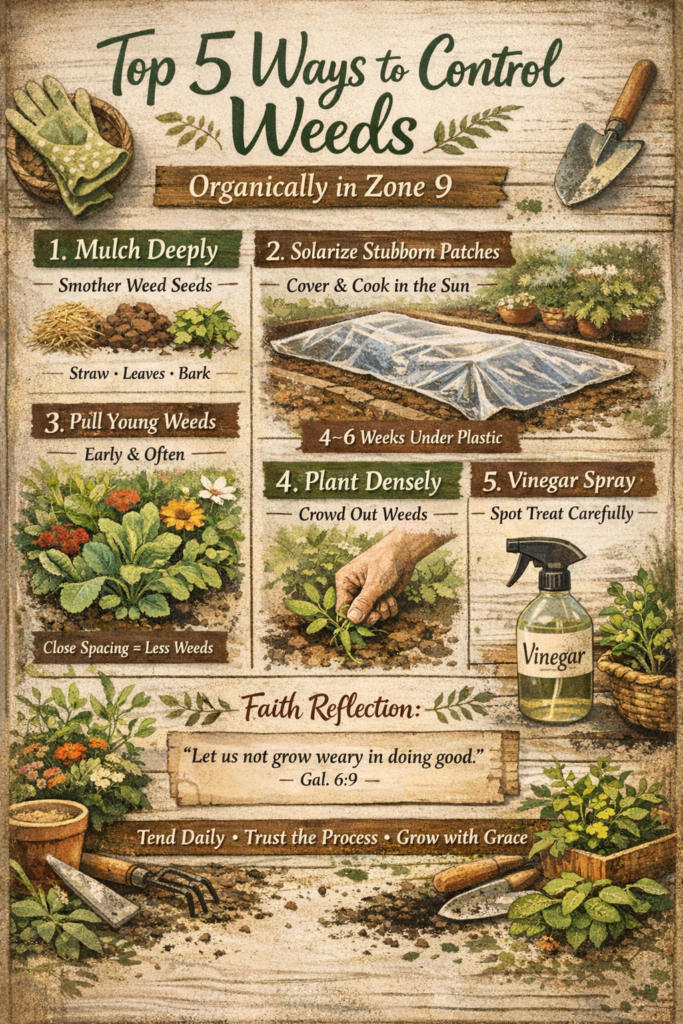
1🌾 1. Mulch Deeply and Intentionally
Mulch is not just decorative. It is defensive.
In Zone 9, I recommend 2–4 inches of mulch around vegetable beds. Anything thinner allows sunlight to reach weed seeds, which means germination.
Best Mulch Types for Zone 9
| Type | Best For | Notes |
|---|---|---|
| Straw | Vegetable beds | Light, easy to move |
| Shredded leaves | Winter beds | Builds soil slowly |
| Pine bark | Permanent beds | Long-lasting |
| Wood chips | Pathways | Weed suppression champion |
Mulch does three things at once:
• Blocks sunlight
• Regulates soil temperature
• Retains moisture (critical for our heat)
If you struggle with dry summer soil, you’ll also want to read The Ultimate Guide to Mulching.
Gentle Reminder
If weeds are pushing through mulch, it may simply need refreshing. This isn’t failure — it’s feedback.
🌞 2. Solarization for Stubborn Patches
If you have a bed that’s completely overtaken, solarization can reset it.
How It Works
- Clear existing weeds.
- Water the soil deeply.
- Cover tightly with clear plastic.
- Secure edges.
- Leave in place 4–6 weeks during hot weather.
In Zone 9, our intense summer heat makes this highly effective. Soil temperatures can rise high enough to kill weed seeds near the surface.
This method works beautifully before fall planting. If you’re planning your year strategically, my Year-Long Gardening Calendar can help you time this well.
✂️ 3. Hand-Pull Early (Before Seeds Set)
This is the simplest method — and the most powerful if done consistently.
Pull weeds when:
• Soil is moist
• Plants are young
• Roots are shallow
Morning tending sessions are ideal. Ten quiet minutes can prevent hours of future work.
And here’s something important for Zone 9 gardeners: many winter weeds go to seed early. If you wait until March, you’re often too late.
DO:
• Remove entire root
• Dispose of seeded weeds off-site
• Compost only young, non-seeded weeds
DON’T:
• Let weeds flower “just this once”
• Leave roots behind in warm soil
A small weekly rhythm changes everything.
🌱 4. Plant Densely to Crowd Out Competition
Nature abhors bare soil.
Open soil invites weeds. Dense planting shades them out.
For example:
• Lettuce planted closely reduces winter weeds
• Sweet potatoes smother summer invaders
• Herbs like oregano create living mulch
If you’re unsure what grows well in our region, explore 10 Easiest Vegetables to Grow in Zone 9.
Strategic spacing reduces weed pressure naturally.
🌾 5. Vinegar Spot Treatment (Use Carefully)
Household vinegar (5% acetic acid) can kill young weeds — but it’s non-selective. It will damage any plant it touches.
Best used:
• On pathway cracks
• Between pavers
• In gravel areas
Not recommended in active vegetable beds.
Spray on a dry, sunny day for best results.
Remember: vinegar kills top growth, not always deep roots. Repeat treatments may be needed.
🌻 Common Weed Problems in Zone 9
Problem: Weeds return immediately after rain
Why: Warm soil + moisture = germination
Fix: Refresh mulch quickly after storms
Problem: Bermuda grass invading beds
Why: Aggressive spreading roots
Fix: Deep edging + barrier + regular removal
Problem: Nut sedge (“nut grass”)
Why: Underground tubers
Fix: Remove entire plant carefully — solarization works well
Problem: Overwhelm
Why: Waiting too long
Fix: 10-minute daily reset. One small section at a time.
“It’s okay — every gardener has days like this.”
🌦 Seasonal Notes for Zone 9
Spring: Pull winter weeds before they seed.
Summer: Solarize empty beds. Mulch heavily.
Fall: Clear summer grasses before planting greens.
Winter: Stay vigilant — growth slows but doesn’t stop.
For a month-by-month rhythm, see the 15-Minute-a-Day Garden Calendar.
🤍 Faith Reflection: What Weeds Teach Us
“Let us not become weary in doing good, for at the proper time we will reap a harvest if we do not give up.” — Galatians 6:9
Weeds grow fast. Fruit grows slowly.
And sometimes the garden reminds us that vigilance isn’t about fear — it’s about faithfulness.
Small daily tending keeps small problems small.
In life and in soil.
📓 Journal Prompts
• Where have I been avoiding small tasks that will grow larger later?
• What “weeds” in my life simply need steady attention instead of shame?
• How can I create a 10-minute tending rhythm this week?
✨ Free Printable Coming Soon
I’m creating a helpful PDF printable that will pair perfectly with this guide—something simple, beautiful, and practical for your garden and your heart.
Check back soon for the download button right here.
🌿 Related Garden Reading
• Ultimate Guide to Fall Soil Preparation
• 10 Easiest Vegetables to Grow in Zone 9
• The Ultimate Guide to Mulching
• Grow Your Dream Garden in Just 15 Minutes a Day
🎙 Grow Deeper With Me
If this stirred something in you, the Rooted in Grace podcast is waiting.
You can also explore the Rooted in Grace eBook here:
Join us on:
Instagram: https://www.instagram.com/southernsoils/
Pinterest: https://www.pinterest.com/southernsoilsunshine/
YouTube: https://www.youtube.com/@SouthernSoils
Let’s root deeper together.
🌿 Final Thoughts
Weed control is never finished.
It’s a rhythm.
A practice of noticing.
A discipline of small, faithful steps.
A reminder that tending matters.
May your soil stay covered.
May your roots grow strong.
And may you never feel alone in the slow work of stewardship.
Stay rooted, and grow with grace.