Feeding Young Tomato and Pepper Seedlings: How Much Is Just Enough
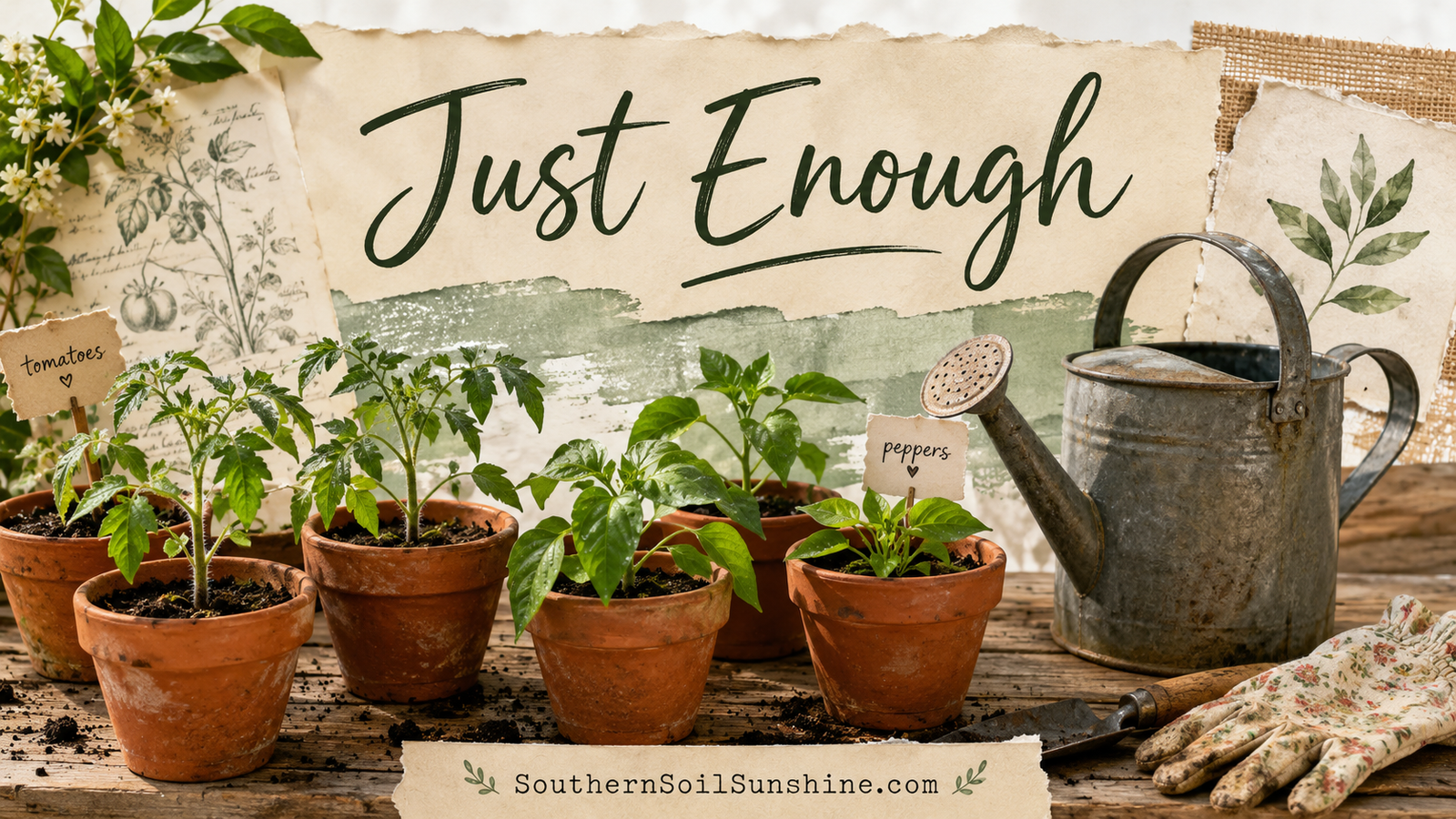
The Season of Just Enough 🌱
By early February in Zone 9, if you started your tomatoes and peppers indoors back in January, you are looking at trays of little green seedlings that have outgrown their baby leaves and are starting to look like real plants. This is the tender, in-between stage — too old to live on the energy stored in the seed, too young to handle a big meal. And this is exactly where a lot of well-meaning gardeners accidentally set their plants back, not by neglecting them, but by feeding them too much.
Feeding seedlings is one of those garden tasks where gentle and steady beats generous and eager every single time. Let me walk you through how much is truly enough, and why holding back a little is one of the kindest things you can do for a young plant.
Free eBook
Rooted in Grace
A Christian guide to intuitive gardening — the whole book, free. Tell me where to send it and it’s yours in a minute.
Why Seedlings Need So Little
A tomato or pepper seedling is building its foundation right now — mostly roots and a sturdy stem. It is not yet trying to grow fruit, and it does not have the leaf mass to use a lot of nutrients. When you feed a small seedling a full-strength dose of fertilizer, the extra nitrogen pushes it to grow fast and soft: tall, leggy, weak-stemmed plants that flop over and struggle when it is time to transplant. Worse, concentrated fertilizer salts can actually burn those fine, hair-thin seedling roots.
What a young seedling needs is a whisper of nutrition — just enough to keep it green and growing while it does the slow, unglamorous work of building a strong root system underground. Everything you want from these plants in July — the heavy trusses of tomatoes, the glossy peppers — depends on the roots they are quietly building right now.
The Quarter-Strength Rule
The simplest guideline I can give you is this: mix your organic liquid fertilizer to about one-quarter of the strength the label recommends for mature plants, and feed lightly every one to two weeks. That is it. Quarter strength, spaced out. You truly cannot go wrong staying on the gentle side.
| Seedling Age | Feeding | Strength | Signs You’re On Track |
|---|---|---|---|
| Just after first true leaves | First light feeding | ¼ strength | Leaves stay medium green |
| Every 1–2 weeks after | Light feeding | ¼ strength | Steady, compact growth |
| 1 week before transplant | Skip / water only | — | Plant “hardens” slightly |
Good organic choices for this gentle stage include a diluted fish-and-seaweed emulsion, worm-casting tea, or a balanced liquid organic fertilizer. All of them feed slowly and forgivingly, which is exactly what you want around fragile roots. Fish emulsion has a smell, so if your seedlings live indoors, seaweed or worm tea may keep the peace with your household.
Reading Your Seedlings Like a Page
Your plants will tell you what they need if you learn to read them. Pale, yellowing lower leaves usually mean they are ready for a little food. Deep blue-green leaves with downward-curling tips can mean you have fed too much. Steady medium-green growth with strong, stocky stems means you have found the sweet spot — keep doing exactly what you are doing.
This is one of the quiet skills that makes a gardener, and it only comes from paying attention. You are not following a rigid schedule so much as staying in conversation with the plant in front of you. The label gives you a starting point; the seedling gives you the truth.
The Light That Matters Most
One honest word before you reach for the fertilizer: most leggy, struggling seedlings are not hungry — they are starved for light. No amount of feeding will fix a seedling stretching desperately toward a dim window. If your plants are pale and reaching, give them more light before you give them more food. A sunny south window helps, but a simple shop light hung a few inches above the trays does even better. Feeding is the small finishing touch on top of good light, warmth, and steady moisture — not a substitute for them.
A Small Dose of Nourishment for You, Too
There is a reason this day’s task pairs feeding your seedlings with feeding yourself. Both are lessons in enough. We so often believe that if a little is good, more must be better — more effort, more output, more pouring ourselves out. But young things, including young dreams and tired people, do not grow strong on floods. They grow strong on steady, appropriate, faithful nourishment, given at the right size for where they are right now.
So as you mix that quarter-strength feeding and pass gently down your trays, ask what a small dose of nourishment would look like for you today. Not a grand overhaul. Just enough. A glass of water, a few quiet minutes, one kind thing. The same gentleness you are giving these seedlings is the gentleness you are allowed to receive.
Come share your seed-starting trays with us on Instagram @southernsoils — there is nothing quite like watching a windowsill full of tiny plants become a summer’s worth of tomatoes.
Choosing the Right Organic Fertilizer for Seedlings
Walk down the garden aisle and the choices can feel overwhelming, but for tender seedlings the good options are actually few and forgiving. Here is how the common organic choices compare at this delicate stage.
| Fertilizer | Best For | Keep in Mind |
|---|---|---|
| Fish & seaweed emulsion | Gentle all-around feeding | Has a strong smell indoors |
| Worm-casting tea | Mild, odorless indoor feeding | You can make it yourself |
| Balanced liquid organic | Convenience & consistency | Still dilute to quarter strength |
| Seaweed / kelp only | Root strength & stress resilience | Low nitrogen — a supplement, not a full feed |
If your seedlings live on an indoor windowsill or under lights, worm tea and seaweed keep the household peace far better than fish emulsion, which announces itself the moment you open the bottle. If they are already out on a sheltered porch, fish and seaweed together make a wonderful gentle food. Whatever you choose, the rule from earlier still holds: quarter strength, onto damp soil, every one to two weeks. The type matters far less than the restraint.
A Simple Feeding Routine You Can Stick To
Consistency beats intensity, so tie your feeding to a rhythm you will actually remember. I feed on the same morning each week — for me it is the quiet start of the week, when I am already checking trays and topping off water. Mix your quarter-strength solution fresh in a watering can, water any dry cells with plain water first, then pass down the trays giving each seedling a small drink of the diluted feed. The whole thing takes five minutes. Then you leave them alone for a week. That is the entire routine, and it is enough.
Resist the urge to feed “a little extra” because a plant looks like it could use a boost. When in doubt, give it light and time before you give it food. Ninety percent of the time, a struggling seedling wants brighter light and a few more days, not another meal.
The Hand-Off: What Changes After Transplant
This gentle, quarter-strength phase is just for the seedling stage. Once your tomatoes and peppers are hardened off and settled into the garden with strong roots and real leaf mass, their appetite grows and you can gradually feed them more — working up toward full-strength feedings as they begin to flower and set fruit. But that is a later chapter. Right now, the whole assignment is restraint: build the roots, keep the growth steady and stocky, and let the plant tell you it is ready for more by putting on strong, healthy new growth. Feeding heavy now does not get you to that fruiting stage faster; it usually gets you there slower, with weaker plants.
Practicing the Gift of Enough
The longer I garden, the more I believe that enough is one of the hardest and most healing lessons the soil has to teach. We live in a world that treats more as the answer to nearly everything — more effort, more input, more hustle, more output. But a tray of seedlings quietly insists otherwise. Give them more than they can use and you weaken them. Give them exactly enough, at the right size for where they are, and they grow strong from the inside out.
Let that sit with you as you feed today. The measured, faithful, appropriately-sized care you are offering these small plants is the same kind of care that grows strong people, strong homes, and strong faith. Not floods. Not frenzy. Just enough, given steadily, trusting the slow work of roots. That is not a lesser way to grow. It may be the only way that truly lasts.
What Healthy Seedlings Actually Look Like
Because feeding is really about reading your plants, it helps to hold a clear picture of the goal. A well-fed, well-grown tomato or pepper seedling is short and stocky rather than tall and thin. Its stem is thick enough to hold the plant upright without leaning. Its leaves are medium green — not pale and yellowing, not dark and clawed. The spacing between leaf sets is tight, giving the plant a compact, bushy look rather than a stretched one. And when you brush your hand across the tops, the seedlings feel firm and springy, not floppy.
If that is what you see, you have done your job, and the quarter-strength rhythm is working. Keep going, unchanged. When people ask me the secret to strong transplants, this is honestly it: bright light, even moisture, gentle food, and the restraint to leave a thriving plant alone. There is no trick that beats simply not overdoing it — in the seed tray, and in most of the good work we are given to tend.
Ready to Go Deeper in the Garden?
If this article resonated with you, you might be ready for something more than tips.
- Download the FREE Rooted in Grace eBook
- Join Rooted Reset
- Follow on Instagram – @southernsoils
“The garden is not just a place to grow plants – it is a place to grow yourself.”
Free eBook
Before you go — the book is yours
Rooted in Grace: A Christian Guide to Intuitive Gardening. No cost, no catch. Read it on any device, at whatever pace the season allows.