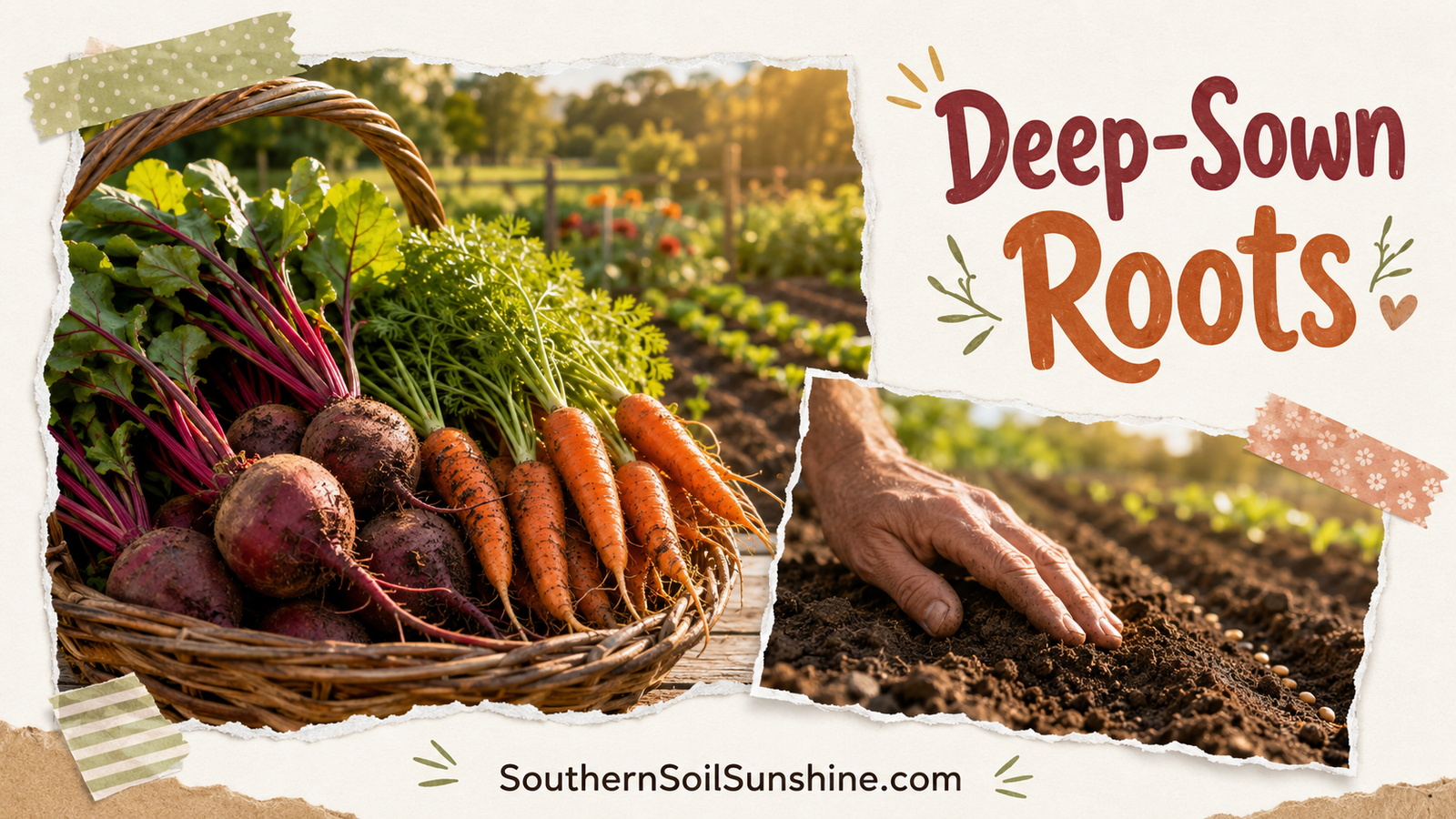
Sowing Deep: Direct-Seeding Carrots and Beets for Sweet Zone 9 Roots
The Crops That Want to Stay Put 🥕
Some crops you fuss over from a windowsill tray. Carrots and beets are not those crops. These are root vegetables that want to be sown right where they will grow — directly into the garden bed, no transplanting, no coddling. And early February is a beautiful time to do it in Zone 9, while our soil is still cool enough to keep these roots sweet and crisp rather than woody and bitter.
Direct sowing is simple, but there are a handful of small things that make the difference between a frustrating row of hairy, forked carrots and a satisfying harvest of long, straight, sweet ones. Let me set you up for the good version.
Free eBook
Rooted in Grace
A Christian guide to intuitive gardening — the whole book, free. Tell me where to send it and it’s yours in a minute.
Start With the Soil, Because Roots Remember Everything
A carrot is a taproot. A beet swells into a round root. Both of them grow down and out into whatever soil you give them — which means the soil is the whole game. If your bed is rocky, compacted, or full of clumps, your carrots will fork, twist, and split trying to get around every obstacle. They are not being difficult; they are recording every hard place they meet.
Before you sow, loosen the top 10 to 12 inches of your bed and break up any clods. Remove rocks, sticks, and last season’s stubborn roots. Avoid adding fresh manure or heavy nitrogen right before planting — too much nitrogen makes carrots grow lush green tops and hairy, misshapen roots. A bed that is loose, smooth, and only moderately rich is exactly what these crops want. If your native soil is heavy Houston clay, this is one crop where a raised bed of loose, sandy-loamy mix truly earns its keep.
How to Sow the Tiny Seed
Carrot and beet seed handling is a little different, so here is a quick reference:
| Crop | Sow Depth | Spacing | Germination (Feb) | Days to Harvest |
|---|---|---|---|---|
| Carrots | ¼ inch | Sprinkle, thin later | 14–21 (keep moist!) | 65–75 |
| Beets | ½ inch | 1 inch apart | 7–14 | 50–60 |
One quirk worth knowing: each wrinkly beet “seed” is actually a little cluster that sprouts several seedlings, so beets almost always need thinning later. Carrot seed is dust-fine — mix it with a pinch of dry sand to help you scatter it evenly, and resist burying it deep. These seeds need to be near the surface.
The single most common reason carrots fail is that the soil surface dries out during their long germination. Carrots can take up to three weeks to sprout, and if that top quarter-inch crusts over and dries even once, many seeds simply will not make it.
Caring for the Row After Sprouting
Once your seedlings are up, the work gets easier but not done. Thin carrots to about two inches apart and beets to three or four, so each root has room to size up — and remember that thinned beet greens are delicious in a salad, so nothing is wasted. Keep the bed evenly watered so roots swell steadily; feast-and-famine watering is what causes carrots to split. A light mulch between the rows once plants are established helps hold that even moisture and keeps our warm spells from stressing the crop.
The Patience These Roots Ask of You
Here is the honest truth about carrots and beets: you will not see much for a while. You will water a bare strip of soil for two or three weeks with nothing to show for it, wondering if anything is happening at all. And that is the lesson these crops came to teach.
Everything real is happening underground, out of sight. The root is reaching down, establishing itself, building the sweetness you will taste in April — and none of it shows on the surface yet. If you have ever been in a season where you are doing the quiet work faithfully and there is simply nothing visible to point to, you already understand carrots.
So sow your rows, water them gently, and let the patience grow alongside the roots. Some of the sweetest things we grow — in the garden and in our lives — are the ones that make us wait in the dark a while first, trusting that unseen does not mean nothing is happening.
Show us your February root rows on Instagram @southernsoils. We love cheering each other through the long germination wait.
Best Varieties for Zone 9 Beds
Variety choice matters more than beginners expect, especially with carrots. If your soil is at all heavy or shallow, the long, elegant grocery-store types will fight you — but shorter, blunt-rooted varieties thrive almost anywhere. Reach for Nantes, Danvers, or the stubby little Chantenay and Paris Market types, which practically shrug off imperfect soil. For beets, Detroit Dark Red is the dependable classic, Chioggia gives you those beautiful candy-stripe interiors, and Golden beets are milder and never bleed on the cutting board.
| Crop | Easy Zone 9 Varieties | Why They Work |
|---|---|---|
| Carrots | Nantes, Danvers, Chantenay | Shorter roots forgive heavier soil |
| Beets | Detroit Dark Red, Chioggia, Golden | Reliable, quick, and heat-aware |
Starting with a variety suited to your conditions removes half the struggle before you ever open the seed packet. It is the quietest kind of wisdom — choosing well at the beginning so the whole season goes easier.
Watering for Sweet, Unsplit Roots
Once your roots are up and growing, the goal is steady moisture. Carrots and beets that ride a roller coaster of drought-then-flood will crack and split, because the root swells suddenly when water finally arrives. Aim to keep the soil consistently, evenly damp — deep waterings on a regular rhythm rather than frequent shallow sips. A one- to two-inch layer of light mulch between the rows, added once seedlings are established, does wonderful work here: it steadies the moisture, keeps our warm afternoons from baking the surface, and holds down the weeds that would otherwise compete with your slow-starting roots.
Knowing When to Harvest
Beets are ready when the roots are roughly the size of a golf ball to a tennis ball — you will often see the shoulder swelling at the soil line, which makes them easy to check without pulling. Larger is not better here; oversized beets turn woody and lose their sweetness. Carrots are ready when they have colored up and reach a usable size; the honest truth is you cannot fully know until you pull one, so pull a test carrot and taste it. If it is sweet and crisp, start harvesting. Both crops actually improve with a touch of cool weather, which nudges them to convert starches to sugars — another reason our cool-season window is the sweet spot for growing them.
The Long, Hidden Work of Roots
I keep coming back to what these crops teach about the unseen. A carrot spends the great majority of its life invisible — a bare strip of soil, then a modest tuft of ferny green, while the whole real story unfolds beneath the surface where no one can admire it. There is no daily evidence, no showy bloom, no way to prove to a passerby that anything worthwhile is happening. And then one April afternoon you loosen the soil, take hold of that unassuming green top, and draw up something long and orange and sweet that was being built the entire time.
If you are in a season of hidden work — tending something faithfully with nothing yet to show for it — let the carrot be your companion. Unseen is not the same as unproductive. The roots are going down. The sweetness is forming. Keep watering the bare soil, keep the faith, and trust the quiet, downward, invisible growth that always comes before the harvest you can finally hold.
Common Root-Crop Problems and Easy Fixes
Most carrot and beet troubles trace back to just a few causes, and every one of them is preventable once you know what you are looking at.
| Problem | Likely Cause | Fix Next Time |
|---|---|---|
| Forked, twisted carrots | Rocky or compacted soil | Loosen deeper; use shorter varieties |
| Hairy roots, lush tops | Too much nitrogen | Skip fresh manure before sowing |
| Split roots | Uneven watering | Water steadily; mulch to hold moisture |
| Poor germination | Surface dried out | Cover row; keep surface damp |
| Small, crowded roots | Never thinned | Thin early to proper spacing |
Notice how many of these come down to the same two habits: prepare loose, smooth soil before you sow, and keep the moisture even from seed to harvest. Get those two right and root crops become some of the most rewarding, low-drama vegetables in the whole Zone 9 garden — the kind of crop that quietly overdelivers for the small, steady attention you give it.
A Row Worth Sharing
One last encouragement before you head out to sow. Carrots and beets are among the most delightful crops to grow with children or grandchildren, precisely because of the long wait and the buried surprise. There is real wonder in the moment a child pulls up their first carrot — genuinely astonished that something so complete was hiding under a scrap of green the whole time. Let this row be a slow lesson you tend together: that good things take time, that we water in faith before we ever see fruit, and that the earth keeps quiet promises. Sow a few extra feet if you can. A harvest is sweeter when there is enough to share, and the patience these roots require is easier to bear in good company.
Ready to Go Deeper in the Garden?
If this article resonated with you, you might be ready for something more than tips.
- Download the FREE Rooted in Grace eBook
- Join Rooted Reset
- Follow on Instagram – @southernsoils
“The garden is not just a place to grow plants – it is a place to grow yourself.”
Free eBook
Before you go — the book is yours
Rooted in Grace: A Christian Guide to Intuitive Gardening. No cost, no catch. Read it on any device, at whatever pace the season allows.