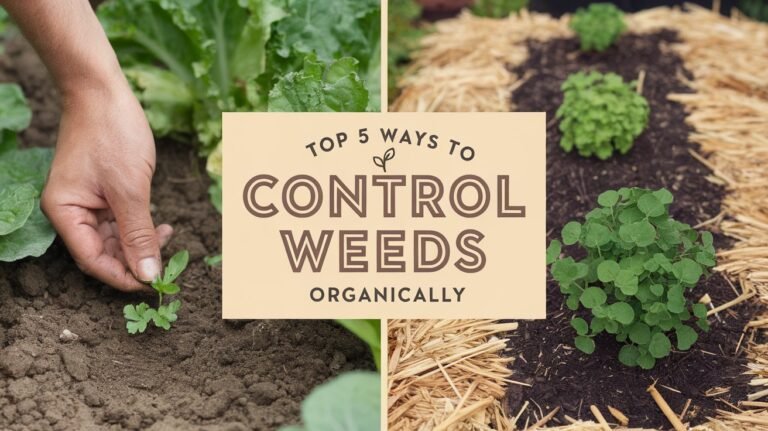
Spring Weeding and Pathway Care: Clearing What Competes for Peace
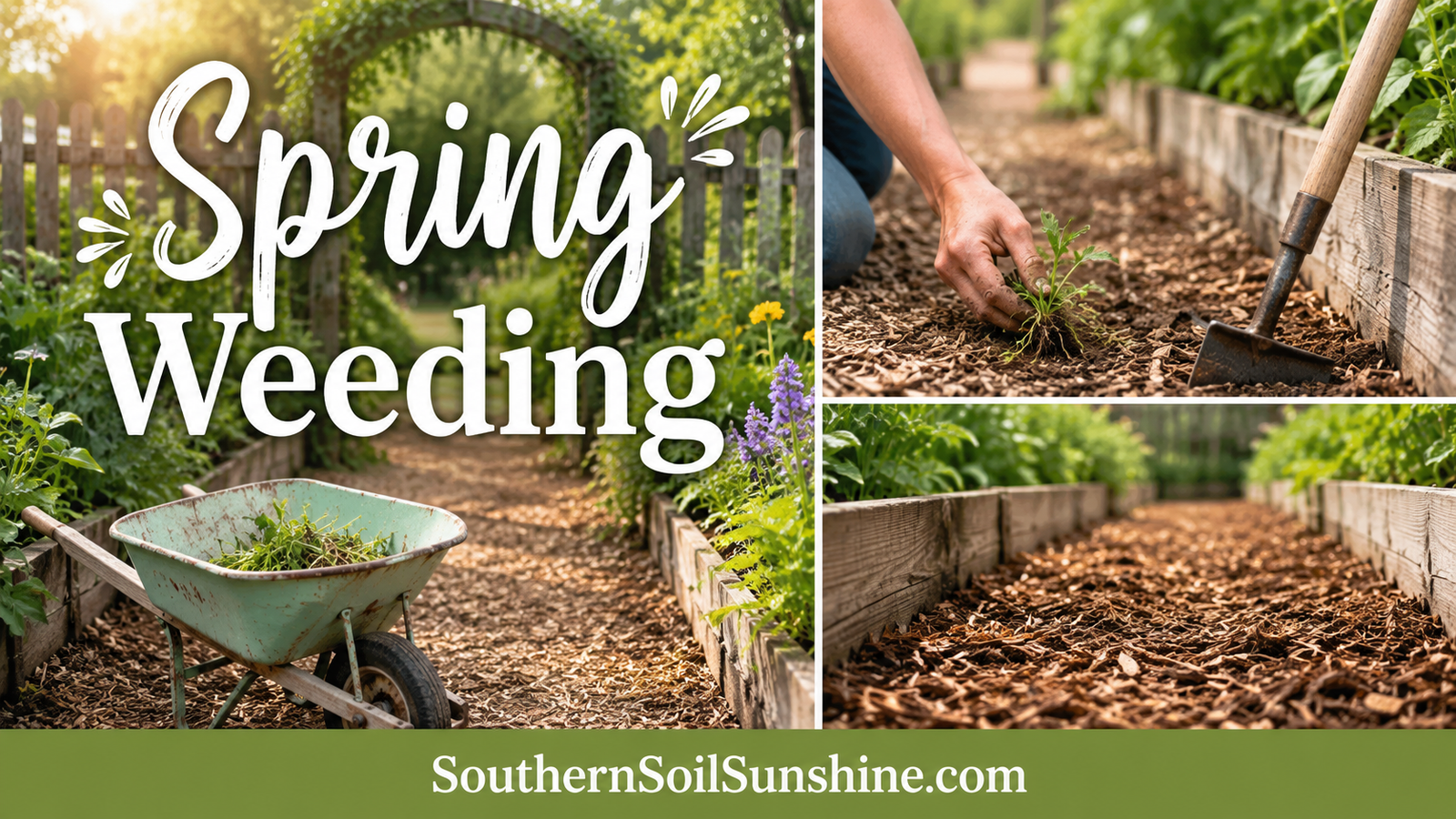
The Quiet Battle of Early Spring 🌿
By mid-March in Zone 9, the same warmth that is waking up your vegetables is waking up something else: weeds. Our mild winter never really stops them, and as spring arrives they surge — sprouting in every open inch of soil, creeping along the edges of your beds, and reaching into the pathways you walk. It is easy to let weeding slide when there are more exciting tasks like planting and harvesting, but a little steady attention now saves you an overwhelming tangle later. Weeds are competitors, quietly stealing water, nutrients, light, and space from the crops you actually want, and the best time to deal with them is always while they are small.
Today’s task pairs weeding the beds with tidying the pathways — caring not just for where things grow but for where you walk. And it carries a gentle theme worth holding onto: clear what competes for your peace. Let me walk you through spring weeding and pathway care done well, and why it is more restful work than it first appears.
Free eBook
Rooted in Grace
A Christian guide to intuitive gardening — the whole book, free. Tell me where to send it and it’s yours in a minute.
Why Weeding Early Matters So Much
There is a world of difference between weeding a bed while the weeds are tiny seedlings and tackling it once they have grown large and gone to seed. Small weeds pull easily, have shallow roots, and have not yet stolen much from your crops. Large weeds are anchored deep, disturb your vegetables’ roots when you finally remove them, and — worst of all — if allowed to flower and set seed, they sow thousands of next season’s weeds right into your soil. The old gardener’s saying holds: one year’s seeding makes seven years’ weeding.
So the goal of spring weeding is to stay ahead. A short, regular pass while weeds are young is far easier and far more effective than an occasional heroic battle against a jungle. Fifteen minutes a week keeps a garden clear; a monthly reckoning with knee-high weeds exhausts you and never quite catches up. Early and steady is the whole secret.
How to Weed Well
Good weeding is more about technique and timing than brute effort. Here are the approaches that work.
| Method | Best For | Tip |
|---|---|---|
| Hand pulling | In and around plants | Weed after rain; roots slip out whole |
| Hoeing | Open ground, pathways | Slice shallowly on a dry morning |
| Mulching | Preventing new weeds | Cover bare soil after clearing |
Weed when the soil is slightly damp — a day after watering or a rain — and the roots slide out whole instead of snapping off to regrow. For open ground and pathways, a hoe used with a shallow slicing motion on a dry, sunny morning severs young weeds at the surface and leaves them to wither in the sun. And always follow weeding with mulching: bare soil is simply an open invitation for the next flush of weeds, while covered soil stays clear. Weed, then cover — that one-two rhythm does more than weeding alone ever will.
Do Not Forget the Pathways
It is easy to focus all your weeding energy on the beds and ignore the paths between them — but neglected pathways are where weed problems are born. Weeds allowed to grow and seed in the paths quickly spread into your beds, undoing all your careful work. Tidying the pathways is not just tidiness; it is prevention. Clear the weeds from your walkways, and consider laying down a thick layer of mulch, wood chips, or even cardboard covered with straw to keep them clear for the season. A well-kept path also simply makes the garden a more peaceful place to be — somewhere you want to walk slowly, not somewhere you push through overgrowth.
Clear What Competes for Your Peace
This day’s task offers a line that has stayed with me: clear what competes for your peace. Weeding is such an apt picture of it. Weeds are rarely dramatic. They do not arrive all at once or announce themselves. They creep in quietly, a few at a time, in the open and untended places, and if left alone they slowly crowd out the good things — stealing the water and light and nutrients meant for the crops you are trying to grow. And the remedy is not a single heroic battle but a steady, gentle practice of noticing and removing them while they are small.
Our peace is competed for the very same way. Not usually by one great crisis, but by the quiet, creeping accumulation of small things — the low-grade worries, the over-commitments, the habits and inputs and distractions that sprout in our untended margins and slowly steal the light and nourishment meant for what matters most. And like weeds, they are far easier to clear while small and regular than to battle once they have taken over. So as you move through your beds and paths today, pulling the small competitors before they can crowd your crops, let it prompt the gentle question: what is quietly competing for your peace? What small thing, cleared now while it is still small, would give the good things in your life more room to grow? Weed the garden today, and tend the quiet ground of your own peace with the same steady, faithful hand.
Share your freshly cleared beds and tidy pathways with us on Instagram @southernsoils — there is a real, quiet satisfaction in a garden made peaceful and clear.
Prevention: The Weeding You Never Have to Do
The most effective weeding is the weeding you prevent entirely, and a few habits do more than any amount of pulling. The first is keeping bare soil covered — nearly every weed needs light to germinate, so a two-to-three-inch mulch layer over open ground stops most weeds before they ever sprout. The second is not letting any weed go to seed, which breaks the cycle that fills your soil with next year’s problem. The third is disturbing the soil as little as possible; every time you dig deeply, you bring buried weed seeds up to the light where they can sprout, so a low-dig approach means fewer weeds over time.
Put those three together — cover the ground, stop the seeds, disturb the soil lightly — and your weeding load shrinks dramatically season after season. A garden managed this way gets easier every year, because the seed bank in the soil slowly empties instead of constantly refilling. This is the quiet reward of steady care: you are not just clearing today’s weeds, you are preventing years of future ones. Prevention is the labor that saves you from labor.
Making a Rhythm of It
The gardeners who stay ahead of weeds are almost never the ones who work hardest in a single burst — they are the ones who work regularly. A short weeding pass woven into your normal garden visits keeps everything manageable. As you walk out to water or harvest, pull the handful of weeds you pass; over a week those handfuls add up to a clear garden, with no dreaded weekend battle required. Keep a hoe or a kneeling pad near the garden door so a quick pass feels effortless rather than like a project you have to schedule.
This little-and-often rhythm is not only more effective, it is far more pleasant. Weeding a jungle is miserable, back-breaking work that makes you resent the whole garden. Pulling a few small weeds on a mild morning, coffee in hand, is genuinely restful — a slow, meditative task that lets you move through your garden and really see it. The difference is entirely in the timing. Stay ahead, and weeding becomes one of the garden’s quiet pleasures instead of one of its burdens.
The Peace of a Tended Garden
When you finish — beds cleared, paths tidied, bare soil covered with fresh mulch — step back and take in the calm of it. A well-tended garden simply feels peaceful. The good plants stand with room to breathe, the walkways invite an unhurried stroll, and the whole space reflects the quiet order you brought to it. That outward peace mirrors an inner one, and it is why weeding, for all that it sounds like drudgery, so often leaves a gardener more settled than when they began. You have cleared what competes, made room for what matters, and set things in order — in the soil, and somehow in yourself as well.
So do this humble work today with a light heart. Pull the small weeds before they grow large, tidy the paths before the problem spreads, cover the ground so it stays clear, and let the steady rhythm of it become a practice you keep all season. Your crops will thrive with the competition removed, your garden will be a more peaceful place to walk, and you will carry the same clearing instinct into the untended corners of your own life — where clearing what competes for your peace is, in the end, one of the most faithful things you can do.
Take the fifteen minutes today. Pull what is small, cover what is bare, and let the clearing be its own gentle reward — in the garden, and in the quieter ground of your own well-tended peace.
Ready to Go Deeper in the Garden?
If this article resonated with you, you might be ready for something more than tips.
- Download the FREE Rooted in Grace eBook
- Join Rooted Reset
- Follow on Instagram – @southernsoils
“The garden is not just a place to grow plants – it is a place to grow yourself.”
Free eBook
Before you go — the book is yours
Rooted in Grace: A Christian Guide to Intuitive Gardening. No cost, no catch. Read it on any device, at whatever pace the season allows.