Winter Mulching in Zone 9: Holding Moisture and Peace in the Cool Months
The Blanket That Does Quiet Work 🍂
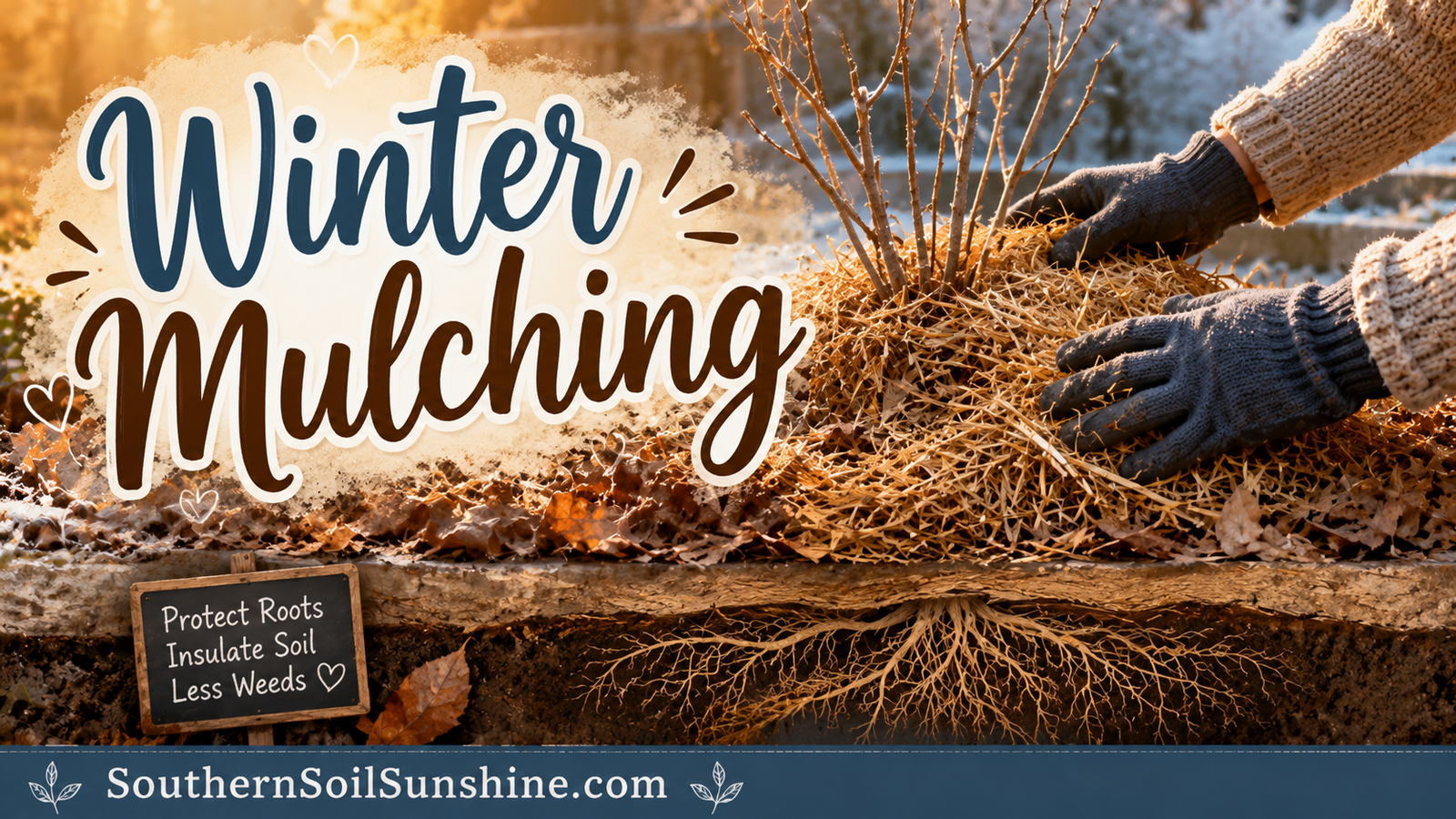
Some garden tasks announce themselves loudly — the harvest, the planting, the first bloom. Mulching is not one of them. It is quiet, unglamorous work, a matter of spreading a layer of humble material over your beds and walking away. And yet I would argue that few things you do in a Zone 9 winter garden pay off more faithfully than a good layer of mulch. It holds moisture in the soil, suppresses the weeds that would otherwise steal from your crops, moderates the temperature swings that keep our winter unpredictable, and slowly feeds the ground as it breaks down. It is protection you lay down once and benefit from for weeks.
Mid-February is a lovely time to mulch here. Your cool-season crops are established and growing, the beds are full but not crowded, and the material you lay down now will do its work right through the changeable weeks ahead. Let me walk you through mulching your winter beds well — what to use, how to apply it, and why this simple task carries a lesson about holding onto your peace.
Free eBook
Rooted in Grace
A Christian guide to intuitive gardening — the whole book, free. Tell me where to send it and it’s yours in a minute.
Why Mulch Matters Even in Our Mild Winter
It is tempting to think of mulch as a summer tool, something you reach for only when the heat arrives. But our Zone 9 winter has its own quiet challenges that mulch answers beautifully. Our “cold” is unpredictable — a run of 75-degree afternoons can give way to a sudden 30-degree night, and those swings stress plant roots. A layer of mulch acts like a blanket, buffering the soil so the temperature underneath stays far steadier than the air above. On the mild days, it keeps precious moisture from evaporating out of the soil under our surprisingly strong winter sun. And all season long, it smothers the cool-season weeds that would otherwise sprout in every open inch of bare ground and compete with your greens for water and nutrients.
There is a deeper benefit, too, one that unfolds slowly. As organic mulch breaks down against the soil, it feeds the earthworms and microbes below, adding organic matter and building richer, healthier ground for next season. A well-mulched bed is not just protected today; it is being quietly improved for every season to come.
The Best Mulch Materials for Winter Beds
Not all mulches are equal, and the right choice depends on where you are spreading it. Here are the materials that serve a Zone 9 winter garden well.
| Material | Best For | Notes |
|---|---|---|
| Shredded leaves | Vegetable beds | Free, breaks down into rich soil |
| Straw (not hay) | Between rows, root crops | Light, easy to spread; avoid seedy hay |
| Pine straw | Paths, established plants | Plentiful here; stays put on slopes |
| Compost | Feeding + light cover | Doubles as gentle nutrition |
| Wood chips | Pathways, perennials | Slow to break down; keep off seedbeds |
For a winter vegetable bed, shredded leaves are hard to beat — they are usually free, they break down into gorgeous soil, and our trees hand them to us by the bagful. Straw is wonderful between rows and around root crops. Save the wood chips for permanent paths and around established perennials, where their slow breakdown is a feature rather than a problem. The goal is always the same: a light, breathable layer that shelters the soil without smothering your plants.
How to Apply Mulch the Right Way
Mulching is simple, but a few details make the difference between help and harm. Start with soil that is already moist — water the bed first if it is dry, because mulch holds in whatever moisture is present when you lay it down, and mulching over dry soil just keeps it dry. Spread your material two to three inches deep across the open ground of the bed, thick enough to block light from weed seeds but not so thick that water and air cannot pass through.
The single most important rule is to keep mulch pulled back a couple of inches from the stems of your plants. Mulch piled up against a stem traps moisture right where the plant is most vulnerable, inviting rot and pests. Leave a little breathing collar of bare soil around each plant, and lay the mulch generously everywhere else. Work it in gently around your greens, tuck it between your rows, and cover every inch of bare ground you can reach — because bare ground is simply an invitation for weeds and evaporation.
Mulch as Your Best Weed Strategy
If weeds frustrate you, mulch is your quiet ally. Most weed seeds need light to germinate, and a good mulch layer simply denies them that light. The weeds that do manage to sprout come up in loose mulch rather than packed soil, so they pull out with an easy tug rather than a fight. Over a full season, a well-mulched bed can cut your weeding time dramatically — not by fighting weeds harder, but by preventing most of them from ever appearing. It is the difference between constant battle and steady peace, and it comes down to whether the ground is covered or bare.
Refreshing and Maintaining Your Mulch
Mulch is not quite a set-and-forget task, though it comes close. Organic materials break down over time — which is exactly what you want, since that is how they feed the soil — so check your beds every few weeks and add a fresh handful wherever the layer has thinned or the bare soil is peeking through. In our mild, damp winter, leaves and straw settle and decompose steadily, and a quick top-up keeps the protection unbroken. Think of it less as a chore and more as tucking the blanket back in when it slips.
What Helps You Hold Onto Your Peace?
This day’s task asks a question I have carried with me through many seasons: what helps me hold onto my peace? Mulch is such a fitting picture for it. Peace, like soil moisture, does not simply stay put on its own. Left exposed, it evaporates under the heat of a demanding day. Left bare, it grows over with the weeds of worry and hurry and everyone else’s urgency. Peace has to be protected — covered, sheltered, guarded — or the conditions of ordinary life will steal it away one hot afternoon at a time.
So it is worth asking, as you spread this quiet layer over your beds, what your own mulch is. What covers and protects the good that has taken root in you? Perhaps it is a morning practice, a boundary you keep, a Sabbath you refuse to give up, a friendship that shelters you, a habit of prayer that keeps the worry-weeds from sprouting. Whatever it is, it deserves the same faithful attention you are giving your garden today: laid down generously, kept a little back from what is tender, and refreshed whenever it thins. Cover the ground of your peace as carefully as you cover the soil, and it will hold moisture through the hottest and hardest days.
Lay down your mulch today, and let it remind you to guard what matters. Come share your winter beds with us on Instagram @southernsoils — there is real beauty in a garden tucked in and cared for.
Common Winter Mulching Questions
A few questions come up again and again from gardeners new to mulching in our climate, so let me answer them plainly.
Can I mulch right over my seedlings? Not directly over them — young seedlings need light and air. Mulch between and around established plants, keeping the material back from tender stems, and wait until direct-sown crops are up and a few inches tall before tucking mulch close to them.
Will mulch make my slug and pill-bug problem worse? A moderate, breathable layer usually will not, but a thick, soggy mat can shelter them. If you are seeing damage, thin your mulch, let the surface dry between waterings, and keep it pulled back from stems. Balance is everything.
Do I need to remove old mulch before adding new? Almost never. Organic mulch is meant to break down into the soil, so simply add a fresh layer on top as the old one thins. You are building richer ground with every application — removing it would waste the very benefit you are after.
Is it too late in the season to mulch? It is essentially never too late. Even a bed you mulch today will hold moisture, block weeds, and protect roots for the remaining weeks of the cool season, then break down to enrich the soil for spring. The best time to mulch was when you planted; the second-best time is now.
Whatever your questions, let the guiding principle carry you: cover the bare ground, keep it back from the stems, keep it breathable, and refresh it as it thins. Get those simple things right and mulch becomes one of the most generous, low-effort gifts you can give your Zone 9 garden — a quiet layer of protection that asks for an hour of your time and repays it for months.
The Peace of a Covered Garden
There is a particular satisfaction in stepping back at the end of a mulching morning and seeing your beds tucked in — every inch of soil sheltered, the rows neat, the ground protected against whatever the weather brings next. It is the look of a garden that is cared for, not merely planted. And that visible peace mirrors an inner one. When the good things in our lives are covered and guarded rather than left exposed, we carry ourselves differently, too — steadier, less anxious, more able to weather the swings. Mulch your beds today for all the practical reasons, yes. But let the deeper reason stay with you as well: what is worth growing is worth protecting, in the soil and in the soul.
Ready to Go Deeper in the Garden?
If this article resonated with you, you might be ready for something more than tips.
- Download the FREE Rooted in Grace eBook
- Join Rooted Reset
- Follow on Instagram – @southernsoils
“The garden is not just a place to grow plants – it is a place to grow yourself.”
Free eBook
Before you go — the book is yours
Rooted in Grace: A Christian Guide to Intuitive Gardening. No cost, no catch. Read it on any device, at whatever pace the season allows.