Fast Wins: Direct-Sowing Radishes and Arugula for a 30-Day Harvest
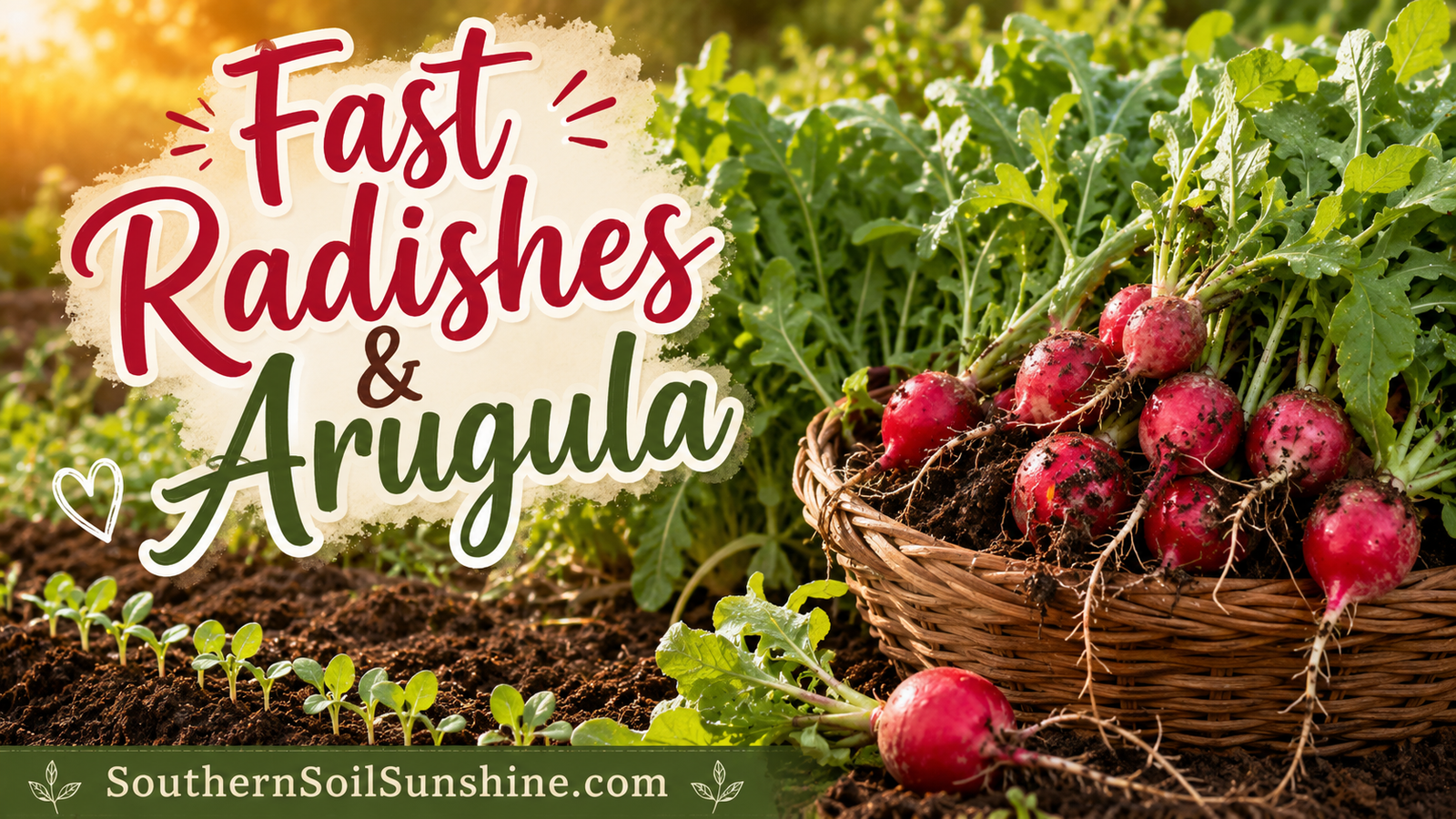
The Crops That Reward You Almost Right Away 🌱
So much of gardening is a lesson in patience. The carrots take three weeks just to sprout. The tomatoes will not fruit until summer. The garlic you plant in fall does not come up until the following season. And all of that waiting is good and formative — but every now and then, the garden hands you a crop that says, here, this one is quick. Radishes and arugula are those crops. From a pinch of seed sown today, you can be harvesting crisp radishes and peppery arugula in as little as three to four weeks. In the middle of a season built on patience, they are a small, delicious reminder that not everything takes forever.
Mid-February is a perfect time to direct-sow both in Zone 9. Our cool soil is exactly what they love, and sown now, they will size up quickly before any real warmth arrives. Let me show you how to grow these fast, forgiving crops well — and why their quick turnaround is worth savoring.
Free eBook
Rooted in Grace
A Christian guide to intuitive gardening — the whole book, free. Tell me where to send it and it’s yours in a minute.
Why Radishes and Arugula Are So Fast
Both of these crops are built for speed. Radishes are among the quickest vegetables in the entire garden, with many varieties going from seed to harvest in just 25 to 30 days. Arugula is nearly as fast, giving you baby leaves in three to four weeks and full-size leaves not long after. They germinate readily, they do not need transplanting, and they thrive in the cool weather that makes our winter their ideal season.
That speed is not just a novelty; it is genuinely useful. Fast crops let you fill gaps in the garden, tuck a quick harvest between slower plantings, and enjoy something fresh from your own soil while you wait for the long-season crops to mature. They are also the perfect confidence-builder for a new gardener or an eager child — nothing convinces you that you can grow food quite like pulling your first radish a month after planting it.
Choosing Varieties for a Quick Zone 9 Harvest
A little variety selection goes a long way toward a satisfying harvest. Here are dependable choices for our cool-season beds.
| Crop | Easy Varieties | Days to Harvest |
|---|---|---|
| Radish (round) | Cherry Belle, Champion | 25–30 |
| Radish (French) | French Breakfast | 28–30 |
| Arugula | Astro, Rocket | 21–35 |
Round red radishes like Cherry Belle are the classic quick crop, mild and crisp. French Breakfast radishes are elongated, tender, and beautiful on a plate. For arugula, both the standard “rocket” types and the slightly slower wild arugula give you that lovely peppery bite — sow standard types when you want speed. All of them are inexpensive by the packet and worth keeping on hand for exactly these quick, gap-filling sowings.
How to Sow for Best Results
Direct sowing could not be simpler, which is part of the charm. Loosen the top few inches of a bed that gets good sun, rake it smooth, and sow your seed shallowly — about a half-inch deep for radishes and a quarter-inch for arugula. Radishes can be sown an inch apart in rows; arugula can be scattered more thickly and thinned as you harvest baby leaves. Water gently after sowing and keep the surface evenly moist, and you will see sprouts within just a few days — another of these crops’ small, quick delights.
Both crops need consistent moisture to grow fast and stay mild. Radishes that dry out and then get watered heavily will crack, and stressed radishes turn unpleasantly hot and pithy. Arugula that goes dry turns sharp and bitter. Steady moisture is the secret to sweet, tender results from both.
Thinning and Simple Care
Radishes must be thinned to size up properly — crowded radishes make all leaf and no root. When the seedlings are an inch or two tall, thin them to about an inch apart, and toss the peppery thinnings into a salad. Arugula is more forgiving; simply thin as you harvest, snipping outer leaves and letting the plant keep producing. Neither crop needs much feeding in rich soil, though a drink of diluted compost tea will keep arugula lush if your bed is lean. Beyond steady water and a little thinning, these crops mostly grow themselves.
Harvesting Your Quick Reward
Radishes are ready when the shoulders of the roots swell to about an inch across, often peeking up out of the soil so you can judge them at a glance. Grasp the base of the leaves and pull — there is genuine delight in that first crisp radish coming up out of the ground. Arugula can be cut as baby leaves at three weeks for a mild flavor, or left to grow larger and more peppery. Cut outer leaves and let the center keep growing, and a single planting will give you several harvests before it eventually bolts in the warmth.
Both are best eaten fresh and soon. Crisp radishes sliced onto buttered bread, tossed into a salad, or eaten straight from the garden with a little salt; arugula piled onto a sandwich, wilted into pasta, or dressed simply with lemon and oil. Few things taste more like a small victory than food you sowed less than a month ago.
Not Everything Takes Forever
This day’s task carries a gentle reminder tucked inside it: let these fast growers remind you that not everything takes forever. It is an easy truth to lose sight of. So much of a meaningful life is built on the long, slow, unseen work — the kind that asks years of faithfulness before any harvest. And that slow work is real and good and necessary. But if we only ever fix our eyes on the long haul, we can grow weary, forgetting that some good things come quickly, and that quick blessings are no less genuine for arriving soon.
Radishes are a small, crisp mercy in the middle of a patient season. So are the quick graces in our own lives — the unexpected kindness, the prayer answered sooner than we dared hope, the small joy that shows up in a matter of days rather than years. Let this quick crop teach you to notice and receive them. Plant the slow things faithfully, yes. But do not miss the fast ones. Some harvests are only a few weeks away, and they are meant to be savored with gratitude, right now, while you wait for the rest.
Sow a quick row today, and check back in a few weeks for your reward. Share your first radish pull with us on Instagram @southernsoils — those small, fast victories are some of the most joyful in the whole garden.
The Perfect Crops to Grow With Children
If there are little ones in your life, radishes and arugula are among the very best crops to grow together, precisely because children and long waits do not mix well. A child who sows a carrot may lose interest long before it is ready, but a child who sows a radish gets to pull a real vegetable out of the ground in about a month — and that is fast enough to hold the wonder. There is nothing quite like the look on a small face at the moment a bright red radish emerges from the dirt, whole and finished and grown by their own hands.
Give a child their own short row, let them scatter the seed a little too thickly, help them keep it watered, and mark the days on a calendar so the waiting has shape. When harvest comes, let them pull every one. Even a child who claims not to like radishes will often eat one they grew themselves, and the lesson underneath — that we tend, and we wait, and the earth keeps its quiet promises — plants itself right alongside the seed. These fast crops are how a lifelong gardener is often born.
What to Plant After Your Quick Crops
One of the loveliest things about fast crops is what they make possible next. Because radishes and arugula clear out in a month, the space they leave behind opens up right as our season is shifting. That freed-up ground is perfect for tucking in another quick succession sowing, or for a slightly longer cool-season crop that still has time to mature, or — as we move toward spring — for warming-season transplants that will appreciate a bed already loosened and enriched by the crop before them.
This is the quiet art of keeping a bed productive: never leaving good ground bare for long. A fast crop, harvested and followed promptly by the next planting, means your garden is always working, always giving. Radishes are not just a harvest in themselves; they are a placeholder that keeps the soil covered and productive while you decide what comes next. Think of them as the garden’s way of buying you time without wasting an inch of space.
Small and Fast Is Still Worth Doing
It would be easy to dismiss a radish as too small a thing to matter — a minor crop, a mere garnish, hardly worth the space. But I have come to believe the garden has no insignificant harvests. A handful of crisp radishes on a February evening, grown from a pinch of seed and a few weeks of care, is a genuine gift: fresh food, a small success, a reason to step outside and pay attention. The quick and the modest are not lesser than the slow and the grand. They are simply a different kind of grace, offered on a shorter timeline. Sow them freely, harvest them gladly, and let their speed keep your gardening joyful while the patient crops take their patient time.
Ready to Go Deeper in the Garden?
If this article resonated with you, you might be ready for something more than tips.
- Download the FREE Rooted in Grace eBook
- Join Rooted Reset
- Follow on Instagram – @southernsoils
“The garden is not just a place to grow plants – it is a place to grow yourself.”
Free eBook
Before you go — the book is yours
Rooted in Grace: A Christian Guide to Intuitive Gardening. No cost, no catch. Read it on any device, at whatever pace the season allows.