Is Your Tomato Seedling Ready? Reading the Signs Before You Transplant
The Question Every Spring Gardener Asks 🍅
By the first of March, if you started tomatoes and peppers indoors back in winter, you are standing over your trays asking the question that comes to every seed-starting gardener: are they ready? Ready to leave the shelter of the windowsill and go out into the real garden. It is a surprisingly hard question, because the eager part of us wants to plant the moment the weather turns mild, and the cautious part remembers that a rushed transplant can set a plant back for weeks. The good news is that your seedlings themselves will tell you when they are ready — if you know how to read the signs.
Transplanting at the right moment is one of the quiet skills that separates a frustrating tomato season from a thriving one. Plant too early, into cold soil and a too-small plant, and you stall your crop. Wait too long, and root-bound seedlings sulk. This is a lesson in reading readiness — in the seedling, and, as it turns out, in ourselves. Let me help you learn the signs.
Free eBook
Rooted in Grace
A Christian guide to intuitive gardening — the whole book, free. Tell me where to send it and it’s yours in a minute.
What a Transplant-Ready Seedling Looks Like
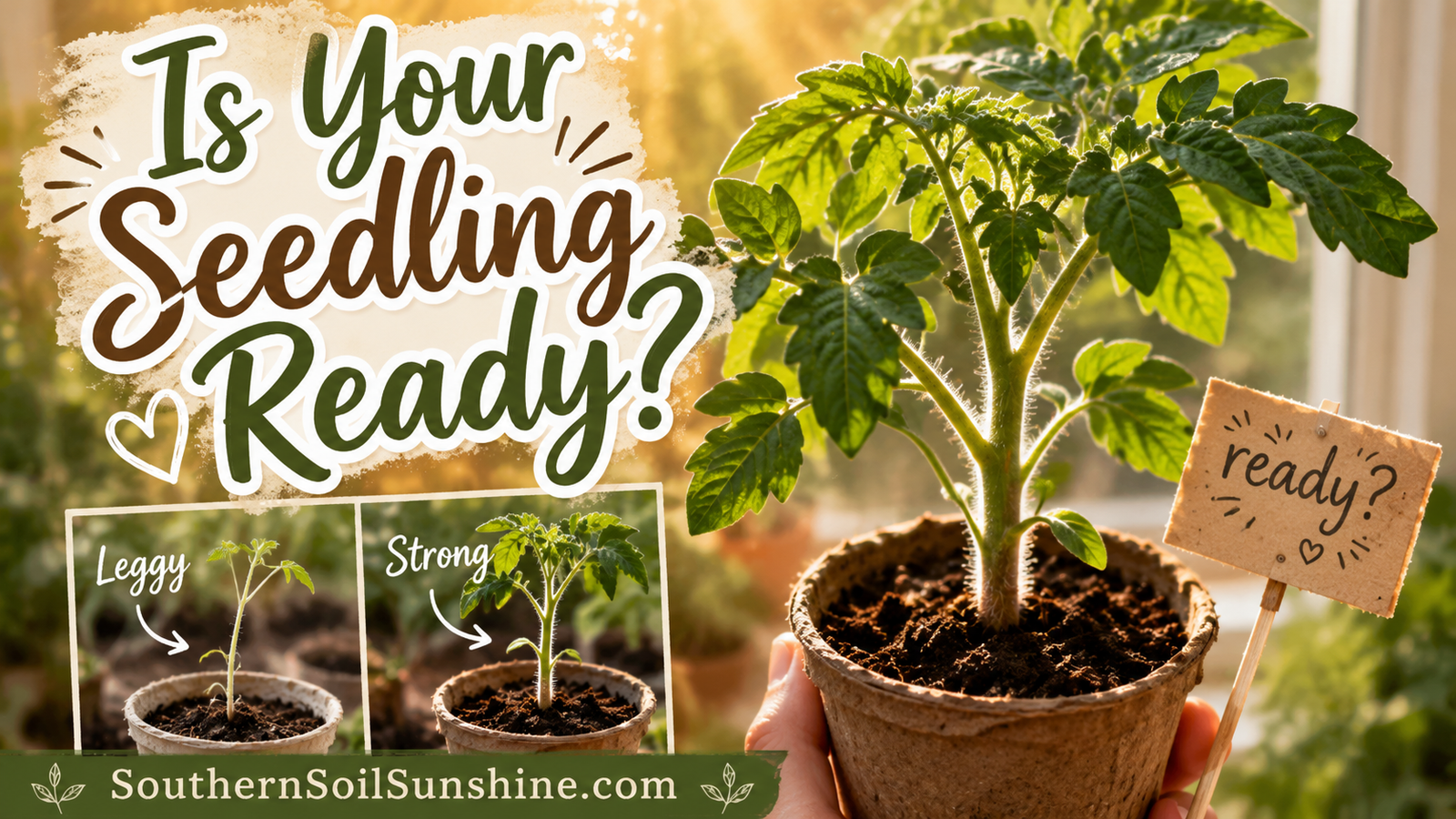
A seedling ready for the garden is not simply one that has gotten tall. Height alone can be a false signal — a leggy, stretched seedling reaching for weak light is tall but not strong. True readiness shows up in a cluster of signs together. Look for a seedling that stands four to six inches tall with a sturdy, thickening stem it can hold upright on its own. Look for at least three to four sets of “true” leaves — the real, adult-looking leaves that come after the first rounded seed leaves. Look for healthy, deep-green color and a general look of vigor. And crucially, look for a plant that has been hardened off, gradually introduced to sun and wind over a week or so, so it can handle the shift outdoors.
When several of these signs line up — good height, a strong stem, multiple true-leaf sets, healthy color, and completed hardening — you have a plant ready to thrive in the ground. One sign alone is not enough. Readiness is the picture the signs make together.
Reading the Signs at a Glance
Here is a quick reference you can use standing right over your trays.
| Sign | Ready | Not Yet |
|---|---|---|
| Height | 4–6 inches, stocky | Very short, or tall and thin |
| Stem | Thick, holds itself up | Thin, floppy, leaning |
| True leaves | 3–4 sets or more | Only seed leaves |
| Color | Deep, healthy green | Pale, yellowing, or purple |
| Hardened off | Yes, over ~7 days | Still living indoors only |
Do Not Forget the Weather and the Soil
A ready seedling still needs a ready world to go into, and this is where Zone 9 asks for a little patience. Tomatoes and peppers are warm-season crops that resent cold soil — planted into ground that is still chilly, they simply sit and sulk, refusing to grow until the soil warms, and they become more vulnerable to disease. Wait until nighttime temperatures are reliably staying above about 50°F and the danger of a late cold snap has passed. Our spring can tease us with warm afternoons while the soil is still cool underneath, so feel the ground, watch the overnight lows, and let the weather be part of your readiness check.
Signs a Seedling Is Not Ready Yet
It is just as important to recognize when to hold off. A seedling with only its first rounded seed leaves and no true leaves is far too young. A pale or leggy seedling stretching thin toward the light needs more light and more time, not a move outdoors. A plant that has never been hardened off will be shocked by direct sun and wind no matter how big it is. And any seedling that looks stressed, yellowed, or struggling should be nursed back to health before you ask it to face the garden. When in doubt, wait. A few extra days on the windowsill costs you almost nothing; a rushed transplant can cost you weeks.
Reading Readiness in Yourself, Too
This day’s task offers a beautiful invitation alongside the practical one: as you check your seedlings for readiness, look for the quiet signs of readiness in yourself. It is a rare and worthwhile skill. So often we force things before their time — launching before we are prepared, saying yes before we are settled, rushing into a new season because the calendar or our impatience says we should, while the deeper signs say not quite yet. And just as often we hold back long after we are truly ready, mistaking fear for wisdom, staying safe on the windowsill when it is time to be planted out into fuller light.
The garden teaches discernment. A seedling is ready when a whole cluster of signs line up — strength, maturity, and a world prepared to receive it — not when one impatient measure says go. Our own readiness works the same way. It is worth learning to read: to notice when we have grown sturdy enough, been stretched enough, put down enough true leaves, and when the ground ahead has warmed enough to receive us. Neither rushed nor endlessly delayed, but planted at the right time, into prepared ground, where we can finally grow to our full size.
Check your seedlings today, and check your own heart while you are at it. Share your transplant-ready tomatoes with us on Instagram @southernsoils — there is real joy in a plant moved to the garden at exactly the right moment.
When Everything Lines Up: A Good Transplant Day
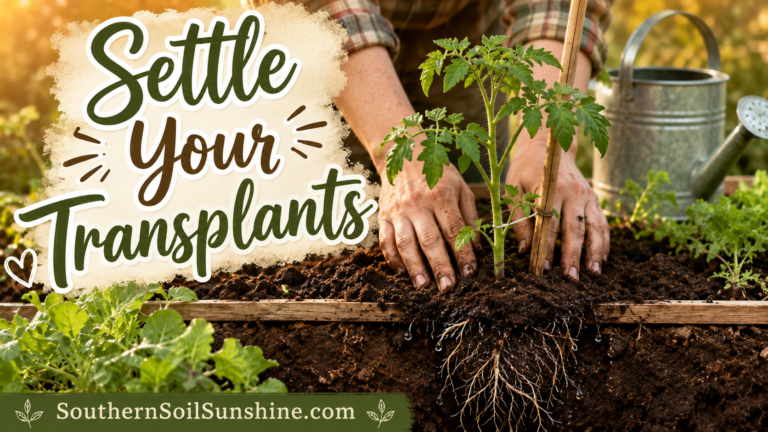
Once your seedlings pass the readiness check and the weather has truly settled, the transplant itself is simple — and doing it well protects everything you have grown. Choose a mild, overcast afternoon or the cool of evening rather than blazing midday sun, so the plants settle in without heat stress on day one. Water the seedlings an hour before you plant so they go into the ground plump and hydrated. Dig a generous hole, and for tomatoes especially, plant deep — you can bury a tomato up to its top few leaves, and every bit of buried stem will grow new roots, giving you a stronger, more drought-resilient plant. Firm the soil gently around each one, water it in well to settle the roots against the soil, and add a ring of mulch a couple of inches back from the stem.
Then give them a few days of easy attention while they root in. A well-timed, well-hardened transplant barely notices the move and keeps right on growing. That seamless transition is the whole reward for waiting until the signs lined up — a plant that never sulks, never stalls, and gets a running start on our long Zone 9 season.
The Real Cost of Rushing
It is worth being honest about why patience pays here, because the temptation to rush is strong every single spring. A tomato shoved into cold March soil does not die dramatically — it just stops. It sits there, leaves tinged purple from the cold, refusing to grow, sometimes for two or three weeks, until the soil finally warms enough to satisfy it. Meanwhile, a gardener who waited an extra ten days and planted into warm, ready ground watches their transplant take off immediately. Very often the patient gardener’s later-planted tomato overtakes the rushed one entirely, because it never lost momentum to cold shock. The lesson repeats itself across the whole garden: the right time beats the early time nearly every season.
So if you find yourself standing over ready seedlings on a chilly first of March, itching to plant while the overnight lows are still dipping low, let this be your permission to wait just a little longer. Pot up if you must. Watch the soil and the sky. And plant when the whole picture — strong seedling, warm soil, settled weather — finally says yes together.
Learning the Patience of Right Timing
There is a deep steadiness that grows in a gardener who learns to read readiness rather than force it. You stop being ruled by the calendar and the itch to do something, and you start trusting the signs. You learn that a thing done at the right moment, into prepared ground, thrives with half the effort of a thing forced too soon. That patience is hard-won, and it is worth more than any single season’s harvest — because it will guide every planting, every decision, every new beginning you ever undertake in the garden. Ready is not a date on a calendar. Ready is a set of signs that line up when the time is truly right, and learning to see them is one of the quiet masteries of a gardening life.
A Gardener’s Confidence
The first few springs, judging readiness feels like guesswork, and that is completely normal. But something shifts after a season or two: you stop needing the chart because your eye has been trained. You glance at a tray and simply know — this one is ready, that one needs another week, the soil is still too cool, wait for the weekend. That quiet confidence is not a gift some gardeners are born with; it is earned, one careful observation at a time. Every spring you practice reading the signs, you are building it. So do not be discouraged if this year you still feel unsure and lean on the table above. You are learning a language, and fluency comes. One day soon you will find yourself trusting your own trained eye completely — and that steady, seasoned confidence is one of the deepest pleasures of growing your own food from seed.
Ready to Go Deeper in the Garden?
If this article resonated with you, you might be ready for something more than tips.
- Download the FREE Rooted in Grace eBook
- Join Rooted Reset
- Follow on Instagram – @southernsoils
“The garden is not just a place to grow plants – it is a place to grow yourself.”
Free eBook
Before you go — the book is yours
Rooted in Grace: A Christian Guide to Intuitive Gardening. No cost, no catch. Read it on any device, at whatever pace the season allows.