How to Decorate a Christmas Tree with Natural Scents: Citrus, Herbs, and Spices
How to Decorate a Christmas Tree with Natural Scents: Citrus, Herbs, and Spices
There’s something sacred about the quiet hush of December mornings—when the air is cool, the house is still, and the tree lights glow like tiny stars. Here in our Zone 9 homes, where December sunshine often arrives instead of frost, we still hunger for that seasonal stillness. This is the season when our homes hold memories, warmth, and small rituals that steady our hearts. And sometimes the simplest offerings—like the smell of orange peel warming in the afternoon light or a sprig of rosemary tucked into a ribbon—can become the most meaningful.
Natural scents have a way of grounding us. They call us back to presence, back to the God who fills every corner of our ordinary lives with grace. Today, I want to show you how to decorate your Christmas tree with fragrant citrus, herbs, and spices—the same way we approach our gardens with intention and care—so that your home feels both cozy and refreshingly alive. 🌿
Free eBook
Rooted in Grace
A Christian guide to intuitive gardening — the whole book, free. Tell me where to send it and it’s yours in a minute.
Why Natural Christmas Tree Scents Matter in Zone 9 Homes 🎄
Here in our warm Southern climate, Christmas often arrives with sunshine streaming through our windows instead of snow. The humidity is lower than in summer, the afternoon temperatures hover in the 60s, and we’re still harvesting vegetables from our fall gardens. But while the weather might not feel traditionally wintry, we can still fill our homes with aromas that speak to the season’s deeper rhythm—and that matter more than we realize.
Natural scents serve a purpose far beyond decoration. They restore peace after long, busy days. They anchor memories in a way that nothing else can—children will remember the smell of orange and clove even more vividly than the gifts they received. They help us steward creation by choosing sustainable, biodegradable décor instead of synthetic fragrances that linger in the air and can trigger headaches. Most importantly, they invite us to slow down, noticing small joys the way intuitive gardeners do when we kneel in the soil and observe the quiet work of growth.
Just as we tend our gardens with intention—observing what thrives, reflecting on what we’re learning, and responding faithfully to the needs before us—we can tend our homes with that same spirit of presence and gentle care.
Sanda’s Zone 9 Note: Our lower December humidity is actually a gift for drying citrus and herbs naturally. While gardeners in other zones need an oven or dehydrator, we can often air-dry orange slices on a sunny windowsill in 5-7 days. The consistency is perfect for tree decoration and lasts beautifully through the holidays.
Using Citrus to Decorate Your Tree 🍊
Citrus is winter’s quiet gift. Even in Zone 9, where our December gardens still hold hints of green, oranges and lemons feel exactly right at home on a Christmas tree. Their bright, clean scent lifts the spirit and adds a fresh counterbalance to the deeper aromas of pine and spice. If you grow citrus in your backyard—and many of us do here in Houston’s suburbs—this is the perfect time to harvest those beautiful fruits for double duty: eating and decorating.
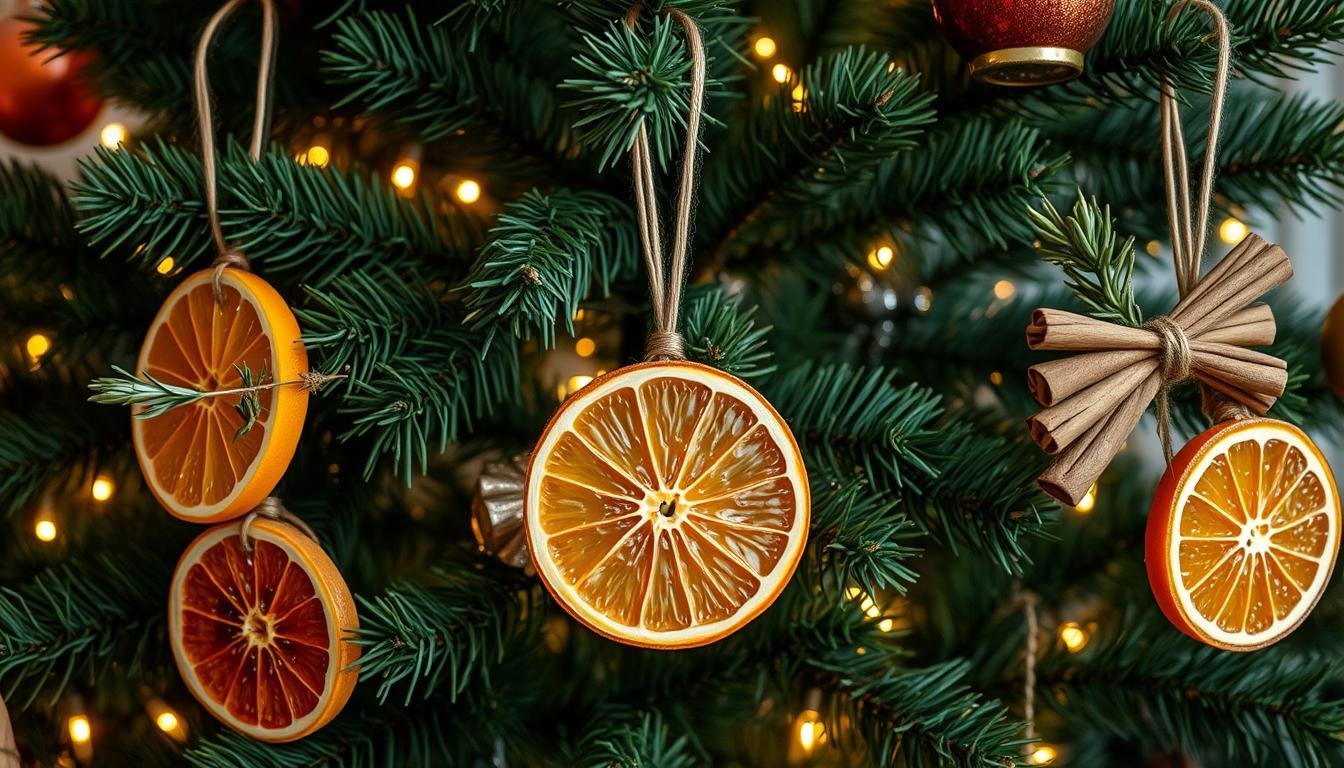
Dried Citrus Slices: Nature’s Stained Glass
These become translucent little windows when the tree lights shine through them, casting warm amber light into the room. The beauty is in their simplicity, and the process is so easy that even young children can help.
How to Make Them: Start with firm, ripe citrus—oranges, lemons, grapefruits, or even blood oranges if you have access to them at the farmers market. Slice them about ¼ inch thick (thinner slices are more delicate; thicker ones dry more slowly). Pat them dry gently with a clean towel to remove surface moisture. If you’re using an oven, arrange them on parchment-lined baking sheets and bake at 200°F for 3–4 hours, flipping every hour or so. They should be completely dry and slightly papery to the touch. In our Zone 9 climate, you can also place them on a sunny windowsill on a baking sheet and let them air-dry over a week, turning them occasionally. Once completely cool, thread them with natural twine, thin ribbon, or embroidery floss.
Sanda’s Garden Wisdom: Don’t discard those citrus peels! If you cut slices from lemons or oranges you’re eating, save the remaining peels for tea infusions or to simmer on the stove with cinnamon sticks. Nothing is wasted in a home tended with intention.
For best results, slice thin-skinned varieties like navel oranges or thin-skinned lemons. Blood oranges make the most dramatic color—deep ruby red that glows beautifully against green branches. If you want to deepen the scent and add warmth, sprinkle the slices lightly with ground cinnamon before baking, and the aroma will intensify as the tree warms the room.
Fresh Citrus Garlands
If you prefer the look and feel of fresh citrus over dried, this approach is wonderfully forgiving. Thread whole kumquats or small clementines onto natural twine and weave the garland through the outer branches of your tree. In our cooler December indoor temperatures (or even with the occasional evening window open), fresh citrus will last for weeks without spoiling. The scent is fresher and brighter than dried varieties, and the visual impact of jewel-toned fruits nestled among evergreen branches is simply gorgeous.
Citrus + Spice Ornaments
Bundle together one dried orange slice, one cinnamon stick, and one star anise pod. Wrap them with raffia or linen ribbon and hang them near warm Christmas lights. The gentle heat will intensify the aroma, and these little bundles make lovely gifts for guests—just package them in a small muslin bag with a note about how to use them for simmering water or tucking into drawers.
Decorating the Tree with Fragrant Herbs 🌿
Herbs carry the scent of the garden into winter—especially rosemary, bay leaf, thyme, and sage. They bring a grounding, earthy aroma that whispers rest into the holiday rush. For us Zone 9 gardeners, many of these herbs are still thriving in late autumn and early winter, which means we can harvest fresh sprigs right from our own gardens.
Rosemary Sprigs as Natural “Icicles”
Long, woody rosemary sprigs make beautiful natural “icicles” when arranged vertically. In our suburban Houston gardens, rosemary thrives year-round, so December is a perfect time to give your plants a light pruning and redirect those cuttings to your tree. Tie a bundle of 3–4 sprigs together with twine or soft linen ribbon. Hang them at the ends of branches where you (and guests) can brush past them and release their piney, grounding scent. Rosemary is believed in many faith traditions to be a symbol of remembrance and fidelity—there’s something deeply right about tucking it into your Christmas tree.
Bay Leaf Garlands
Bay leaves dry beautifully and retain their soft color. They’re subtle where rosemary is bold—perfect if you want a more understated herb presence. Thread individual bay leaves onto thin wire or twine, spacing them a few inches apart. Drape the garland loosely around the tree for an elegant, understated look. The scent is gentle but distinctive, with warm, slightly peppery notes that feel sophisticated.
Thyme and Sage for Texture
Both thyme and sage dry quickly and hold their form well. Small bundles of thyme create delicate texture among the branches, while sage leaves (especially the velvety gray-green varieties like ‘Autumn Sage’) add visual interest alongside their herbal warmth. Tie small bundles with natural raffia and tuck them into the branches where they’ll catch both light and air movement.
| Herb | Scent Profile | Zone 9 Availability | Best Placement |
|---|---|---|---|
| Rosemary | Piney, grounding, warm | Year-round in garden | Branch tips, where brushed easily |
| Bay Leaf | Subtle, peppery, sophisticated | Year-round (slow growth in winter) | Garland throughout tree |
| Thyme | Delicate, herbaceous, fresh | Thrives through winter | Small bundles among branches |
| Sage | Warm, slightly peppery, earthy | Thrives through winter | Clustered for visual texture |
| Lavender (dried) | Floral, calming, purple | Harvest summer, use dried | Mixed with ribbons, near lights |
Adding Spices for Warmth and Memory
Spices are where the “Christmas magic” lives, at least in terms of aroma. Cinnamon, cloves, nutmeg, star anise, and cardamom together create that unmistakable holiday scent that our brains link to joy, memory, and tradition. These dried spices are easy to work with and last beautifully throughout the season.
Cinnamon Stick Bundles
Bundle 3–4 cinnamon sticks together with natural twine or raffia. Tie them in a simple knot or bow. Hang them throughout the tree, especially near lights where the warmth will gently release their rich, sweet scent. You can even add a small dried orange slice or fresh evergreen sprig to each bundle for a multi-sensory decoration.
Star Anise and Whole Cloves
Thread whole cloves and star anise pods onto thin wire to create delicate garlands. They’re small enough to weave anywhere and add visual interest with their geometric shapes. Star anise is particularly beautiful—its eight-pointed
Creating Scent Layers: Building Aroma Depth Like Garden Design
Just as we layer perennials in our garden beds—tall plants in back, texture in the middle, delicate flowers in front—we can layer scents throughout our tree to create depth and complexity. This intuitive approach transforms your tree from simply fragrant into a complete sensory experience that unfolds as you move around it.
The key is thinking about scent projection. Rosemary and cinnamon are bold, confident aromas—they announce themselves and carry across a room. These work beautifully as your foundational layer, placed where air naturally moves (near doorways, windows, or where the tree lights generate gentle warmth). Bay leaves and thyme are more subtle, almost whisper-like—these benefit from placement where people will discover them up close, brushing past a branch or pausing to admire the tree. Fresh citrus is the bridge between bold and delicate, bright and grounding. The most memorable scent experiences happen when these layers work together, revealing themselves gradually as you spend time near the tree.
Think about the time of day too. Morning light in our Zone 9 homes is often cool and clear—this is when subtle herb scents shine. By afternoon, when winter sun streams warm through south-facing windows, that gentle heat intensifies the spices, bringing forward the cinnamon and clove. By evening, when the tree lights are on and the house settles into quiet, all the layers meld together into one cohesive, comforting aroma. This natural rhythm mirrors how our gardens respond to temperature and light—we’re simply reading and responding to the conditions our space already offers.
Storing and Refreshing Your Scented Tree Throughout the Season
One beautiful thing about natural scent decorations is their graceful fade. Unlike synthetic fragrances that can become cloying, dried citrus and herbs gently release their aroma and then soften into the background. But there are gentle ways to refresh and extend the experience as December moves forward.
If your dried citrus slices begin to feel papery and the scent fades (usually after 2–3 weeks), you can revive them by misting very lightly with water—just a few drops from a spray bottle—and placing the tree near (not in direct sunlight, but in bright indirect light) for a day. The moisture rehydrates the fruit slightly and awakens the oils. Fresh rosemary and thyme last longer than you might expect indoors; if needles begin to brown at the tips, it simply means they’re completing their season, and that’s okay. There’s grace in this impermanence—it reminds us that nothing is meant to last forever, and that’s part of what makes the present moment precious.
For spices, the opposite is true. Cinnamon sticks, star anise, and cloves actually strengthen in scent over the first week or two as they dry completely in your climate-controlled home. If by mid-December the scent feels flat, gently crush or break one cinnamon stick or star anise pod near the tree. The fracture releases fresh oils and reinvigorates the aroma. Store any leftover dried citrus or spice bundles in a paper bag (not plastic—it traps moisture) in a cool, dry spot. These make lovely gifts for friends, or you can save them to simmer on the stove in early January with fresh water to extend the season a little longer.
Why This Practice Connects Us to Something Larger
As we decorate our trees with intention—choosing what to harvest from our own gardens, drying it with our hands, arranging it with care—we’re participating in something ancient and deeply human. Our grandmothers did this. Their grandmothers did this. Long before synthetic fragrances existed, people marked the darkest season by filling their homes with the scents of citrus brought from distant, sunnier places, and herbs from their own careful gardens. They did this not because it was trendy, but because it was true—because natural scent speaks to something in us that reminds us we’re part of a created world full of abundance, even in winter’s quiet.
There’s a rhythm to this kind of living, isn’t there? We observe what grows in our Zone 9 soil and climate. We reflect on what we’re grateful for—an orange tree producing fruit, rosemary thriving year-round, the simple fact of fresh herbs available to us in December. And we respond by bringing those gifts into our homes, using them thoughtfully, and letting them remind us of God’s faithful provision. When we do this, our homes become not just decorated spaces, but places of formation—spaces where our children learn that the best gifts are often the simplest ones, and that beauty doesn’t require artifice to be real. 🌿
Ready to Go Deeper in the Garden?
If this article resonated with you, you might be ready for something more than tips.
- Download the FREE Rooted in Grace eBook
- Get the Rooted in Grace Print Book on Amazon
- Join Rooted Reset
- Follow on Instagram – @southernsoils
- Save on Pinterest – @southernsoilsunshine
- Join on Facebook – Southern Soil Sunshine
“The garden is not just a place to grow plants – it is a place to grow yourself.”
Free eBook
Before you go — the book is yours
Rooted in Grace: A Christian Guide to Intuitive Gardening. No cost, no catch. Read it on any device, at whatever pace the season allows.