BEST Premium Compost Bins: Which One’s Right for You?
Some of the links on this website are affiliate links, which means that if you make a purchase through these links, I may earn a small commission at no additional cost to you. As an Amazon Associate, I earn from qualifying purchases. I only recommend products I genuinely trust and believe will bring value to my readers. Also, some of the content was created with strategic use of AI tools. For more information, please visit the Privacy Policy page. Thank you for supporting my blog and helping me continue to provide valuable content. Gardening is more than growing food—it's where God grows us. If you're hungry for a faith that feels grounded again, I wrote a book for you. Download my free eBook: Rooted in Grace: A Christian Guide to Intuitive Gardening
Composting is one of the most faithful things a gardener can do.
It’s not flashy. It doesn’t offer instant gratification. And most days, it looks like nothing more than vegetable peels and dried leaves slowly disappearing into a dark corner of the yard.
But over time, compost becomes everything.
It builds soil that holds moisture in summer heat.
It feeds plants gently, without forcing growth.
It turns waste into nourishment — both for the garden and for the gardener learning to tend patiently.
If you’ve ever felt overwhelmed trying to choose a compost bin, you’re not alone. There are dozens of options, price points, and promises. And not all of them are right for your space, climate, or season of life.
This guide is here to help you choose a premium compost bin that works with your rhythms — not against them.
📌 Save This Guide for Later
A Pinterest-friendly graphic will be added here soon.
Pin it now so you can come back anytime.
Why Composting Matters (Especially in Warm Climates) 🌱
In Zone 9 and other warm regions, composting isn’t just possible — it’s powerful.
Long growing seasons mean soil is constantly being asked to give. Compost restores what’s taken, slowly and steadily, without burning plants or stripping nutrients.
A good compost system helps you:
- Reduce household waste without guilt or overwhelm
- Build resilient, living soil year after year
- Improve water retention during hot, dry stretches
- Support healthier plants with fewer inputs
Composting isn’t about perfection.
It’s about participation.
If you’re newer to soil health, you may also find
The Complete Tropical Composting System helpful as a deeper companion guide.
Composting as a Rhythm, Not a Rule 🤍
Before we talk bins, let’s pause for a moment.
Composting works best when it fits into your life — not when it becomes another thing you feel behind on.
Some seasons allow for careful balancing of greens and browns.
Other seasons are about simply showing up and tossing scraps where you can.
There is grace here.
The right compost bin supports that rhythm. The wrong one creates pressure.
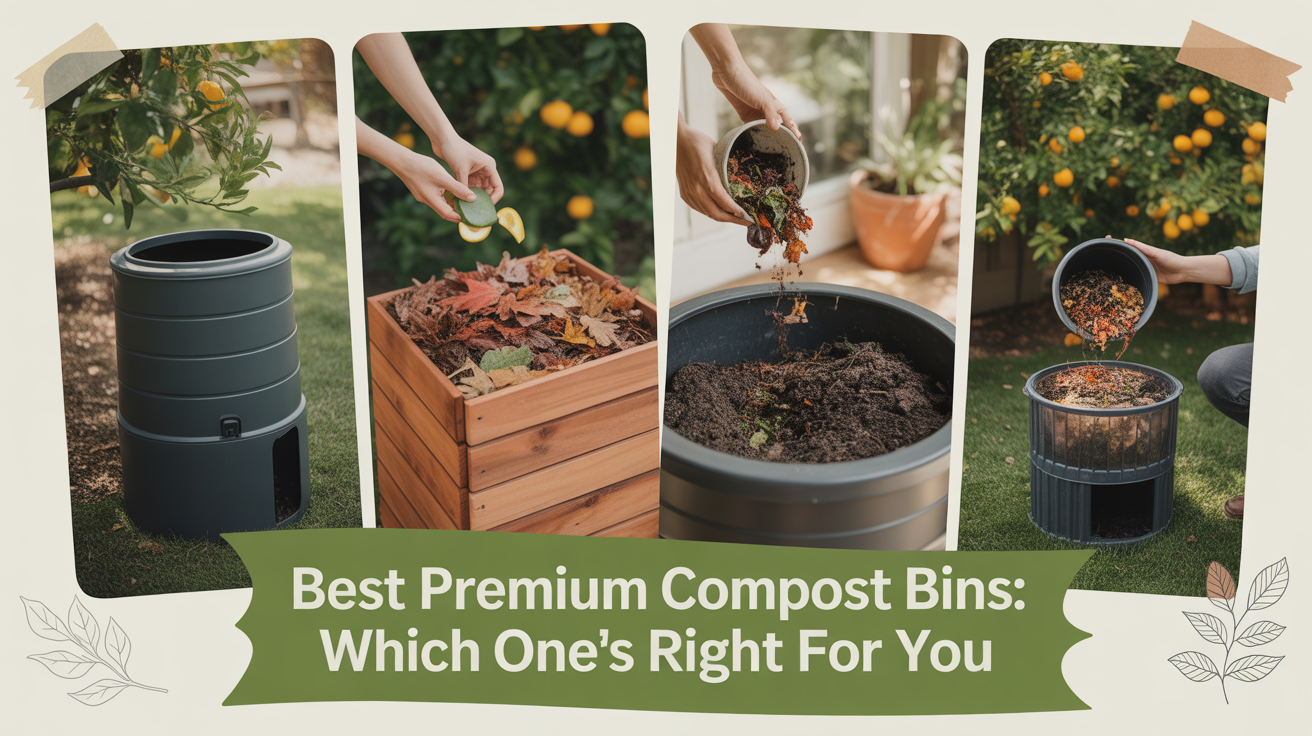
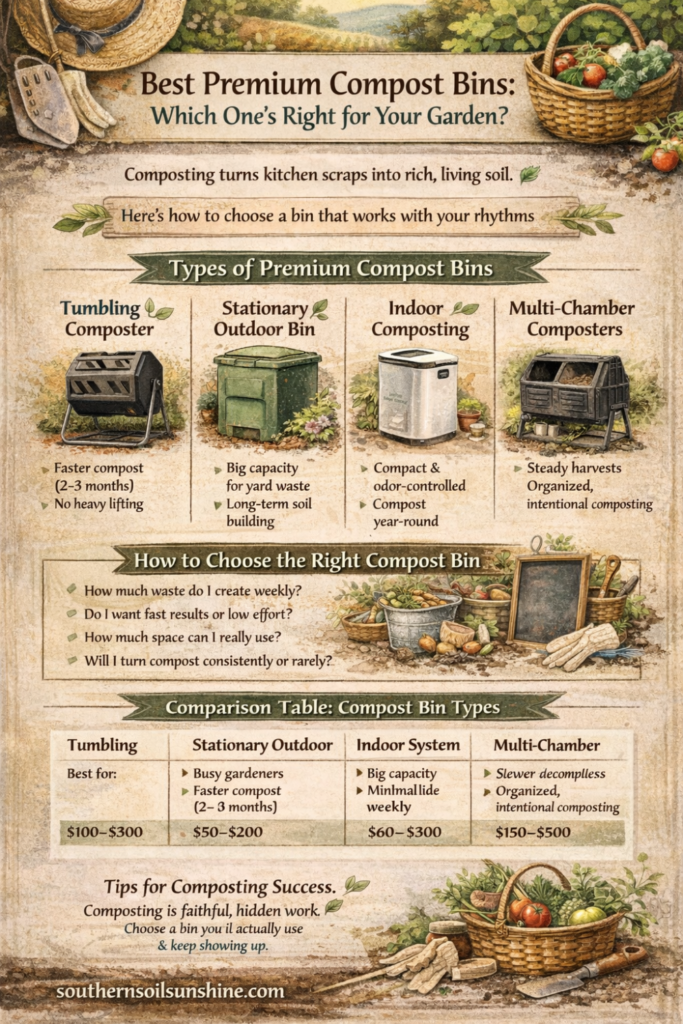
The Main Types of Premium Compost Bins (And Who They’re Best For)
🌿 Tumbling Composters
Best for: busy gardeners, small households, faster compost cycles
Tumbling composters are sealed drums that rotate, making it easy to mix materials and introduce oxygen.
Why they’re loved
- Faster decomposition (often 2–3 months)
- No digging or heavy lifting
- Better odor control than open piles
Consider this if: you want compost without a lot of physical effort, or you’re composting mostly kitchen scraps.
🌿 Stationary Outdoor Compost Bins
Best for: large gardens, heavy yard waste, long-term soil building
Stationary bins are simple, sturdy, and excellent for gardeners who generate a lot of leaves, grass clippings, and pruning debris.
Why they shine
- Large capacity
- Minimal maintenance
- Ideal for slow, steady composting
If your goal is long-term soil health, this pairs beautifully with
Grow Your Dream Garden in Just 15 Minutes a Day.
🌿 Indoor Composting Systems
Best for: apartments, patios, kitchen-only composting
Indoor systems include countertop bins, worm composters, and electric composters.
Why they’re helpful
- Compost year-round
- No outdoor space required
- Manageable entry point for beginners
These systems are less about volume and more about consistency — small scraps, faithfully tended.
🌿 Multi-Chamber Composters
Best for: consistent composters who want a steady supply
Multi-chamber systems allow you to add new material to one side while another finishes curing.
Why they’re worth it
- Continuous compost availability
- Clear stages of decomposition
- Great for gardeners who compost weekly
How to Choose the Right Compost Bin for Your Garden 🌾
Instead of asking “What’s the best compost bin?”
Try these gentler questions:
- How much waste do we realistically generate each week?
- Do I want fast results — or low effort?
- Will I turn compost regularly, or rarely?
- How much space can I truly dedicate to this?
There is no virtue in choosing the hardest system.
The best compost bin is the one you’ll actually use.
If planning feels overwhelming,
7 Easy, Practical Steps to Plan and Start Your Garden may help you simplify.
Compost Bin Size & Capacity (Where Most Gardeners Get Stuck)
Too small leads to stalled compost.
Too large leads to overwhelm.
A helpful guideline
- 1–2 people → 30–50 gallons
- 3–4 people → 80–100 gallons
- Large families / heavy yard waste → 120+ gallons
In warm climates, compost piles need enough mass to regulate moisture and heat. Size matters — but so does consistency.
Premium Features That Are Actually Worth the Investment 💡
Not all upgrades are fluff. These features truly support compost success:
- Ventilation systems → reduce odors, improve breakdown
- Rodent-resistant lids → peace of mind
- UV-resistant materials → longer outdoor lifespan
- Insulated walls → faster composting in cooler months
If composting hasn’t worked for you before, it usually wasn’t you.
It was the system.
Maintenance & Ease of Use: An Honest Check-In
Ask yourself:
- Will I turn compost weekly?
- Will I chop scraps consistently?
- Will I monitor moisture levels?
If the answer is “probably not,” choose low-maintenance systems:
- Tumbling composters
- Insulated stationary bins
- Electric composters
Grace grows here too.
Price Ranges: What You’re Really Paying For
| Price Range | What You’re Paying For |
|---|---|
| $35–$85 | Entry-level simplicity |
| $100–$150 | Better airflow + structure |
| $200+ | Insulation, speed, durability |
A higher upfront cost often saves frustration — and replacement — later.
Best Compost Bins by Garden Setting
- Apartments / kitchens → Countertop or electric composters
- Suburban backyards → Tumblers or stationary bins
- Large properties → Multi-bin or high-capacity systems
Your garden doesn’t need the best bin.
It needs the right one.
Composting as Spiritual Formation 🌿
Composting teaches us to trust slow processes.
To believe that what looks like waste still holds potential.
To tend faithfully without needing instant results.
To let transformation happen in the dark.
It’s one of the most countercultural practices in both gardening and life.
Ready to Go Deeper? 🌱
If this guide stirred something in you, here are a few gentle next steps:
- 🎧 Listen to the Rooted in Grace podcast
https://podcasts.apple.com/us/podcast/rooted-in-grace-intuitive-gardening-for-christian-women/id1823571984 - 📅 Grow with a simple rhythm using the
Year-Long Gardening Calendar - 📝 Download free garden printables & reflection pages
https://southernsoilsunshine.com/gardenresources
Your garden is already speaking.
Let’s listen — and tend it with grace.




One Comment