BEST Premium Compost Bins: Which One’s Right for You?
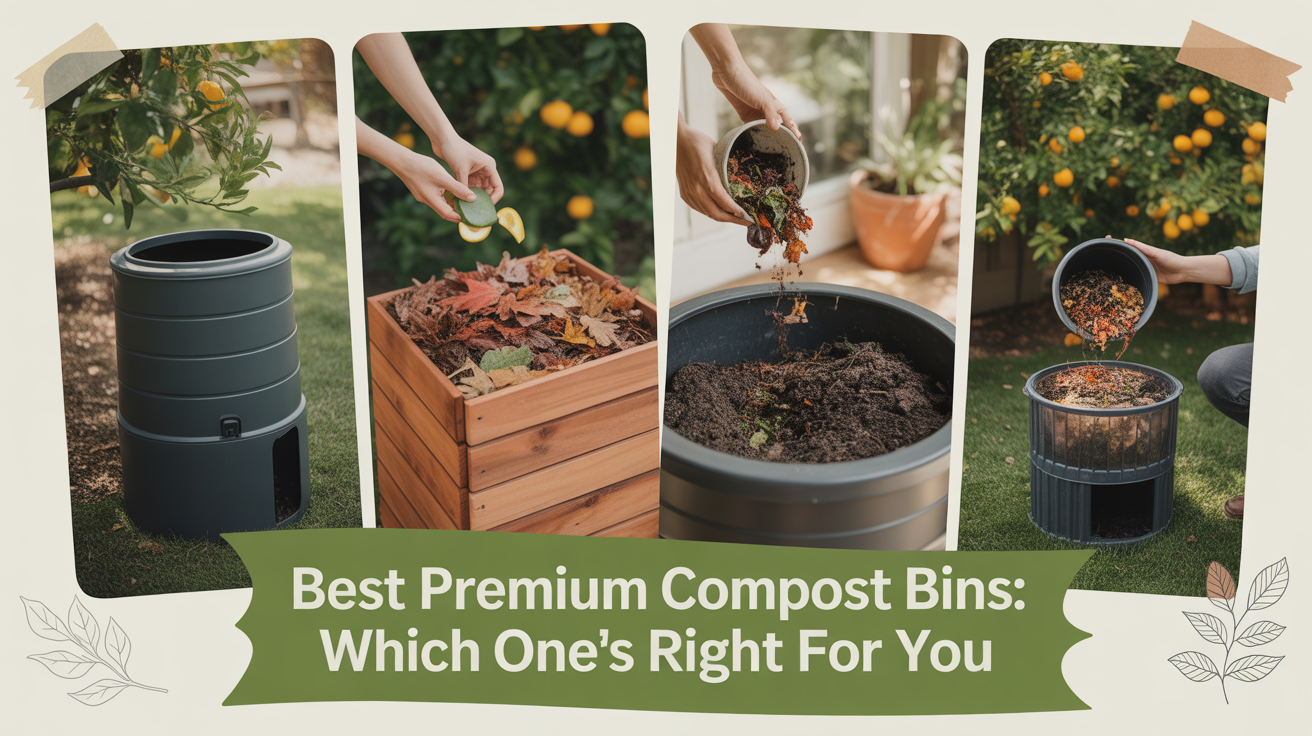
Choosing Your Perfect Compost Bin: A Guide for Zone 9 Gardeners 🌱
Composting is one of the most faithful things a gardener can do.
It’s not flashy. It doesn’t offer instant gratification. And most days, it looks like nothing more than vegetable peels and dried leaves slowly disappearing into a dark corner of the yard.
But over time, compost becomes everything.
It builds soil that holds moisture during our brutal Houston summers. It feeds plants gently, without forcing growth. It turns waste into nourishment — both for the garden and for the gardener learning to tend patiently. In Zone 9, where our soil can be heavy clay and our heat unforgiving, good compost is less of a luxury and more of a necessity.
If you’ve ever felt overwhelmed trying to choose a compost bin, you’re not alone. There are dozens of options, price points, and promises. And not all of them are right for your space, climate, or season of life. When you’re juggling Texas heat, humidity, and the particular demands of suburban gardening, the stakes feel higher.
This guide is here to help you choose a premium compost bin that works with your rhythms — not against them. Let’s find the one that fits your garden, your climate, and your life. 🤍
Free eBook
Rooted in Grace
A Christian guide to intuitive gardening — the whole book, free. Tell me where to send it and it’s yours in a minute.
Why Composting Matters (Especially in Warm Climates)
In Zone 9 and the Houston suburbs, composting isn’t just possible — it’s powerful. Our long growing season means soil is constantly being asked to give. Compost restores what’s taken, slowly and steadily, without burning plants or stripping nutrients the way synthetic fertilizers can.
A good compost system helps you:
Reduce household waste without guilt or overwhelm. Build resilient, living soil year after year. Improve water retention during our hot, dry stretches when lawns turn brown and thirsty. Support healthier plants with fewer inputs, which matters when our summer heat already stresses everything green.
Composting in our climate is also deeply practical. Our mild winters mean we can compost nearly year-round, though summer decomposition moves faster than the rest of the country’s. Our humidity can be both blessing and curse — it speeds breakdown, but it also means odor management matters more.
Composting isn’t about perfection. It’s about participation. It’s about showing up, observing what’s working, reflecting on your pace, and responding faithfully to what your garden actually needs.
Composting as a Rhythm, Not a Rule
Before we talk bins, let’s pause for a moment.
Composting works best when it fits into your life — not when it becomes another thing you feel behind on. Some seasons allow for careful balancing of greens and browns. Other seasons (hello, summer heat and back-to-school chaos) are about simply showing up and tossing scraps where you can.
There is grace here.
The right compost bin supports that rhythm. The wrong one creates pressure and sits unused in the corner, a reminder of good intentions that didn’t quite fit your life.
Sanda’s Zone 9 Note: In our Houston humidity, choose bins with good drainage and airflow. Our moisture-rich air means compost piles can get anaerobic (oxygen-poor) faster than in drier climates. This causes that rotten-egg smell and slows decomposition. A bin that encourages turning or has built-in ventilation is worth its weight in black gold.
The Main Types of Premium Compost Bins (And Who They’re Best For)
Tumbling Composters 🔄
Best for: Busy gardeners, small households, faster compost cycles
Tumbling composters are sealed drums that rotate on a frame, making it easy to mix materials and introduce oxygen. When you’re ready, you give the drum a spin (or several spins), and your compost aerates itself — no digging required.
Why they’re loved in Zone 9:
Faster decomposition — often 2–3 months in our warm climate, compared to 4–6 months in cooler regions. The sealed design means no digging or heavy lifting, which matters on a 100-degree June afternoon. Better odor control than open piles, which is crucial in suburban neighborhoods where space is close and smell travels. The drum design also shades the pile, which can help prevent the pile from drying out too quickly in our intense sun.
Consider this if: You want finished compost without a lot of physical effort, you’re composting mostly kitchen scraps, or you live in a neighborhood with HOA concerns about appearance. This is also ideal if you have mobility challenges — no bending, no back strain.
The honest trade-off: Tumbling bins have smaller capacity than stationary bins. You’re usually managing one batch at a time rather than layering new scraps continuously. They also cost more upfront (typically $150–$400) compared to stationary options.
Stationary Outdoor Compost Bins 📦
Best for: Large gardens, heavy yard waste, long-term soil building
Stationary bins are simple, sturdy structures — think wooden frames, large plastic bins with lids, or wire mesh containers. They sit in one spot and let gravity and time do the work. You add layers of greens and browns, and eventually, beautiful compost settles at the bottom.
Why they shine in suburban Zone 9 gardens:
Large capacity means you can handle the volume of leaves and clippings our oak trees, Bradford pears, and overgrown shrubs produce. Minimal maintenance — some folks simply add scraps and walk away, letting nature take its course. Ideal for slow, steady composting that plays nicely with seasonal rhythms. The open design (with good airflow) works well in our humid climate if positioned properly.
Consider this if: Your goal is long-term soil health, you generate a lot of yard waste, or you prefer low-fuss composting. These work beautifully for the gardener who understands that good soil building is a multi-year commitment. Perfect if you’re in a place of life where you can let things unfold at their own pace.
The honest trade-off: Slower decomposition (6–12 months or longer), which means you need patience. No mixing means less active aeration, which can create odor issues in humidity if it gets too dense. These also take up more space — plan for at least a 3-by-3-foot footprint.
Sanda’s Garden Wisdom: Never place a stationary bin directly on concrete or compacted ground. The bottom needs contact with soil so beneficial microorganisms and earthworms can migrate up into your pile. This also ensures excess moisture drains away rather than creating a soggy, anaerobic mess.
Indoor and Countertop Composting Systems 🏠
Best for: Apartments, patios, kitchen-only composting, year-round processing
These include countertop bokashi bins, worm composters (vermicomposting), electric composters, and compact bins designed for small spaces. Some use fermentation, some use heat, and some use earthworms to break down kitchen scraps into finished compost or nutrient-rich liquid.
Why they’re helpful for Zone 9 apartment dwellers and small-space gardeners:
Compost year-round indoors without worrying about outdoor temperature swings. Process scraps quickly (electric units sometimes in hours, bokashi in weeks, worm bins continuously). No smell if managed correctly — ideal for close neighbors and HOA restrictions. Perfect for renters who can’t dig up the yard.
Consider this if: You have limited outdoor space, generate mostly kitchen scraps, or want year-round composting without relying on outdoor conditions. These are also wonderful if composting feels emotionally meaningful to you but your living situation has felt limiting.
The honest trade-off: Higher upfront cost ($100–$500+). You’ll still need outdoor garden space to use finished compost (or you’re giving it away to gardening friends). Some systems require regular maintenance or special additives. Electric units need electricity. Worm bins require attention to moisture and bedding.
Comparing Premium Compost Bins at a Glance
| Bin Type | Time to Finished Compost | Capacity | Cost Range | Best for Houston Zone 9 |
| Tumbling Composter | 2–3 months | 40–80 gallons | $150–$400 | Busy schedules, small households, HOA-conscious neighborhoods |
| Stationary Plastic Bin | 4–8 months | 80–150 gallons | $75–$250 | Moderate yard waste, medium gardens |
| Wire/Wood Bin | 6–12 months | 100+ gallons | $50–$200 | High volume leaves/clippings, long-term builders |
| Bokashi Bin (fermentation) | 2 weeks + outdoor finishing | 5–10 gallons | $100–$200 | Kitchen-only, renters, small spaces |
| Vermicomposting (Worms) | 3–6 months ongoing | 20–40 gallons (depending on size) | $100–$300 | in July, adding a layer of browns isn’t a step backward — it’s you responding wisely to what your specific climate needs. Composting in Houston is less about following a universal formula and more about building an intuitive rhythm with your microclimate.
Space, Aesthetics, and Living Your Values in the SuburbsLet’s be honest: choosing a compost bin isn’t purely practical. It’s also about what you can live with and what your neighborhood culture allows. In many Houston suburbs, the conversation around yard maintenance is loaded. Some neighborhoods have HOA bylaws about what can be visible from the street. Others have unspoken norms about what makes a yard look “intentional” versus “cluttered.” And some of us live in places where our neighbors are genuinely curious and supportive — maybe even wanting to start their own compost systems after seeing ours thrive. This context matters when choosing a bin. A large, open wire bin filled with leaves might feel like the most logical, affordable choice for building serious soil. But if it’s going to create anxiety or neighborhood tension every time you use it, that stress will eventually lead you to abandon composting altogether. A smaller, neater tumbler or a decorative stationary bin that blends with your landscape might serve you better — not because it’s “superior,” but because you’ll actually use it consistently, and that consistency is where the magic happens. There’s also something worth noticing about where we position our compost systems. Some gardeners tuck bins in back corners, almost hiding them. Others place them prominently in the garden, treating them as part of the visible landscape — sometimes adding trellises nearby or positioning them next to beds they feed. That visual placement reflects something about our relationship to the work itself. Are we composting out of obligation, or are we composting as an act we’re proud of? Both are valid, but the answer shapes where and how you’ll engage with your system over time. When to Upgrade or Expand Your SystemIf you’re new to composting, it can be tempting to invest in the biggest, fanciest premium bin right away. But many experienced gardeners find that starting smaller, learning their own rhythms, and then expanding makes more sense. Think about upgrading or adding a second bin when: You’re consistently adding to your bin faster than it decomposes. Summer leaf season arrives and you’ve got massive piles of oak debris with nowhere to put them. You notice your pile getting too wet or too dry and realize you need better temperature or moisture management. You’ve found a composting rhythm you love and want to increase your finished compost output without waiting longer between batches. Many suburban gardeners find a two-bin system ideal for Zone 9. One bin actively receives fresh scraps and materials. The second is “resting” — already decomposing, not receiving new additions — so it finishes completely while the first is filling. This staggered approach means you’re harvesting finished compost every few months instead of waiting a year between batches. It also gives you flexibility: when one bin is moving slowly (maybe during a dry stretch), you’re not stressed because the other is progressing. Some gardeners also keep a small bokashi or vermicomposting system for kitchen scraps during summer months when outdoor piles are less appealing, then move those fermented materials into their outdoor bin in fall when temperatures cool. This isn’t about having “all the bins.” It’s about designing a system that matches how you actually live and garden, season by season. Composting teaches us something quiet about faith and formation: transformation takes time, the right conditions, and consistent attention. A pile of kitchen scraps and leaves doesn’t become nourishing soil by force or by accident. It becomes soil because someone shows up regularly, observes what’s happening, and responds with small, faithful adjustments. We turn it when it needs oxygen. We add browns when it’s too wet. We accept that some seasons move faster than others, and we work with those rhythms rather than fighting them. In doing this, we’re not just building compost — we’re building a kind of trust in processes we don’t fully control, a willingness to participate in something larger than ourselves, and an understanding that the slow, invisible work is often the most transformative. That’s something worth tending, both in the garden and in the soul. Ready to Go Deeper in the Garden?If this article resonated with you, you might be ready for something more than tips.
“The garden is not just a place to grow plants – it is a place to grow yourself.” Free eBook Before you go — the book is yours Rooted in Grace: A Christian Guide to Intuitive Gardening. No cost, no catch. Read it on any device, at whatever pace the season allows. |



One Comment