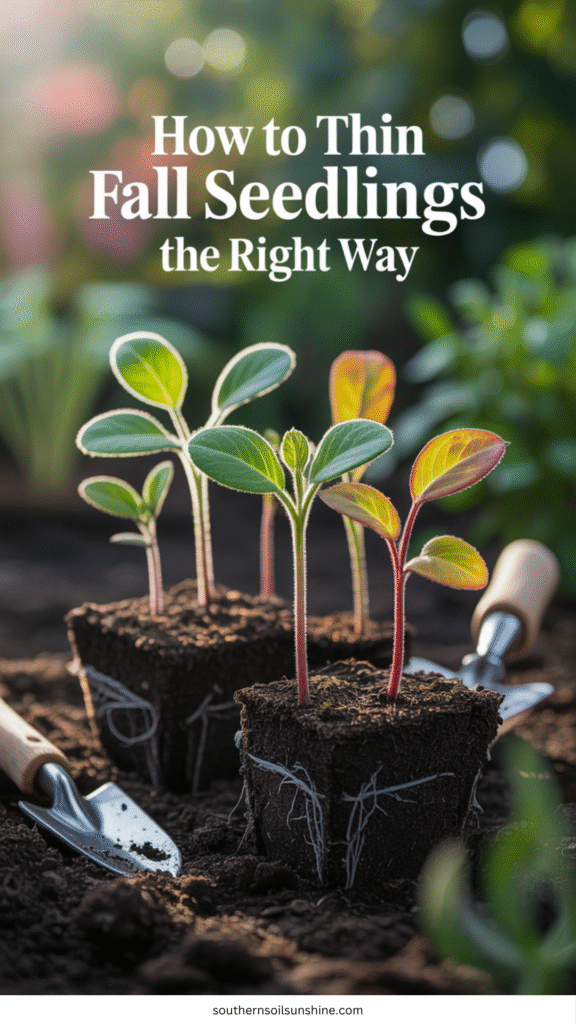
How to Thin Fall Seedlings the Right Way

Some of the links on this website are affiliate links, which means that if you make a purchase through these links, I may earn a small commission at no additional cost to you. As an Amazon Associate, I earn from qualifying purchases. I only recommend products I genuinely trust and believe will bring value to my readers. Also, some of the content was created with strategic use of AI tools. For more information, please visit the Privacy Policy page. Thank you for supporting my blog and helping me continue to provide valuable content. Gardening is more than growing food—it's where God grows us. If you're hungry for a faith that feels grounded again, I wrote a book for you. Download my free eBook: Rooted in Grace: A Christian Guide to Intuitive Gardening
🌱A Gentle Start: Making Space to Grow
Fall seedlings can be deceptive—tiny at first, then suddenly crowding one another as cooler weather encourages steady, steady growth.
Thinning is not about waste; it’s about stewardship. We create space so the strongest plants can flourish, knowing that in the process, nothing truly goes to waste—many thinnings can be eaten, transplanted, or composted back into the soil.
In the garden and in life, making space often means letting go—not because what’s removed is unworthy, but because the remaining plants (or commitments, or relationships) need room to develop fully. Thinning teaches us that growth sometimes requires subtraction and trust.
🌱 Why Thinning Matters for Fall Crops
1. Prevents Resource Competition
Crowded seedlings compete for water, nutrients, and light, leading to stunted, weak plants.
2. Promotes Stronger Root Development
When each plant has the proper space, roots spread deeply, improving stability and nutrient uptake.
3. Improves Air Circulation
Cooler fall air can be damp, increasing the risk of fungal diseases. Thinning reduces humidity around leaves.
4. Increases Yield Quality
Properly spaced plants produce larger heads of lettuce, straighter carrots, and more flavorful beets.
5. Extends Harvest Windows
Healthy plants withstand light frosts and pests better, giving you more harvest weeks before winter.
📅 When to Thin Fall Seedlings
Thinning too early risks damaging the survivors; too late means you’ve already slowed their growth.
General Timing by Crop:
- Leafy Greens: Thin when seedlings have 2–3 true leaves (about 2–3 inches tall).
- Root Crops: Thin once seedlings are 2–3 inches tall, before roots begin to swell and intertwine.
- Brassicas: Thin after plants are well-established with 3–4 true leaves, or adjust spacing post-transplant.
- Herbs: Thin when they form their first true set of leaves for bushier growth.
🗺 Zone-Specific Thinning Tips
Zones 9–10 (Warm Climates)
- Seedlings may grow quickly even in October heat. Thin earlier to prevent crowding stress.
- Water immediately after thinning to help plants recover from the added heat exposure.
Zones 7–8 (Mild Climates)
- Moderate temperatures give you a longer thinning window. Aim for early morning work to avoid midday warmth.
- Consider a second light thinning mid-season if plants still feel crowded.
Zones 5–6 (Cooler Climates)
- Shorter days slow seedling growth—thin promptly so plants can size up before frost.
- Use row covers immediately after thinning to encourage recovery.
📋 Step-by-Step: Thinning Fall Seedlings
1. Water Before You Begin
Moist soil allows roots to slip free without pulling neighboring seedlings out by accident.
2. Identify the Best Plants to Keep
Look for:
- Upright stems
- Even leaf color
- No insect damage
- Uniform spacing potential
These are the “keepers” that will repay your effort.
3. Choose Your Method
- Pulling: Best for sturdy greens like kale or lettuce; loosen soil first.
- Snipping: Use scissors to cut seedlings at soil level—perfect for carrots, beets, and any crop prone to root disturbance.
4. Thin to Correct Spacing
Use these general distances unless seed packet suggests otherwise:
- Carrots & Radishes: 2 inches
- Beets & Turnips: 3–4 inches
- Lettuce: 6–8 inches (loose-leaf), 10–12 inches (heading)
- Spinach: 4–6 inches
- Kale & Chard: 8–12 inches
5. Reuse What You Remove
- Edible Thinnings: Use beet greens, radish leaves, or tiny lettuces in salads.
- Transplant: In cooler, damp conditions, some thinnings can be replanted elsewhere.
- Compost: Return nutrients to your soil for future crops.
6. Water and Mulch
After thinning, water gently but thoroughly. Add a light mulch to conserve moisture and protect roots.
7. Monitor and Adjust
Check spacing after a week. Seedlings sometimes “lean” into open spaces, requiring slight re-thinning.
🌿 Troubleshooting Common Thinning Challenges
- Seedlings Wilting Post-Thin: Thin in the early morning or on a cloudy day; water immediately.
- Accidental Uprooting: Switch to snipping method to avoid root disturbance.
- Uneven Germination: Fill gaps by transplanting sturdy thinnings.
- Pest Damage: Protect freshly thinned rows with lightweight row covers.
🥕 Crop-by-Crop Spacing & Thinning Quick Reference
| Crop | First Thin Height | Final Spacing | Notes |
|---|---|---|---|
| Carrots | 2–3″ tall | 2″ apart | Snip, don’t pull |
| Radishes | 2–3″ tall | 2″ apart | Very fast growers |
| Beets | 2–3″ tall | 3–4″ apart | Eat the greens |
| Lettuce | 2–3″ tall | 6–12″ apart | Space by type |
| Spinach | 2–3″ tall | 4–6″ apart | Harvest outer leaves |
| Kale | 3–4 true leaves | 8–12″ apart | Transplantable |
| Swiss Chard | 3–4 true leaves | 8–12″ apart | Regrows after cutting |
📝 Journal Prompt
What areas of my life feel overcrowded right now? What might God be inviting me to thin out so the most important things have room to flourish?
✨ Grace Note
Thinning reminds us that sometimes less truly is more. Removing what is good can make room for what is best.
“Every branch that does bear fruit He prunes, that it may bear more fruit.” – John 15:2
🪴 Final Thoughts
Thinning is more than a chore—it’s a moment of intentional partnership with your garden. By giving each plant the space it needs now, you set the stage for healthier growth, a bigger harvest, and fewer problems down the road.
The process takes patience and a willingness to make decisions, but the reward is a garden that reflects both good stewardship and God’s principle of pruning for greater fruitfulness. This fall, thin with confidence, knowing that your careful choices today will yield abundance tomorrow.
🌿 Related Garden Wisdom
- Cool-Season Crops to Plant in October
- Protecting Fall Crops with Row Covers
- Using Worm Castings in Fall Gardens
📄 Printable Resource
Download the Fall Seedling Thinning Chart — includes spacing for common fall crops, thinning techniques, and a journal reflection page.
Listen to the Podcast!
Tune into The Rooted In Grace Podcast for faith-filled garden encouragement.
📘Rooted in Grace: The eBook
Feeling scattered or unsure about what to plant, when, or how to keep it all alive?
Grab Rooted in Grace—your soulful companion for gardening through every season.
This eBook will walk you through the rhythms of intuitive gardening, spiritual reflection, and simple seasonal wins.
💌Want More Grace in Your Inbox?
Sign up here to start growing with grace! Next?
- Weekly encouragement
- Exclusive download Monthly garden to-do lists
- Early access to podcast episodes & products