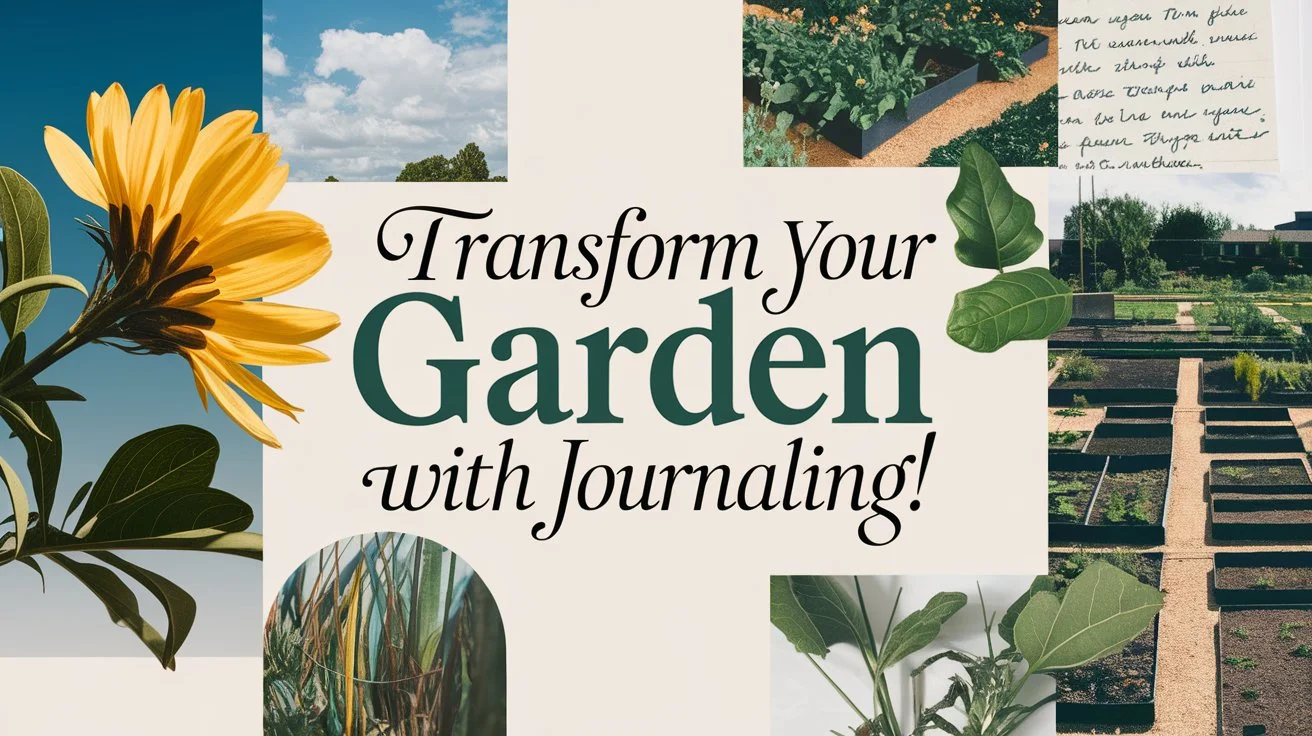
The Importance of Garden Journaling & How to Start Your Own
Some of the links on this website are affiliate links, which means that if you make a purchase through these links, I may earn a small commission at no additional cost to you. As an Amazon Associate, I earn from qualifying purchases. I only recommend products I genuinely trust and believe will bring value to my readers. Also, some of the content was created with strategic use of AI tools. For more information, please visit the Privacy Policy page. Thank you for supporting my blog and helping me continue to provide valuable content. Gardening is more than growing food—it's where God grows us. If you're hungry for a faith that feels grounded again, I wrote a book for you. Download my free eBook: Rooted in Grace: A Christian Guide to Intuitive Gardening
“`html
The Importance of Garden Journaling & How to Start Your Own 📖
I didn’t always keep a garden journal. I genuinely thought I could remember when I planted my tomatoes, which pepper variety thrived in our brutal Houston summers, and when those early frosts would sneak in. But after a few seasons of forgetting our critical frost dates, losing track of what actually worked in our Zone 9 heat, and re-buying the same seeds I’d already planted last year, I realized something profound: garden journaling isn’t just helpful — it’s a complete game-changer. 🌱
Now, I jot down everything — planting dates, what flourishes (and what frankly flops), our unpredictable Houston weather patterns, how our soil behaves month to month, and even those little observations about which heirloom tomato really loves our afternoon shade. And let me tell you, it has completely transformed my gardening life. The garden journal has become my faithful companion, my problem-solver, and honestly, my best teacher.
If you’re not keeping a journal yet, I want to show you why it’s essential — especially here in the subtropics — and walk you through exactly how to start one today. This isn’t about perfection. It’s about learning from your own garden’s beautiful, messy history so you can grow bigger, healthier, and more abundant plants every single season. ✨
🌿 Why Keep a Garden Journal?
Garden journaling isn’t just about writing things down. It’s about learning from your own garden’s history so you can respond faithfully to what your unique growing space is actually telling you. In Zone 9, where our seasons blur together and our weather can shift dramatically, a garden journal becomes your eyes and memory combined.
🌱 The Intuitive Gardener’s Why: When you journal, you’re practicing the first principle of intuitive gardening — observe. You’re paying attention to patterns, rhythms, and the unique personality of your garden. Over time, this observation becomes wisdom, and wisdom becomes confidence in your decisions.
Tracks What Works (& What Doesn’t): 🍅 No more wondering why your tomatoes flourished last June but completely wilted this year. Your journal becomes a record of varieties that love our Houston heat, planting times that aligned with success, and those experimental plants that just don’t belong in our climate. After three seasons of notes, you’ll see the patterns emerge.
Saves Time & Money: 💰 There’s real wisdom in knowing which seeds germinate reliably for you, which fertilizers actually improve your soil, and which gardening purchases were worthwhile investments versus impulse buys. Every dollar you avoid wasting is a dollar you can invest in something that truly serves your garden.
Improves Planning: 🌿 A journal helps you see the full year. You’ll notice when to succession plant lettuce before our brutal summer, when to prepare beds for fall planting, how crop rotation actually works in your space, and when seasonal transitions are coming. For our subtropical climate, this is absolutely crucial.
Helps Predict Weather Patterns: ☀️ Our Houston weather is wonderfully unpredictable, but over years, patterns emerge. By recording frost dates, first freeze dates, heat waves, and unusual rainfall, you’ll start to anticipate what’s coming. You’ll know intuitively when that late freeze might arrive or when to brace for a drought.
Boosts Creativity: 🎨 A garden journal invites dreaming. Sketch layouts for new beds, brainstorm which heirloom varieties you want to try, plan garden projects for the seasons ahead. Some of my best garden ideas came from flipping through old journal pages and thinking, “What if we tried that differently?”
📝 What to Include in a Garden Journal?
A garden journal can be as simple or detailed as you want it to be. Whether you prefer a weathered notebook on your potting bench, a digital tracker on your phone, or a beautifully illustrated bullet journal, the format matters far less than consistency. Here’s what I track across my seasons:
| 📖 Journal Section | 🌿 What to Record | ✍️ Why It’s Important for Zone 9 |
|---|---|---|
| Planting Dates & Frost Info | First & last frost dates, seed starting times, transplant dates | Our last frost is typically mid-April; tracking this prevents frost loss and helps with succession planting |
| Weather & Climate | Rainfall, temperature highs/lows, frost/freeze dates, humidity notes | Houston’s heat spikes and humidity patterns affect watering schedules and plant stress |
| Garden Layouts & Bed Maps | Sketches of raised beds, containers, spacing notes, companion planting | Helps optimize space in smaller yards and tracks which areas get afternoon shade |
| Plant Growth & Health Notes | Germination times, growth rates, pruning schedules, harvest readiness | Some varieties grow faster in our heat; tracking helps you time plantings correctly |
| Soil & Amendment Records | pH levels, nutrient additions, compost contributions, mulch applications | Our alkaline Houston soil needs regular amendments; tracking prevents guesswork |
| Pest & Disease Log | What pests appeared, when, what treatment was used, results | Knowing when spider mites or whiteflies typically appear helps you prevent problems |
| Harvest Records | Dates harvested, yields, flavor notes, storage methods, seed saving notes | Helps you choose varieties that actually produce in our climate and when peak harvest occurs |
⚠️ Watch Out: Don’t feel pressured to record everything perfectly. I’ve learned that a messy, honest journal is infinitely more valuable than a pristine one you’re afraid to write in. Spill coffee on the pages. Use pencil instead of pen. Write sideways in the margins. Your journal should be a living tool, not a museum piece.
💡 Five Creative Ways to Keep a Garden Journal
Your journal should fit your personality and your actual gardening rhythm. Here are five approaches that work beautifully for different gardening styles:
1️⃣ The Classic Notebook Journal 📖
Perfect for: Old-school gardeners who love pen, paper, and sitting on the porch with a cold sweet tea.
Grab a sturdy notebook — something weatherproof or keep it under shelter. Use lined pages for your seasonal notes and observations. Dedicate blank pages to sketches, garden layouts, and those little diagrams that help you remember which bed is which. I like to keep index tabs so I can flip quickly to the month I need.
💚 Pro Tip: Use color-coded sticky notes to mark different sections — green for planting info, orange for pest problems, blue for harvest notes. This helps you find information at a glance, especially when you’re rushing out to the garden with a question.
2️⃣ A Digital Garden Journal 📱
Perfect for: Tech-loving gardeners who appreciate accessibility and easy photo documentation.
Create a Google Sheets tracker where you can log planting dates, weather notes, and harvest records. Apps like GrowVeg, Planter, or Gardenize let you upload plant photos and track progress visually. The beauty of digital journaling is that you can set phone reminders for watering schedules, fertilizer applications, or pest checks — especially helpful during our hot summers when plants need attention daily.
Snap photos regularly. Over a season, a photo timeline shows your garden’s transformation and helps you remember exactly what happened and when.
3️⃣ A Bullet Journal-Style Garden Tracker 🎨
Perfect for: Creative minds who love visual organization and the meditative practice of beautiful documentation.
Combine sketching, writing, and organized layouts in one journal. Create monthly spreads showing what’s planted, what needs attention, and what’s ready to harvest. Use symbols — a leaf for planting dates, a droplet for watering needs, a sun for heat alerts. This approach marries creativity with practicality and becomes something you actually want to flip through.
4️⃣ A Photo-Based Visual Journal 📸
Perfect for: Visual learners who remember better through images than words.
Take consistent photos of your garden beds from the same angle each month. Add captions with the date, what’s growing, and brief notes. Keep these organized in a digital album or printed in a binder. Over years, watching your garden evolve visually becomes profoundly meaningful — and it helps you spot patterns you might miss in text alone.
5️⃣ A Hybrid Approach (My Personal Favorite) 🌱
Perfect for: Gardeners who like flexibility and want the best of multiple formats.
Keep a quick-reference digital spreadsheet for data you need to access fast (frost dates, planting schedules, pest logs). Maintain a physical notebook for observations, reflections, and those quiet moments where you’re thinking through a garden problem. Take regular photos. This way, you capture information in whatever format feels most natural in that moment — and everything serves your overall gardening wisdom.
🌿 Getting Started: Your First Journal Entry
Don’t overthink your first entry. Simply begin where you are. If it’s spring, document what you’re planting now. If it’s summer, record what’s thriving and struggling in the heat. If it’s fall, note what you’re preparing for the cooler season. Your journal doesn’t need to start on January 1st — it starts
🌿 Ready to Go Deeper in the Garden?
If this article resonated with you, you might be ready for something more than tips — you might be ready for
a whole new way of seeing your garden.
- 📖 Download the FREE Rooted in Grace eBook — Intuitive gardening for the faith-filled suburban gardener.
- 📚 Get the Rooted in Grace Print Book on Amazon — A beautiful companion for your garden journal.
- 🌱 Join Rooted Reset — A 5-day gentle reset to slow down, pay attention, and tend what matters most.
- 📌 Follow @southernsoils on Instagram — Daily garden encouragement in your feed.
- 📌 Save & share on Pinterest — Pin this for later and share it with a gardening friend.
- 👥 Join us on Facebook — Connect with a community of faith-filled gardeners.
“The garden is not just a place to grow plants — it is a place to grow yourself.” 🌸



3 Comments