
Refreshing Mulch for Summer: Keeping Roots Cool as Temperatures Climb
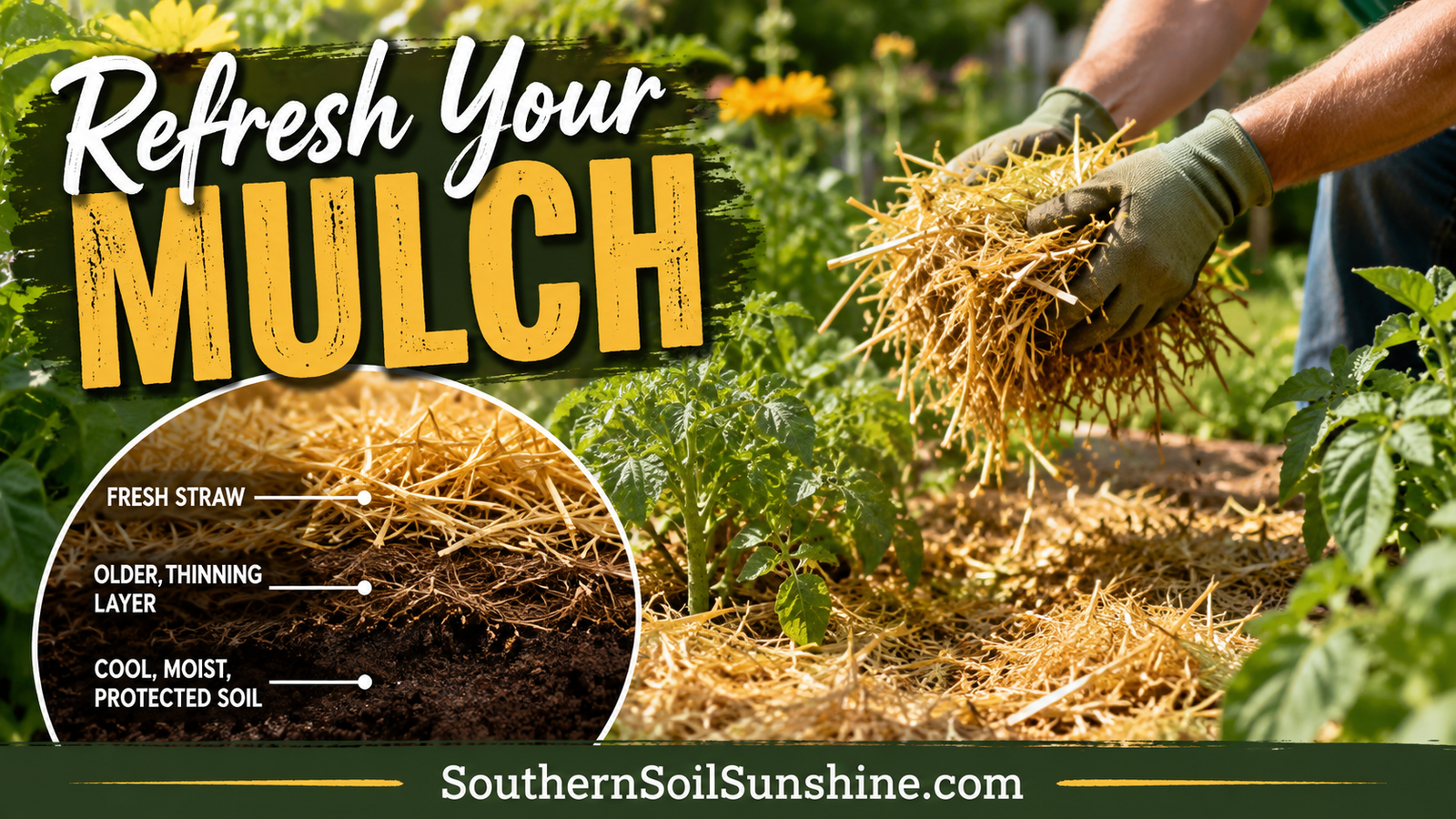
Topping Up the Blanket Before the Real Heat 🌾
You mulched your beds back in spring, and that layer has been quietly working ever since — holding moisture, blocking weeds, protecting the soil. But mulch does not last forever. Organic mulch breaks down over time (which is exactly what we want, since that is how it feeds the soil), and by late May, your once-generous layer has likely thinned, settled, and decomposed down to a fraction of what you spread. And that thinning comes at the worst possible moment, right as the Zone 9 heat is climbing toward its brutal summer peak, when your soil and roots need that protective blanket most. Now is the time to refresh it — to top up the mulch before the real heat arrives, keeping your soil cool and moist through the hardest season.
This day’s task is to refresh your mulch layers to keep the soil cool, and it carries a tender phrase: add protection where life is heating up. Let me show you why refreshing mulch now matters so much, and why adding protection right where things are heating up is wisdom for far more than a garden bed.
Free eBook
Rooted in Grace
A Christian guide to intuitive gardening — the whole book, free. Tell me where to send it and it’s yours in a minute.
Why Mulch Thins Just When You Need It Most
There is a cruel irony in mulch timing. The very process that makes organic mulch so valuable — its slow breakdown into rich soil — also means it steadily disappears, and it disappears fastest in warm, moist conditions, which is to say, exactly as our summer approaches. The straw and leaves and compost you laid down in spring have been decomposing all season, feeding your soil but also thinning the protective layer. So by late May, right when the sun is growing fierce and your soil is at greatest risk of baking and drying, your mulch is at its weakest. Left un-refreshed, thinning mulch means hotter soil, faster evaporation, more weeds, and stressed roots — all during the season your plants can least afford it.
Refreshing the mulch now closes that gap. By topping up the layer just as the heat arrives, you ensure your soil goes into summer fully protected: roots kept cool, moisture held, weeds suppressed, right through the months when all of that matters most. It is a small, well-timed task with an outsized payoff for the health of your whole summer garden.
How to Refresh Your Mulch
Refreshing mulch is simple — you are adding to what is there, not replacing it. Here is the approach.
| Step | What to Do |
|---|---|
| Assess | Check where mulch has thinned to bare soil |
| Weed first | Clear any weeds before adding new mulch |
| Water | Moisten dry soil before covering |
| Top up | Add fresh mulch back to 2–3 inches deep |
| Keep off stems | Leave a collar of bare soil around plants |
Walk your beds and look for where the mulch has broken down and thinned, exposing bare soil. Quickly clear any weeds that have crept into those gaps, water any dry areas, then add fresh mulch — straw, shredded leaves, compost, or your material of choice — back up to a good two-to-three-inch depth. As always, keep the mulch pulled back a couple of inches from plant stems. You do not need to remove the old, partly-decomposed mulch; simply lay the new on top, where it continues the protection while the older layer keeps enriching the soil below.
The Many Gifts of Summer Mulch
It is worth remembering everything this refreshed layer does for you through the hard months. It keeps the soil cool, protecting roots from heat stress. It slows evaporation, so the water you give lasts far longer and your plants stay hydrated between waterings. It suppresses the weeds that would compete for scarce summer water. It prevents the soil surface from crusting and cracking in the heat. It protects the soil life — the worms and microbes — that keep your ground healthy. And as it breaks down, it continues feeding your soil. A single refreshed layer of mulch quietly delivers all of this, all summer long, for the price of an afternoon’s work now.
Add Protection Where Life Is Heating Up
This day’s phrase is one worth carrying: add protection where life is heating up. Refreshing mulch is such a clear picture of it. As the season grows harsh and the heat intensifies, you do not leave your soil exposed and hope for the best — you intentionally add protection, precisely where and when the conditions are becoming most difficult. You shore up the defenses just as the pressure mounts, so that what you are trying to grow is sheltered through the hardest stretch.
How wise this is for our own lives and the lives of those we love. When a season is heating up — when the pressure rises, the demands multiply, the conditions turn genuinely hard — the instinct too often is to simply push through, exposed and unprotected, hoping to endure. But the garden teaches a gentler wisdom: add protection where life is heating up. When things intensify, that is precisely the time to shore up our defenses — to protect our rest, our margins, our relationships, our practices of renewal — not to strip them away in the name of pushing harder. The hotter the season, the more protection we need, not less. So as you refresh your garden’s mulch today, adding a cool, protective layer just as the heat climbs, let it prompt you to do the same in your own life. Where is life heating up for you right now? And are you adding protection there — the rest, the boundaries, the shelter — or leaving yourself exposed to bake? Add protection where life is heating up. It is one of the most caring and sustaining things you can do, for your garden and for yourself, as the hard season arrives.
Share your refreshed summer beds with us on Instagram @southernsoils — there is real care in protecting the soil before the heat descends.
Best Mulches for Summer Heat
Any organic mulch helps, but some materials excel at keeping soil cool and moist through a Zone 9 summer. Here is what works well for the refresh.
| Mulch | Summer Strengths |
|---|---|
| Straw | Light color reflects heat; excellent insulation |
| Shredded leaves | Free, cooling, enriches soil as it breaks down |
| Pine straw | Plentiful here; stays put, breathable |
| Grass clippings (dry, thin) | Free; apply in thin layers so they don’t mat |
| Compost + straw on top | Feeds and protects at once |
Straw is a particular favorite for summer because its light color actually reflects some of the sun’s heat rather than absorbing it, keeping the soil beneath noticeably cooler. Shredded leaves are wonderful and usually free. A lovely combination is a thin layer of compost against the soil topped with straw — the compost feeds while the straw insulates and reflects. Whatever you choose, aim for a light, breathable material rather than something dense that could trap too much moisture in our humidity. The goal is a cool, airy blanket, not a heavy mat.
Keep Checking Through the Summer
This refresh is not a one-and-done task — mulch continues to break down all summer, faster in the heat and moisture, so plan to walk your beds every few weeks and top up wherever the layer has thinned or bare soil is peeking through. Think of it less as a chore and more as tucking the blanket back in as it slips. A quick check and a handful of fresh mulch here and there keeps the protection unbroken through the whole hard season. The gardens that sail through a Zone 9 summer with the least stress and the least watering are almost always the ones kept faithfully mulched — the soil never left exposed to bake, the moisture always held, the roots always cool. It is one of the quietest and most powerful habits of summer gardening in our climate.
And the payoff compounds. Every layer of mulch you add and let break down enriches your soil for the seasons to come, so the faithful mulcher is not only protecting this summer’s garden but building richer, more resilient ground year after year. Few tasks give back on so many timelines at once — cooling the soil today, feeding it tomorrow, and improving it for every season ahead.
Shelter Before the Storm of Heat
So take the afternoon today to walk your beds, clear the thin spots, and refresh your mulch back to a generous, protective depth before the true heat of summer descends. It is humble, unglamorous work — spreading straw and leaves over the soil — but it is exactly the kind of well-timed protection that carries a garden safely through its hardest season. You are adding shelter just before the storm of heat arrives, and your soil, your roots, and your whole summer garden will be the better for it. Refresh the protection now, keep topping it up through the heat, and carry the same wisdom into your own life — adding shelter and care right where the season is heating up, so that you, like your garden, are protected and sustained through whatever hard stretch is coming.
An afternoon of refreshing mulch now is one of the highest-value gifts you can give your Zone 9 garden — cooler soil, held moisture, and fewer weeds through the hottest months — and a gentle reminder to add shelter and protection wherever your own life is heating up, too.
Ready to Go Deeper in the Garden?
If this article resonated with you, you might be ready for something more than tips.
- Download the FREE Rooted in Grace eBook
- Join Rooted Reset
- Follow on Instagram – @southernsoils
“The garden is not just a place to grow plants – it is a place to grow yourself.”
Free eBook
Before you go — the book is yours
Rooted in Grace: A Christian Guide to Intuitive Gardening. No cost, no catch. Read it on any device, at whatever pace the season allows.