15 Small Backyard Homestead Ideas to Maximize Your Productivity
15 Small Backyard Homestead Ideas to Maximize Your Productivity 🌱
There’s something about a small backyard that invites us to slow down and pay attention. Maybe it’s the Houston heat pushing us to plant in summer shade, or the way our Zone 9 soil whispers what it needs. Whatever drew you here, I want you to know: small spaces aren’t limitations—they’re invitations to garden with intention.
I’ve learned that the most abundant harvests don’t always come from the biggest yards. They come from gardeners who observe their space, reflect on what will truly nourish their family, and respond faithfully to what that little plot of earth is telling them. Whether you’re working with a cozy suburban quarter-acre or a balcony overlooking the city, this guide will help you transform that space into a thriving homestead bursting with fresh food, beauty, and purpose. 🌿
Free eBook
Rooted in Grace
A Christian guide to intuitive gardening — the whole book, free. Tell me where to send it and it’s yours in a minute.
The Art of Observing Your Small Space
Before we dive into specific ideas, let’s pause and observe together. Walk around your backyard in the morning and again in the afternoon. Where does the sun linger longest? Where do shadows fall thickest? In Houston’s heat, that afternoon shade becomes precious real estate come July and August. Notice the breeze patterns, the moisture pockets, the spots where water collects after rain. These observations will become your greatest gardening teachers.
1. Vertical Gardening for Small Spaces
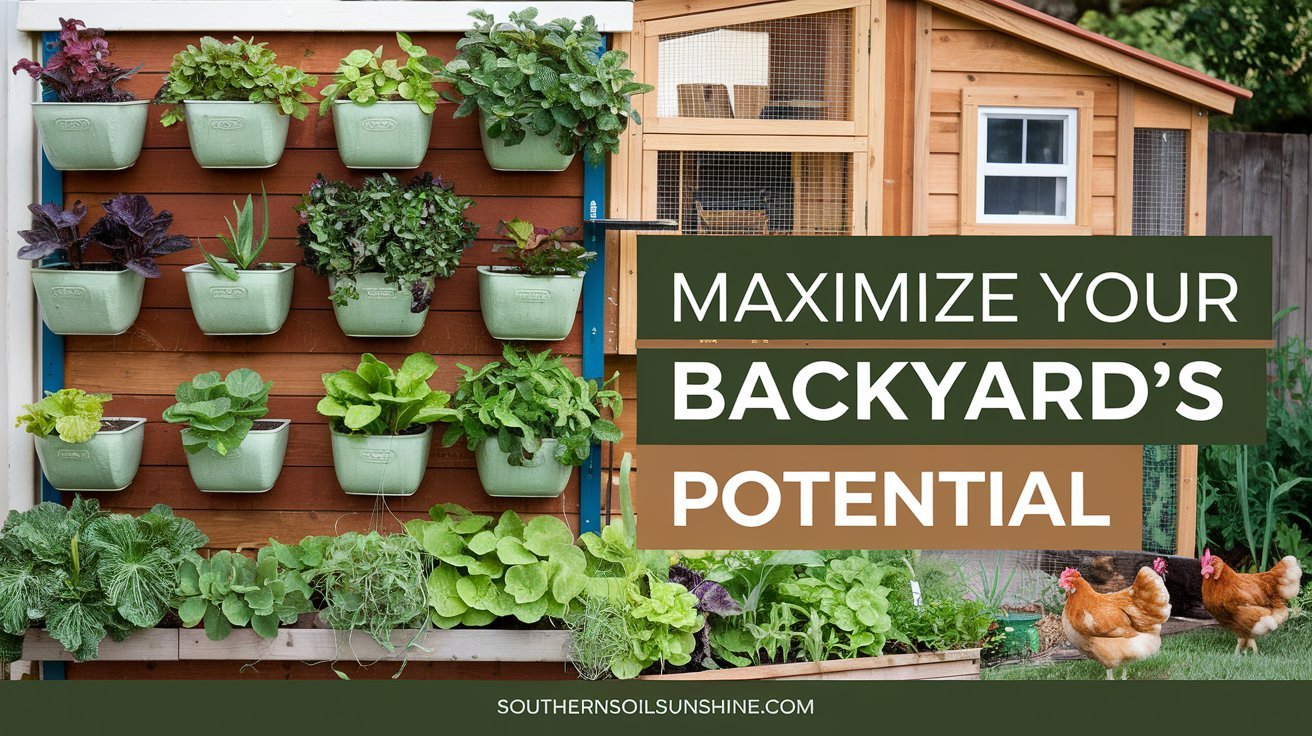
Vertical gardening isn’t just clever—it’s faithful stewardship of the space you’ve been given. By growing upward instead of outward, you’re honoring your square footage and multiplying your harvest potential at the same time.
Wall-mounted pots, trellises, and tiered planters transform a blank fence into a living pantry. In our Zone 9 climate, vertical gardens offer another gift: better air circulation around the plants, which helps prevent the fungal issues we battle during our humid springs and falls. Think herbs like basil, oregano, and thyme cascading down a sunny wall. Imagine compact varieties of tomatoes, peppers, and even beans climbing a sturdy trellis. You’re not just saving floor space—you’re creating a microclimate that works with our Houston weather patterns.
Sanda’s Tip: Plant heat-loving herbs on your south-facing vertical wall, but position leafy greens on an east-facing trellis where they catch morning sun but avoid our brutal afternoon rays. In August, even tough herbs appreciate a little mercy from the 3 p.m. heat. 🫖
Vertical gardens also work beautifully with drip irrigation—another blessing in a small space. When you’re not watering by hand each day, you free up time to simply observe your garden, to sit with it, to notice what’s asking for attention. That’s when the real gardening happens.
2. Raising Backyard Chickens for Fresh Eggs
There’s wisdom in keeping chickens, especially in a small backyard. They’re teachers, really—showing up each morning ready to do their work, scratching and pecking the soil, transforming kitchen scraps into golden eggs. In Zone 9, chickens thrive beautifully, though we need to plan for their comfort during our intense summers.
A modest coop in one corner of your yard provides fresh eggs, natural fertilizer, and that quiet joy of stepping outside to collect breakfast. Chickens are also excellent pest controllers, eating insects and their larvae while you sleep. Check your local Houston ordinances (most suburban areas allow 3-6 hens), and position your coop where it catches morning sun but has afternoon shade shelter.
The real magic happens when you integrate your chickens with your garden. Compost from their roosts feeds your beds. Crop scraps feed your flock. Their manure, aged properly, becomes black gold for your vegetables. It’s a complete cycle—and in a small space, that efficiency becomes essential.
Sanda’s Zone 9 Note: Our Houston summers are brutal on chickens. During peak heat (July-August), provide deep shade structures, fresh water in multiple locations (it gets hot quickly), and consider adding electrolytes to their water. Predators also hunt year-round here—raccoons especially thrive in our suburban areas. Invest in a truly secure coop with proper hardware cloth, not just wire fencing.
3. Composting in Tight Spaces
Even in a small backyard, composting is possible and powerful. A compact bin tucked against a fence transforms kitchen scraps and yard waste into the rich, dark earth amendment that small gardens desperately need.
For Houston gardeners, composting addresses a real challenge: our sandy or clay-heavy soils benefit enormously from organic matter. Every bit of compost you create reduces your dependence on bags from the garden center and keeps nutrients cycling right there in your space. In a small yard, that matters.
Three methods work beautifully for tight spaces: the stationary bin (just a 3’x3′ wire enclosure), a rotating tumbler (faster results, fits in corners), or even vermicomposting indoors if space is truly minimal. The key in Zone 9 is managing moisture and heat. Our summer rains and humidity mean you’ll need to turn your pile more frequently than gardeners in drier climates, and you may need to add carbon (dry leaves, shredded paper) more often to balance things out.
4. Container Gardening for Maximum Flexibility
Container gardening speaks directly to small-space hearts. Every pot is a world unto itself, positioned exactly where it needs to be. Moving a container in August to escape the hottest afternoon sun? That’s responsive, intuitive gardening at its finest.
Large containers (at least 18-24 inches deep) work best for most vegetables. Fill them with quality potting mix—not garden soil, which compacts in containers—and you’re set. The beauty of containers in Houston is flexibility: you can move them, protect them from unexpected freezes, and adjust their placement as seasons shift.
| Container Type | Best For | Zone 9 Consideration |
| Large clay/ceramic pots (24″+) | Tomatoes, peppers, eggplant | Heavy but breathable; soil dries fast in heat |
| Fabric grow bags (20+ gallons) | Any vegetable; excellent drainage | Light, moveable; retains moisture better than ceramic |
| Wooden raised containers | Greens, herbs, shallow-rooted crops | Use untreated wood; lasts 4-5 years in our climate |
| Self-watering containers | Herbs and salad greens | Good for consistency; check moisture in extreme heat |
5. Herb Spirals and Tiered Plantings
An herb spiral might be the most elegant solution to small-space gardening. This ascending mound of herbs not only saves space but creates microclimates—drier conditions at the peak for Mediterranean herbs like rosemary, moister soil at the base for mints and parsley.
In Houston’s humid climate, this vertical arrangement helps with drainage and air circulation, two things that can prevent root rot during our wet springs. Plant your spiral in a sunny corner, and you’ve created a functional piece of garden art that feeds you daily.
6. Trellis and Wall Gardening Systems
A simple trellis against a sunny fence becomes a support system for beans, peas, cucumbers, and lightweight melons. In Zone 9, this isn’t just space-saving—it’s heat-smart. A vine-covered trellis also creates afternoon shade for plantings behind it, which extends your growing season into our hot summers.
Wall-mounted planter systems, living walls, and espalier techniques all follow the same principle: grow up, not out. Your small yard becomes three-dimensional, and with it, your abundance multiplies.
7. Keyhole Garden Beds
A keyhole garden—a circular bed with a wedge-shaped entry and a composting center—is designed specifically for small, intensive gardening. The composting core feeds plants as it breaks down, and the circular design maximizes growing area while minimizing pathways.
This approach reflects the intuitive gardening framework beautifully: you’re observing that nutrients cycle, reflecting on how to work with that reality, and responding by building a system that feeds itself. It’s elegant and efficient.
8. Succession Planting for Continuous Harvests
In a small space, you can’t afford to have an empty bed. Succession planting—sowing seeds every two weeks rather than all at once—ensures continuous harvests from the same piece of earth.
Plant lettuce today, and in two weeks, plant more lettuce in another container. By the time you harvest the first crop, the second is ready to go in the ground. In Houston, this works year-round if you time it wisely. Our main growing seasons are spring (February-May) and fall (September-November), but you can also succession-plant cool-season crops in winter and heat-lovers like okra and yard-long beans in summer.
Sanda’s Garden Wisdom: Keep a simple planting calendar. In Zone 9 Houston, I mark dates for planting lettuce every two weeks from August through March, and okra/beans every two weeks from April through July. Small notes about what actually produced well become invaluable knowledge year after year. 📅
9. Pollinator-Friendly Plantings
A small garden benefits immensely from native pollinators. Bees, butterflies, and beneficial insects aren’t extras—they’re essential partners in your homestead. Interplant flowers among your vegetables: marigolds, zinnias, and salvia bloom nearly year-round in Zone 9 and attract the creatures that make your harvests possible.
Native Texas wildflowers like gregg’s mistflower and purple coneflower also thrive in small spaces and require minimal water once established. You’re not just growing food; you’re creating habitat and honoring the interconnected life that makes gardening work.
10. Dwarf and Compact Vegetable Varieties
Choose varieties intentionally. Determinate tomatoes, compact pepper plants, and dwarf bean varieties were practically designed for small spaces. ‘Patio’ or ‘Tiny Tim’ tomatoes produce abundantly in containers. ‘Lunchbox’ peppers offer full-size flavor in half the space. ‘Provider’ beans mature quickly in just 50 days.
In Houston’s heat, these compact plants also manage better in containers where you can control soil moisture and amend as needed. They’re not second-rate—they’re thoughtfully bred for exactly what you’re trying to do.
11. Shade Gardening and Understory Planting
Not every corner of your
When Small Space Becomes Your Greatest Teacher
There’s a paradox we learn quickly in small-space gardening: limitation often breeds creativity more than abundance does. When you have one 4×8 raised bed instead of a quarter-acre, every decision matters. You can’t plant randomly and hope something thrives. You have to watch, listen, and respond to what your specific soil, sun, and space are actually asking for. That attentiveness—that patient observation—is where real gardening wisdom lives.
In Houston’s Zone 9, this becomes even more nuanced. Our clay-heavy soils, our intense summer heat, our specific humidity patterns—these aren’t problems to overcome with a bigger space. They’re invitations to know our land intimately. A gardener with a small backyard who truly understands their microclimate, their soil’s particular needs, and their region’s rhythms will harvest far more than someone with an acre who gardens by generic rules. Small space gardening teaches you to see your specific place, not just a generic “backyard.”
Building Soil in Small Spaces: The Long Game
One challenge small-space gardeners face that larger homesteaders sometimes miss: soil depletion happens faster when you’re harvesting intensively from the same concentrated area. You’re asking more from less earth, which means your soil amendment strategy becomes foundational, not optional.
Beyond the composting we mentioned earlier, consider creating a “soil-building rotation” even in a tiny space. Dedicate one container each season to a nitrogen-fixing cover crop—clover or buckwheat—that you’ll cut down and work back into the soil. Plant legumes (beans, peas) strategically, allowing their root nodules to deposit nitrogen naturally. Layer in aged compost before each planting season, and mulch heavily with leaves or straw to build organic matter gradually.
In our Houston clay, organic matter is liquid gold. It improves drainage in wet springs, increases water retention during dry spells, and creates the crumbly, life-filled soil structure that plants absolutely thrive in. A small space means you can afford to invest in really good soil amendments—high-quality compost, aged manure, even pricier additions like biochar. Spread that investment over a small area, and suddenly it becomes economically feasible to build genuinely excellent growing medium rather than settling for “good enough.”
Sanda’s Zone 9 Note: Test your soil every other year, especially in a small intensive garden. The Cooperative Extension office in your Harris County area offers affordable soil testing that shows pH, nutrient levels, and organic matter percentage. Knowing these numbers guides your amendment choices and saves guesswork.
Seasonal Transitions: Moving Your Garden Through Houston’s Two-Season Reality
While the rest of the country talks about spring, summer, fall, and winter, we Zone 9 gardeners experience something different: a long, hot growing season (roughly April through September) and a mild, precious cool season (October through March). Small-space gardening actually simplifies this reality because you can physically transition your entire garden between seasons.
Picture this: summer containers planted with heat-lovers—okra, long beans, Armenian cucumber, eggplant—positioned in full sun where they’re protected from afternoon wind. As late August arrives and heat stress becomes a real threat, you move some containers to afternoon shade or even to the east side of your house where they catch gentler morning light. In October, those same containers get cleared, refreshed with new potting soil, and replanted with lettuce, spinach, broccoli, and cool-season herbs.
You’re not fighting the seasons; you’re dancing with them. Your small space becomes responsive, adaptive. One gardener with three fabric grow bags, rotated strategically through the year, harvests more continuously than someone with a sprawling in-ground garden trying to force cool-season crops through our July heat.
This seasonal awareness also teaches us something deeper about living with intention. We learn to celebrate what each season offers rather than mourning what we can’t grow right now. The abundance of summer tomatoes and peppers, the quiet green wealth of winter lettuce—both are gifts, both are enough for their time. That perspective, learned in a small backyard, has a way of flowing into how we live our whole lives.
Ready to Go Deeper in the Garden?
If this article resonated with you, you might be ready for something more than tips.
- Download the FREE Rooted in Grace eBook
- Get the Rooted in Grace Print Book on Amazon
- Join Rooted Reset
- Follow on Instagram – @southernsoils
- Save on Pinterest – @southernsoilsunshine
- Join on Facebook – Southern Soil Sunshine
“The garden is not just a place to grow plants – it is a place to grow yourself.”
Free eBook
Before you go — the book is yours
Rooted in Grace: A Christian Guide to Intuitive Gardening. No cost, no catch. Read it on any device, at whatever pace the season allows.