Christmas Tablescapes: Bringing Your Garden Indoors
Christmas Tablescapes: Bringing Your Garden Indoors 🎄🌿
There’s something sacred about a Christmas table — a place where hearts slow down, where stories linger, and where beauty invites us to breathe deeply. In a season filled with noise and hurry, bringing the garden indoors becomes an act of gentle resistance. A way of saying, “We will choose wonder. We will choose Presence. We will choose peace.”
Here in Zone 9, we’re blessed with something many gardeners dream of: fresh greenery still growing strong through December. While the rest of the country watches bare branches, our gardens are still offering up cedar, magnolia, and fragrant herb sprigs. This year, I’m inviting you to let that abundance guide your Christmas tablescape — not as a show of excess, but as a grateful celebration of what God has grown right outside our back doors.
Free eBook
Rooted in Grace
A Christian guide to intuitive gardening — the whole book, free. Tell me where to send it and it’s yours in a minute.
The Table as a Place of Gathering and Grace
A Christmas tablescape is never really about perfection. It’s about presence. It’s about slowing down enough to notice the way candlelight catches on a magnolia leaf, how the scent of cedar and cinnamon makes us feel like we’re gathered in a sacred forest. This year’s tablescapes take their cues from winter’s quiet garden: evergreen branches, fragrant herbs, soft candlelight, citrus, dried blooms, and simple, soil-born textures. Whether your décor is simple or abundant, what matters most is the spirit of welcome woven through it. ✨
Sanda’s Zone 9 Note: In Houston, we can harvest fresh greenery into mid-December. Your cedars, magnolias, and rosemary are still tender and fragrant in late fall. Cut early morning, seal stems in water immediately, and they’ll stay vibrant through your holiday gatherings. This is one of our greatest gardening gifts!
Creating a Living Centerpiece 🌲🕯️
Letting Nature Lead the Way
Greenery, texture, and warm light — these are the building blocks of a table that feels both festive and grounded. The key is observation. Before you even think about arrangement, spend time in your garden. Walk the paths. Observe what’s calling to you. Notice what’s still thriving, what’s fragrant, what catches the light. Then respond faithfully by gathering those treasures with intention.
Begin With Fresh Greenery
In our Houston gardens, we have remarkable choices this time of year. Cedar offers delicate drape and that signature evergreen fragrance. Southern magnolia leaves bring glossy, sculptural depth — they’re almost architectural in their beauty. Fir sprigs provide fullness, and our native rosemary garlands offer both texture and the most wonderful scent when brushed by a passing hand.
The technique matters here: start with a loose, asymmetrical base down the center of your table, letting tips spill over the edge like a woodland path inviting someone deeper in. Aim for varied lengths (6–14 inches) to create movement and flow. Don’t make it tight and uniform — nature is never that. Nature is wild and generous, and that’s exactly what we’re honoring.
Add Earthy Textures
Here’s where your tablescape goes from lovely to unforgettable. We’re layering in the elements that catch light, hold fragrance, and tell a story of the season. Consider dried orange slices (you can dry these yourself in a slow oven), whole clementines still in their bumpy skin, pinecones from your landscape, cinnamon sticks bundled with twine, star anise, eucalyptus seed pods, and dried hydrangea blooms from your summer garden.
A gentle rule: cluster items in odd numbers — threes and fives have a natural rhythm that feels right to our eyes. Tuck citrus and pods near candle bases to catch the glow and amplify the warmth. This isn’t random scattering; it’s thoughtful placement that draws the eye and creates visual rest.
Let Candlelight Set the Tone
Light is the prayer of the table. Use a trio of heights — tapers, pillars, and votives — spaced every 18–24 inches for gentle rhythm. Brass or wooden holders ground the arrangement in warmth, while the varying heights create movement that mirrors how we actually see light dance in a room.
Sanda’s Garden Wisdom: Never place candles directly against greenery. Keep wicks at least 2 inches away from any foliage. Add water in low vessels near candles to reflect light safely and add humidity. Our Texas heat can dry out arrangements quickly — mist greenery lightly the morning of your gathering, and you’ll keep it fresh and fragrant through dinner.
Light always finds its way in. Let your table echo that truth.
Unconventional Botanicals 💐✨
Embracing Winter’s Quieter Elegance
Christmas florals don’t have to be traditional poinsettias and red amaryllis — though there’s certainly beauty there. This is the year to lean into winter’s quieter elegance. In Zone 9, we can source or grow some remarkable winter bloomers that feel both fresh and contemplative.
Consider white anemones with their dark, mysterious centers. Hellebores (sometimes called Christmas roses) bloom reliably through our mild winters. Delphinium brings unexpected height and structure. Ranunculus in cream or blush tones feels romantic without being fussy. Seeded eucalyptus offers that silvery, ethereal quality that makes people stop and really look.
Here’s the secret: one or two flower types paired with abundant greenery looks infinitely more serene than many varieties competing for attention. It’s the gardening principle of “less is more,” and it translates beautifully to the table. One perfect white ranunculus in a small bud vase says more than a dozen mixed blooms crowded together.
| Winter Bloom Option | Zone 9 Availability | Best Pairing | Vase Life |
| White Anemones | Florist source (Dec–Jan) | Cedar, magnolia leaves | 7–10 days |
| Hellebores | Garden grown (Dec–Feb) | Eucalyptus, herbs | 10–14 days |
| Ranunculus | Florist source (Dec–Jan) | Seeded eucalyptus | 8–12 days |
| Paperwhites | Garden forced (Dec–Jan) | Pinecones, cinnamon | 5–7 days |
| White Amaryllis Stems | Florist or forced bulbs | Magnolia, gold accents | 10–14 days |
Three Complete Tablescape Recipes 🍽️
Recipe One: Woodland Citrus + Evergreen
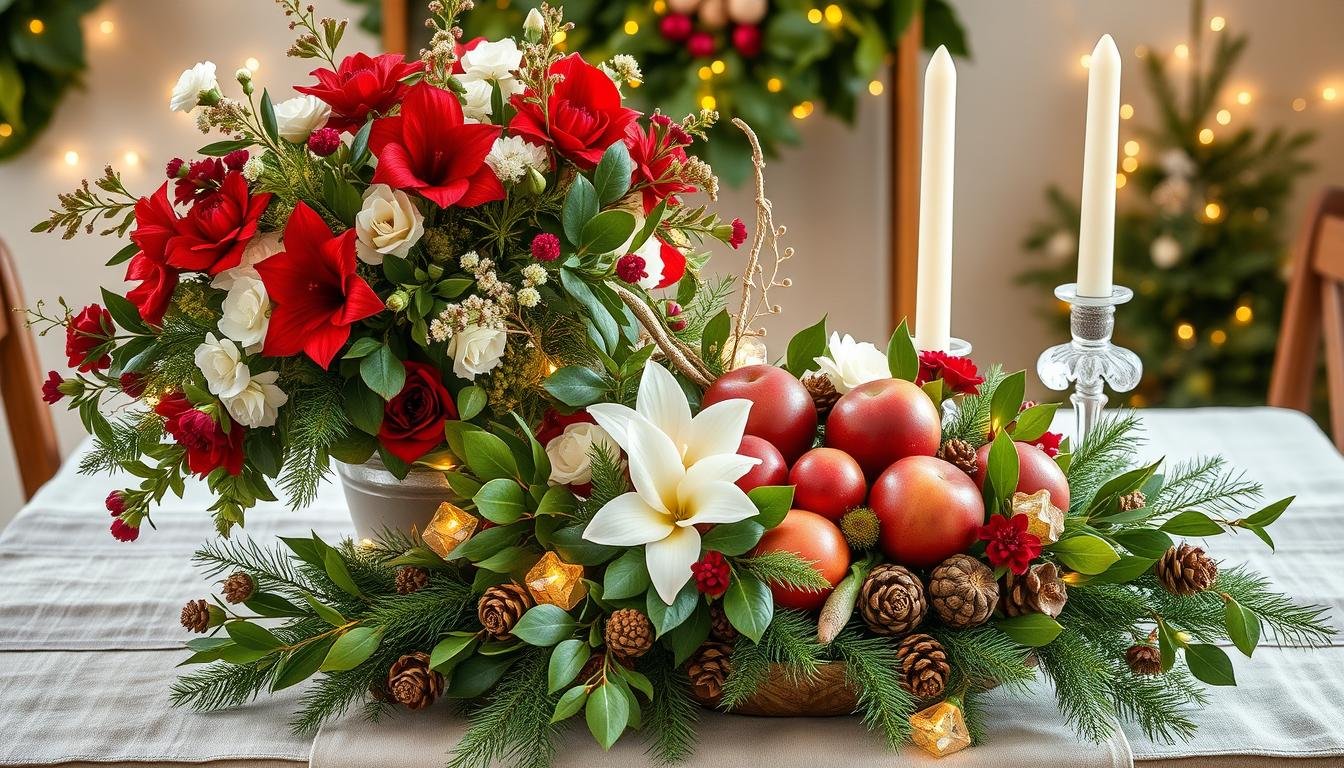
This arrangement celebrates the abundance of our Houston winter. Begin by laying a runner of fresh cedar or fir down the center of your table — about 12 inches wide. Cluster dried orange slices in groups of three or five near your candle bases, allowing them to catch and reflect the candlelight like small suns. Nestle whole clementines (still in their bumpy skin — they’re more beautiful that way) in threes throughout the runner. Scatter pinecones and cinnamon stick bundles tied with twine or raffia. Finally, place 6–8 ivory tapers in brass or wooden holders along the length, creating a gentle rhythm of light.
Pairing palette: Evergreen, linen white, soft gold, amber glass. Use simple white plates, linen napkins, and let the table’s natural colors speak. This is rustic elegance with a grateful heart.
Recipe Two: Winter Herb + Linen Minimalist
For those who love simplicity and intentional space, this arrangement speaks in a quieter voice. Center a simple linen runner down your table. Place 5–7 small clear bud vases with single stems of white hellebores or ranunculus — one bloom per vase, nothing more. Trail fresh rosemary or olive branches along both sides of the runner, allowing the fragrance to drift as people lean close. Add white pillar candles at varying heights in matte black or wooden holders. The beauty here is in restraint, in the breathing room between elements.
Pairing palette: Flax linen, deep green, matte black, beeswax-colored candles. This arrangement pairs beautifully with simple, elegant dinnerware and lets the food become the secondary focal point.
Recipe Three: Magnolia Glow + Quiet Gold
This is for when you want to feel the abundance of Southern elegance. Alternate magnolia leaves and seeded eucalyptus down the center of your table, creating a visual pathway. Set small glass votives densely throughout — 10–12 votives creates an intimate glow. Place one perfect white amaryllis stem or a trio of paperwhites in a clear vessel as your focal point. Layer in soft gold accents: gold chargers under your plates, cream napkins tied with gold ribbon, perhaps a small gold candlestick or two. This arrangement feels generous without being chaotic, warm without being heavy.
Pairing palette: Magnolia green, cream, gold, amber glass. This works beautifully with your nicest china if you have it, or with simple white plates that let the table’s beauty take center stage.
Sanda’s Tip: Gather your greenery and botanicals the morning of your event if possible. If you must prepare ahead, cut stems at a 45-degree angle, place immediately in water, and store in a cool spot (50–60°F if you can manage it). A basement or cool garage works beautifully. Mist gently before guests arrive, and you’ll have the freshest, most fragrant table.
The Sacred Work of Preparation 🙏
The Heart of Seasonal Stewardship
There’s something sacred happening when we pause to gather what our garden has grown. In Zone 9, this privilege feels especially tender — while gardens across the country sleep under snow, ours are still whispering their abundance. When we bring that abundance to the table, we’re not simply decorating. We’re participating in a kind of gratitude that goes deeper than aesthetics. We’re acknowledging that we tend what we’re given, and we share what we’ve tended. This season, as you gather cedar and magnolia, dried citrus and fragrant herbs, you’re literally holding the work of months of watering, weeding, and faithful care. That story — your story — belongs on the table.
Working With Houston’s December Light
One detail that makes tablescape design in our region beautifully different is how our light actually behaves in December. While northern gardeners experience that sharp, crystalline winter light lasting only a few hours, we in Houston have something gentler and more lingering. Our winter sun sits lower and warmer, and it lasts longer through the afternoon. This means your tablescape has more time to glow.
When you’re placing candles and choosing your greenery, consider how your particular dining room receives light at the time you’ll gather. If you’re dining at 6 p.m., you might catch the last honey-colored light from the west. If it’s 7 or 8 p.m., you’ll be relying more on candlelight and interior illumination. A tablescape designed to work with available light feels effortless rather than forced. If you have western-facing windows, position some of your lighter elements — dried orange slices, paperwhites, cream-colored ranunculus — where they’ll catch that departing warmth. If you’re dining in purely candlelit hours, lean into deeper greens and use the candles to create pools of light rather than trying to brighten the entire arrangement. This isn’t a technical problem to solve; it’s an opportunity to observe and respond, the way we do in the garden.
Scent as an Invisible Welcome
We spend so much time thinking about how tablescape looks that we often forget one of its most powerful elements: how it smells. In the garden, we know this intuitively. We brush past rosemary to release its oil. We crush a magnolia leaf to experience its depth. We lean into gardenias for their almost-too-much richness. Yet on the table, scent often gets overlooked.
This is your year to be intentional about fragrance. Fresh rosemary sprigs don’t just look beautiful — they release their herbal warmth when someone brushes past them or when warm candlelight gently warms the oils. Cedar carries that deep, woodsy scent that feels like home. Cinnamon sticks and whole star anise add spice. Even magnolia leaves, when fresh-cut, release a subtle green fragrance that’s nothing like their spring flower perfume — quieter, earthier, more contemplative. And if you’re using fresh citrus (rather than dried), that bright, sharp scent lifts the entire arrangement.
When your guests arrive and step toward the table, let them experience a moment where their senses align — what they see, what they smell, what they touch all working together to create that feeling of being welcomed into something intentional and thoughtful. Scent does this work so quietly that people often can’t name it, but they feel the difference.
The Table as a Spiritual Practice
In our busiest season, the work of creating a beautiful table becomes an act of spiritual resistance. It says: we will slow down. We will notice. We will create beauty not because it’s necessary for survival, but because beauty itself is a form of prayer. When you spend an hour gathering from your garden, choosing where each element goes, lighting candles and stepping back to observe the whole, you’re engaging in what some call “contemplative work.” Your hands are busy, but your soul is settling. You’re modeling for everyone who will gather at this table that presence matters, that intentionality matters, that the small sacred acts of care are what actually hold us through the hard seasons.
Our faith isn’t formed only in moments of crisis or clarity — it’s formed in these quiet afternoons, in gardens and at tables, in the faithful small choices to honor what God has grown and to invite others into that gratitude. Your Christmas tablescape is never really about the table. It’s about the people who’ll sit around it, and the reminder you’re giving them (and yourself) that we live in a world still being made beautiful, still being tended, still offering us reasons to gather and give thanks. 🌿✨
Ready to Go Deeper in the Garden?
If this article resonated with you, you might be ready for something more than tips.
- Download the FREE Rooted in Grace eBook
- Get the Rooted in Grace Print Book on Amazon
- Join Rooted Reset
- Follow on Instagram – @southernsoils
- Save on Pinterest – @southernsoilsunshine
- Join on Facebook – Southern Soil Sunshine
“The garden is not just a place to grow plants – it is a place to grow yourself.”
Free eBook
Before you go — the book is yours
Rooted in Grace: A Christian Guide to Intuitive Gardening. No cost, no catch. Read it on any device, at whatever pace the season allows.